Nordvindia: The Northern Realm of Ice and Steel


"You cannot cut a thread by wishing. You can only learn to carry its weight." — A Thread-Keeper at the Keldheim Midwinter Council
Where Winter Is the Only Honest Teacher
North of Hallgilda's passes, north of the timber line, north of the point where most sensible people turn back, Nordvindia begins. It begins with ice.
The tundra stretches without interruption: frost-wreathed forests giving way to wind-bared flatland, frozen rivers snaking between rocky highlands, and great glaciers looming at the horizon like the shoulders of sleeping giants. In summer — those few precious weeks when wildflowers and mosses burst to brief, desperate life — the land softens just enough to remind its people what warmth feels like. The rest of the year is ice, snow, and darkness. Nordvindians do not complain about this. Complaining wastes breath, and breath is warmth, and warmth is survival.
The capital, Keldheim, sits sheltered within black cliffs and geothermal springs, its halls warmed by vast industrial generators and its streets permanently lit by magical or alchemical lamps against the months of polar night. Most settlements beyond Keldheim are compact, fortified walled towns built for one purpose: keeping the cold on the outside and the living on the inside.
Survival as Culture
Nordvindian life is communal because the alternative is death. Resources are scarce and strictly rationed; food, clothing, and furs are shared for the good of the clan. Theft is punishable by exile: not because Nordvindians are unusually moralistic, but because stealing from your neighbors in a place where everyone is three bad weeks from starvation is functionally equivalent to attempted murder. The punishment fits the crime with Nordvindian precision.
Historically wary of outsiders and magic, Nordvindians have only recently begun accepting arcane arts, chiefly to help sustain crops in subterranean farms and preserve food when hunting is lean. This pragmatic adoption, magick as a survival tool rather than a philosophical commitment, captures the Nordvindian temperament precisely. They do not care whether magic is beautiful or dangerous. They care whether it keeps the grain from rotting.
The nation is ruled by a High Council of clan chiefs, with a High Chieftain elected in times of great hardship or peril. Decision-making is deliberative, guided by tradition and precedent, but once a decision is made, execution is swift and final. Nordvindians do not revisit choices. The ice doesn't care about second thoughts.
Urd-Hael and Haldis: The Gods Who Don't Negotiate
Nordvindian faith sits outside the Sa̅hamarahist mainstream. The people of the north worship two primary deities who have nothing to do with the Nine Fortunes and require nothing from their followers except endurance.
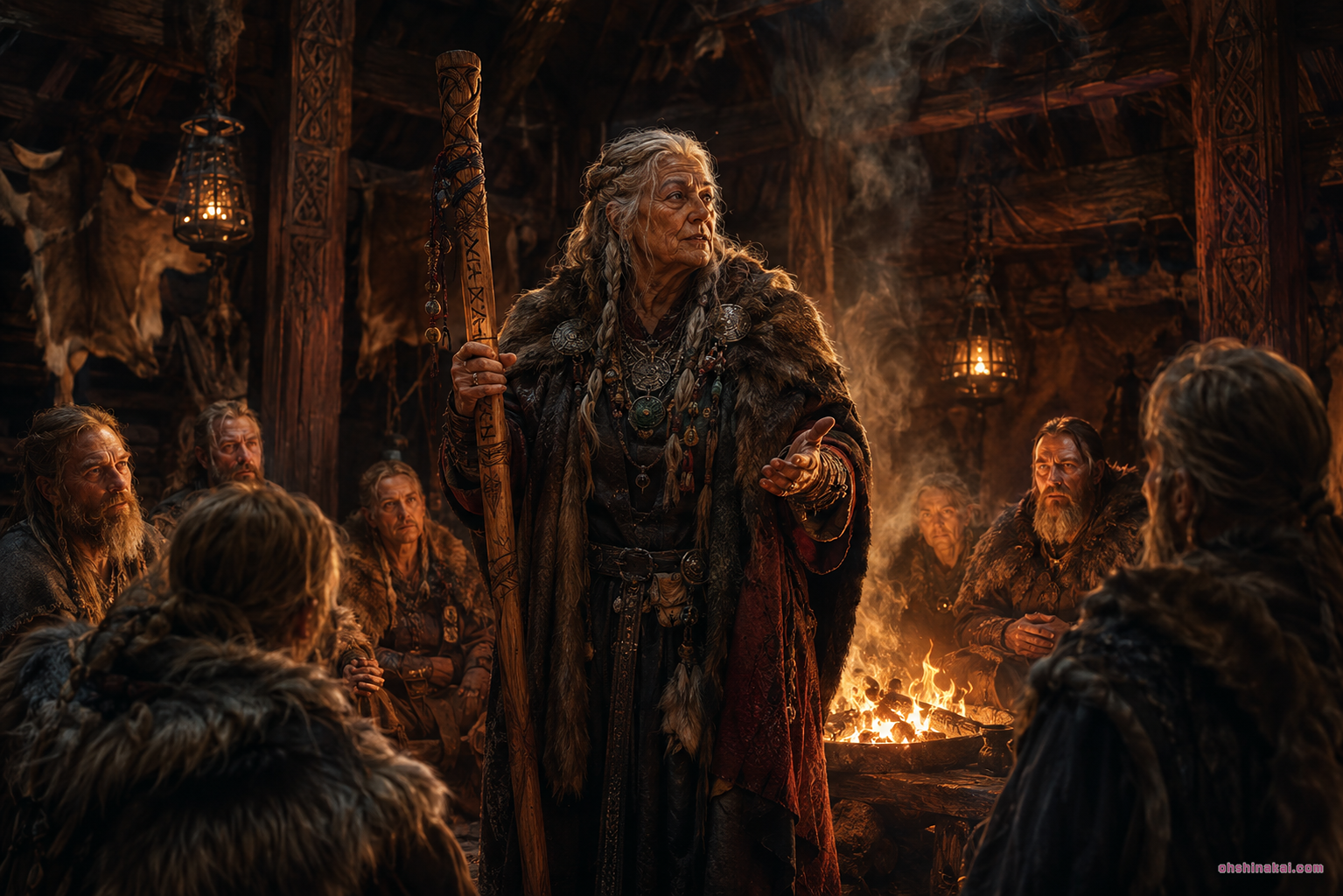
Urd-Hael is the god of fate, endurance, and unbroken time. He is not prayed to for favors. He is acknowledged as already at work, the force that ensures winter returns, that generations replace one another, and that no action escapes its consequence. His clergy, the Thread-Keepers, are law-speakers, judges, historians, and oath-witnesses. They don't intercede with their god. They don't promise blessings. They remember what happened before, and they tell you what it cost. A Thread-Keeper's authority comes from memory: the ability to recite genealogies, feuds, precedents, and oaths stretching back generations, all oral, nothing written that can be memorized instead. Their rune-staffs, carved wooden staves bearing runic inscriptions of key precedents, serve as mnemonic devices rather than weapons, though they're sturdy enough to lean on through a blizzard.
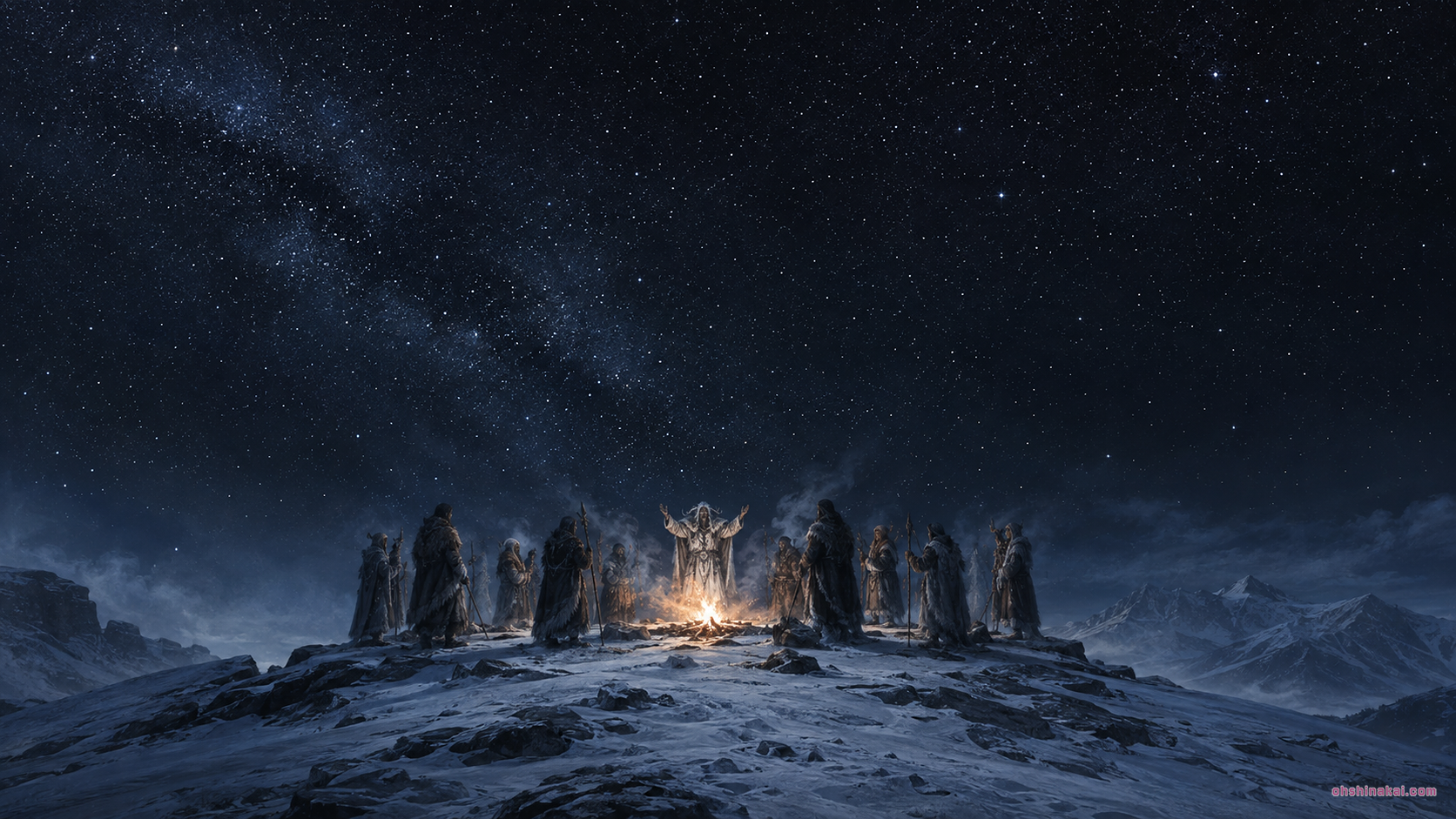
Haldis is the goddess of winter, death, and the quiet certainty that no fire burns forever. Her clergy, the Cold Wardens, oversee burials, winter rites, the care of the dying, and the grim calculation of which families will survive the season and which will need help. They dress in pale greys, whites, and frost-blues: the colors of winter, and carry carved bone or ice-crystal tokens. Their funerals are brief, factual, and stripped of exaggeration. Eulogies are restricted to what the dead actually did. Embellishment is considered disrespectful; Haldis sees the truth, and flattering a corpse insults both the goddess and the deceased. The longest night of the year brings Haldis's Night: a vigil from sunset to sunrise during which the names of everyone who died that year are spoken aloud. When dawn comes, the names are released.
Beyond these two primary deities, many clans maintain older beliefs: local wights of river, pine, and tundra; ancestral animal spirits; and figures like Sa̅rissah (The Sky Father, god of weather and thunder) and Malinhah (The Lady of Winter and Mountains) who belong to an older stratum of Nordvindian worship among the Thousand Ancestral Gods.
Explorers and Iron
Nordvindians are not merely survivors. Around 900 BFE, bands of Nordvindian explorers crossed the Gylfang Sea, guided by stars and runic tradition, making landfall on the coasts of Skaldmark Islands, Yakhuli, Vándrgarðr, and Dálvi. Their arrival sparked trade (furs, fish, iron) and fierce skirmishes as rival clans competed for control of harbors and river-mouths. These encounters forged the first long-term treaties between northern and southern peoples, and shaped the legendary duality of Nordvindia: both harsh warriors and shrewd merchants.
That duality persists. Nordvindian ironwork is respected across Evernia (perhaps not as refined as Hallgildan metal-craft), not as inventive as Falentian engineering, but hard, reliable, and built to last. Their naval prowess, built on generations of Arctic seafaring, gives them reach that their frozen homeland alone would not suggest. A Nordvindian longship can navigate pack ice that would shatter a Bravonian hull, and Nordvindian captains sell that expertise to anyone who needs something delivered through waters that other sailors refuse to enter.
The relationship with Hallgilda across the southern passes is old, complicated, and mostly respectful. The two peoples share blood, climate, and a worldview built on endurance, but Nordvindian clans have raided Hallgildan borderlands in lean years, and Hallgildan miners have pushed too far into passes that Nordvindians consider theirs. The friction is real, but it rarely escalates beyond border skirmishing — both sides know that the mountains and the trolls are worse enemies than each other.