The Milk That Builds a Clan: Allonursing, Immune Transfer, and the Biology Behind Communal Nursing
Allonursing shows up in almost every earlier piece of Aldermark writing as a religious and social practice, a Freyjaist expression of the idea that a child belongs to the whole clan. All of that is true. What I hadn't written down until now is how much of it is biology. Elvish communal nursing works because elvish bodies are unusually good at it, and the practice in turn has shaped what elvish infants need.

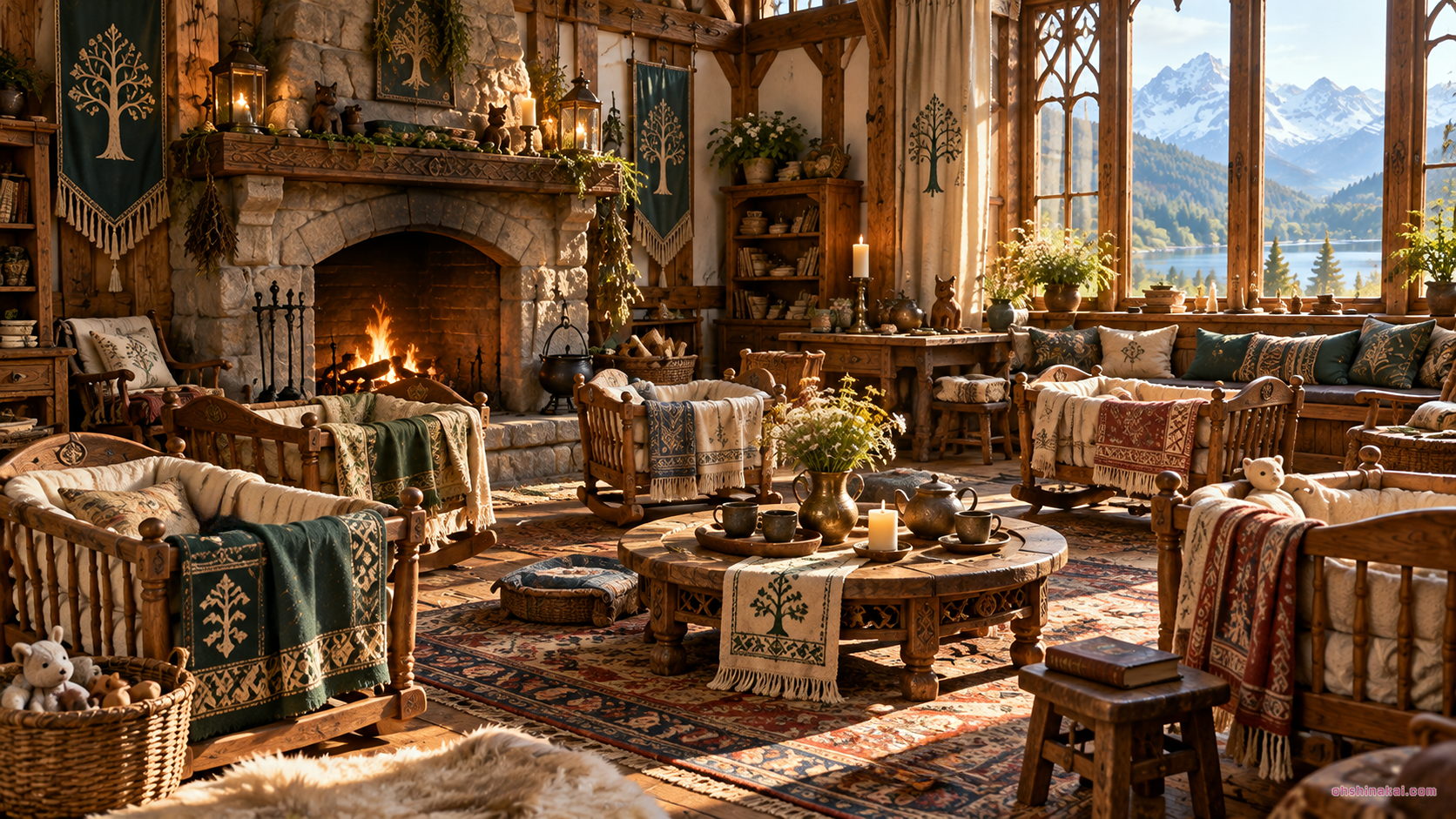
What Allonursing Actually Is
Allonursing means a lactating woman feeding an infant who isn’t her own. Plenty of human cultures have practised wet nursing, usually as paid work or a last resort. Elvish allonursing is different in scale and in intent. In a traditional sipp, a newborn is fed by several women in rotation from the first weeks of life, with the birth mother as one of them.
Elvish distinguishes two roles. An allonursa is any communal nursing mother, a woman who feeds the sipp’s infants alongside her own for a season or a few years. A bhristavaedhri, the Wet Mother, is something more: a woman who takes up nursing as a long vocation, sometimes for decades, and holds a recognised place in Freyjaist practice. The duty itself is allonursdhuthy, and the bond it creates between a nursing woman and a child she fed is allonursbhandhi.
Bodies Built to Share Milk
Three features of elvish physiology make communal nursing practical on a scale humans rarely manage.
Lactation is Easier to Start
Humans can induce lactation without a pregnancy, but it usually takes weeks of effort and often produces a partial supply. In elvish women the response is much stronger. The same hormonal sensitivity behind the breast hypertrophy means elvish breast tissue reacts readily to prolactin and to regular nursing. A woman whose own child is already weaned, or who has never given birth, can often establish a working supply within a couple of weeks with frequent nursing and traditional support. Elvish calls this capacity bhrustavaxti, breast development for allonursing.
The Body Reshapes For the Work
Brusthamr, nursing form, names the physical change a lactating elvish woman goes through: fuller breasts, a measurable rise in appetite and fluid intake, and shifts in posture and sleep patterns. Elvish women describe it as the body settling into a different mode.
Supply Responds to Demand
Like human milk supply, elvish supply rises with the number of feeds. Because elvish lactation responds more strongly, a single bhristavaedhri can sustain two or three infants over long periods, which is the arithmetic that lets a sipp feed every newborn even when a birth mother is ill, absent or recovering from a hard elder pregnancy.
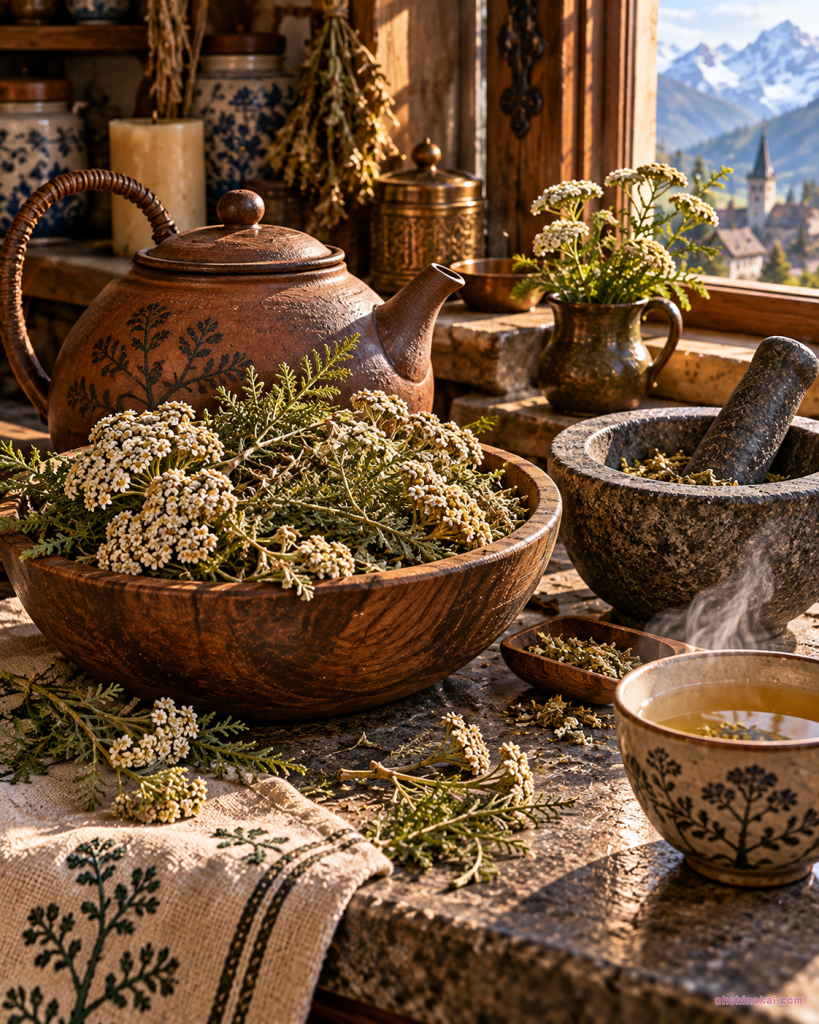
Vivekara and the Herbal Tradition
Dark elf communities in Shikarapura have a long herbal tradition around lactation, and the centre of it is Vivekara, wild yarrow. Allonursas drink yarrow tea through the day when establishing or increasing supply, and yarrow goes into the barley broths and root-vegetable soups served to nursing women.
The Aldermark reference material attributes yarrow’s effect to plant compounds that act like estrogen in the body. In elvish women, with their stronger hormonal response, that effect is noticeable. Aldermark pharmacology has confirmed the activity and now publishes dosing guidance, partly because the same sensitivity means too much yarrow over a long period can push some women toward the breast overgrowth. Experienced Shikarapuran allonursas know this from long observation and adjust what they drink. Newly arrived human-country elvish women, finding yarrow tea sold as a wellness product in a Munich health-food shop, often don’t.
The same caution applies to certain spices in traditional Shikarapuran cooking that are also lactation-promoting. In the valleys where those dishes are eaten daily, rates of lactation-related breast hypertrophy are noticeably higher.
A Wider Immune Inheritance
This is the part of the practice that interested Aldermark scientists most, and it is the reason the Ministry of Health now treats allonursing as public health policy.
Breast milk carries antibodies and other immune compounds made by the mother’s body in response to everything she has been exposed to. An infant fed by one woman receives that one woman’s immune history. An infant fed by four or five women receives a much broader range. Aldermark studies comparing allonursed and singly nursed infants found that allonursed children had wider antibody coverage in their first year, fewer serious infections, and faster recovery from the infections they did catch.
The effect seems to be stronger in elves than it would be in humans. Elvish adults carry immúnkhrafthi, the immune fortitude is built from centuries of exposure. A bhristavaedhri in her fourth century has an immune history far longer than any human woman’s, and her milk reflects it. Dark elf communities had observed the pattern for generations before anyone measured it. Their phrase for it, roughly, is that a child fed by many mothers is protected by many lives.
There is a less comfortable side. Elvish infants raised this way may have come to depend on it. Aldermark paediatricians report that elvish babies fed by a single mother, or on human formula, catch more infections in their first year than the human average, which suggests elvish infant immunity is calibrated to expect a broad supply. That remains a hypothesis. It matters a great deal to elvish families living far from a sipp.
The Wet Mother’s Body Over Decades
Human wet nursing rarely lasted more than a few years for any one woman. A bhristavaedhri may nurse for twenty, thirty or fifty years. That raises physiological questions no human medical tradition has had to answer.
The biggest is minerals. Milk draws heavily on the mother’s calcium, and elvish bainaflex bone is dense precisely because it holds a lot of it. Over decades of continuous nursing, that store can run down. Aldermark guidance for long-term Wet Mothers includes regular bone-density monitoring (against elvish reference ranges), mineral supplementation and planned rest years. In Shikarapura, the traditional answer was a mineral-heavy diet and a custom that a Wet Mother spends one winter in every seven not nursing at all.
Other concerns are calories, sleep and the cumulative strain on back and shoulders. Lactation-related breast hypertrophy is more common among long-term Wet Mothers than in any other group, and Aldermark guidance treats it as an occupational health matter, with support garments, physiotherapy and reduction surgery all covered.
Some women nurse for decades with no trouble at all. The role is still taken seriously as physical work, with the protections that implies.
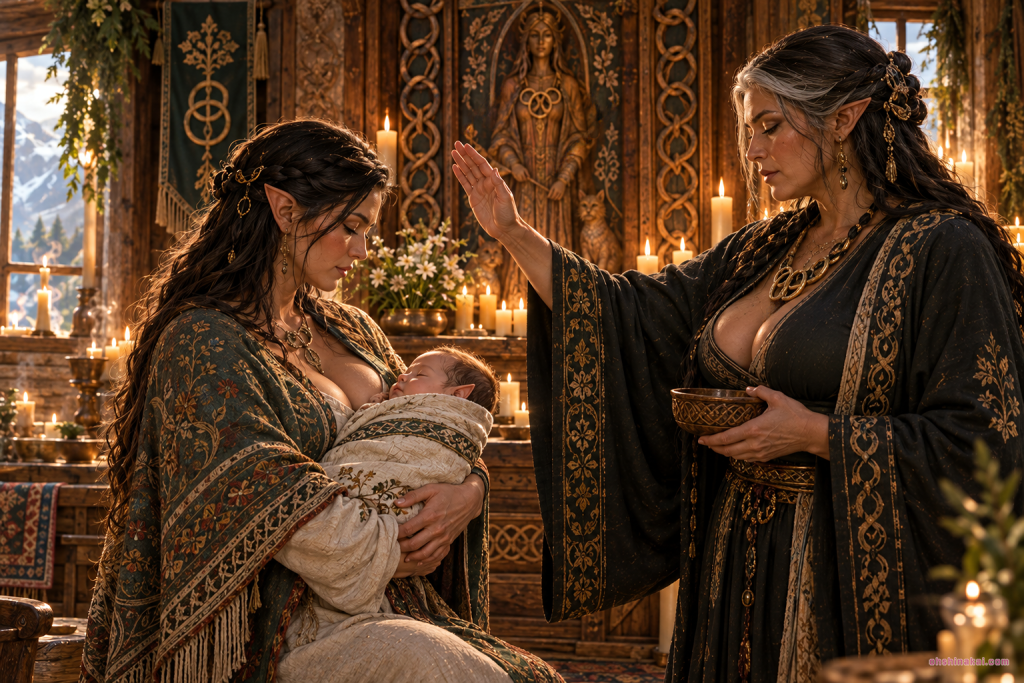
Safety: What the Ministry Actually Regulates
Shared milk can share infections as well as antibodies. Elvish communities have known this for as long as they have practised allonursing, and Aldermark now regulates it directly. The Ministry of Health’s guidance on allonursery composition covers:
- screening for blood-borne and other transmissible infections before a woman joins a sipp’s nursing rotation, repeated at set intervals;
- medication and herbal-intake checks, since whatever a nursing woman takes reaches every infant she feeds, including Vivekara at high doses;
- limits on how many infants one woman feeds at a time, tied to her supply and her own health;
- hygiene standards for allonurseries in clan houses and in the state-funded centres that serve city elves without a sipp.
To humans the list can look clinical for something so intimate. Elvish families mostly see it the way they see food-safety rules in a shared kitchen.
Where Human Law Gets In the Way
Allonursing runs into human institutions at almost every point.
Milk Sharing
Many human countries regulate donated breast milk through milk banks that pool, pasteurise and distribute it. Pasteurisation makes it safe and also destroys some of the live immune components that make allonursing valuable. Direct informal milk sharing is legal in most places but discouraged by health authorities, and childcare settings usually forbid it outright. An elvish sipp trying to run a rotation in a human country often has no clear legal footing.
Childcare Licensing
A human-country daycare that employs elvish staff will rarely let a staff member nurse children who aren’t her own, whatever the parents want. Elvish families in Britain and the United States have set up private cooperative allonurseries to get around this, with mixed success with inspectors.
Workplace Protections
Human lactation rights at work assume one woman nursing her own baby for a year or two. United States federal protections for breaks to express milk, for example, run for one year after birth. A bhristavaedhri feeding the sipp’s infants in her thirtieth year of service falls outside every one of these rules.
Family Law
The allonursbhandhi has legal standing in Aldermark custody and inheritance cases. In most human courts it has none. A Wet Mother who fed and helped raise a child for its first years can be treated as a stranger in a custody dispute.
A Practice the Body Grew Into
Allonursing is easy to describe as a belief system, and Freyjaist theology does give it much of its meaning. Underneath, it is a biological arrangement that elvish bodies seem well suited to: lactation that starts readily, milk carrying immune histories centuries long, and infants who may now depend on that breadth. It also has real costs, which elvish medicine has learned to manage.
Glossary of Thungalëthaur Terms
- Allonursa Communal nursing mother
- Bhristavaedhri Wet Mother; a woman who takes up allonursing as a long vocation; a recognised Freyjaist role
- Allonursdhuthy The sacred duty of allonursing
- Allonursbhandhi Allonursing bond; the tie between a nursing woman and a child she fed
- Bhrustavaxti Breast development for allonursing; the biological capacity to nurse
- Brusthamr Nursing form; the body’s physical change during lactation
- Vivekara Wild yarrow; Shikarapuran herb used to support lactation
- Immúnkhrafthi Immune fortitude
- Bainaflex Bone density with flexibility
- Sipp Clan; the extended kinship unit
You Might Also Enjoy These Posts
 Aldermark
Join the conversation