Seidr Is Not Magic: The Elvish Practice That Early Humans Mistook for Sorcery
The laboratory at the University of Kaiseringaden looks like every other lab in the building: white benches, fluorescent light, equipment humming. In the middle of it sits a Völva with her eyes closed and her bare feet on a tray of forest soil. After a few minutes she opens her eyes and says, quite calmly, that it will rain before evening. The sky outside is clear. The researchers note the time. Three hours later, the weather station on the roof starts to register a falling barometer as a front moves in from the west, and by dusk it is raining. The researchers aren't looking for magic. They are trying to work out what she noticed, and how.

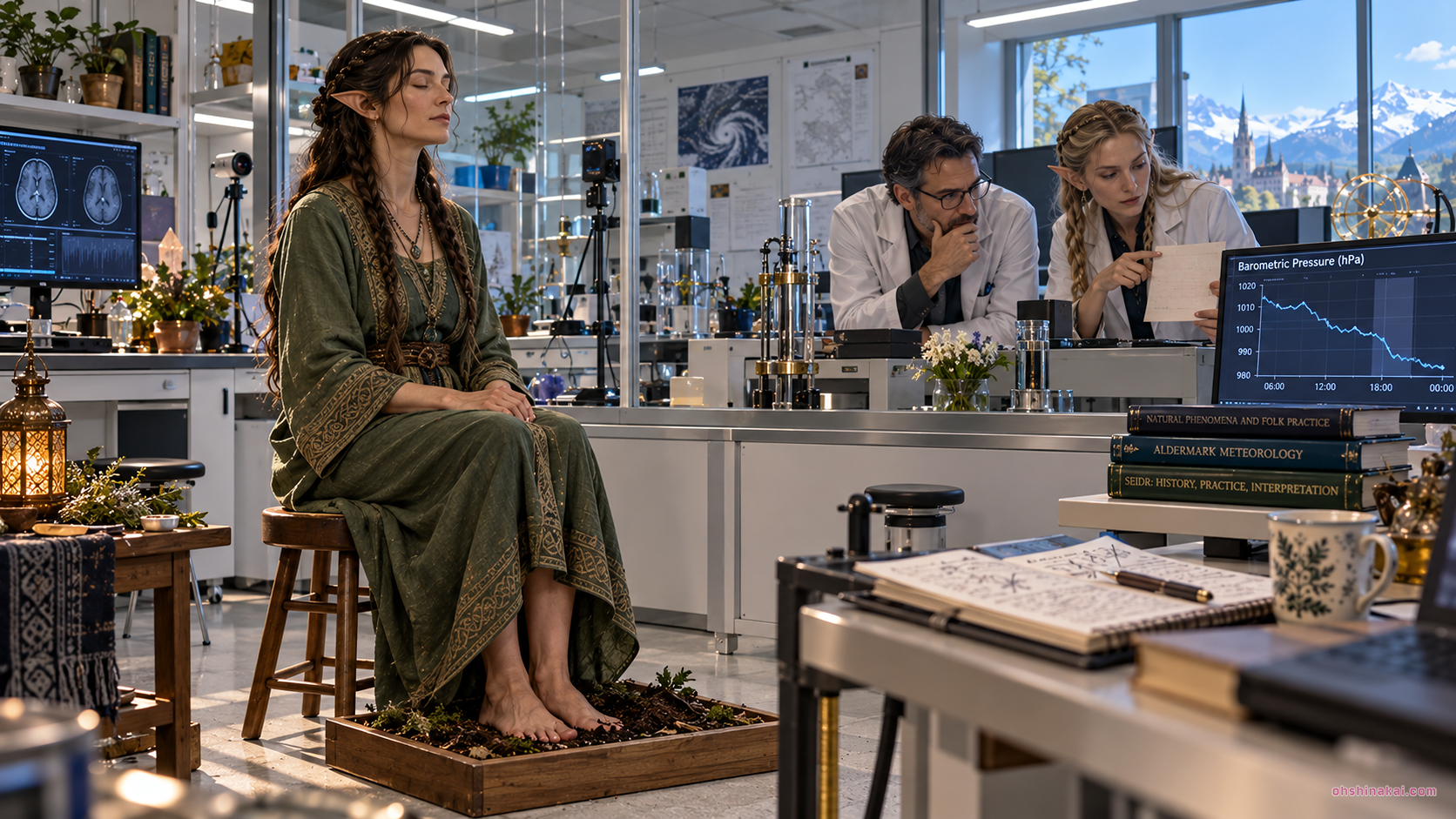
The laboratory at the University of Kaiseringaden looks like every other lab in the building: white benches, fluorescent light, equipment humming. In the middle of it sits a Völva with her eyes closed and her bare feet on a tray of forest soil. After a few minutes she opens her eyes and says, quite calmly, that it will rain before evening. The sky outside is clear. The researchers note the time. Three hours later, the weather station on the roof starts to register a falling barometer as a front moves in from the west, and by dusk it is raining. The researchers aren't looking for magic. They are trying to work out what she noticed, and how.