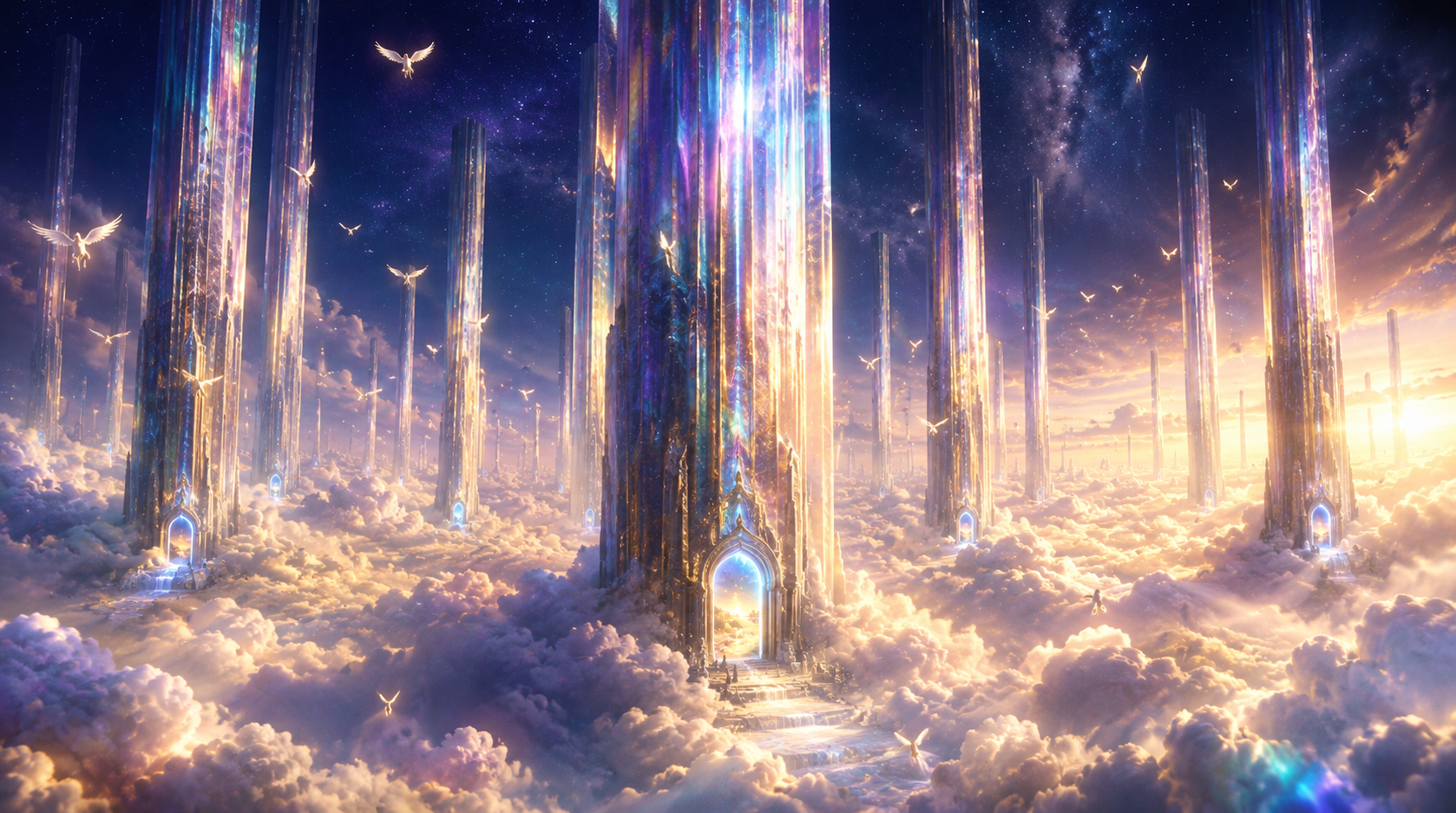
Welcome to Empyrea: The World Between Worlds


There is a realm that sits above the mortal world but below whatever true infinity might be: a place of breathtaking architecture, warring philosophies, and divine beings who are, despite their celestial nature, profoundly, frustratingly human in their politics and their grief. It is called Empyrea, and in this series I will take you into every corner of it.
This is a setting that began, as many do, with a question: what if the concept of heaven wasn't a reward, but a civilization? What if the angels were not messengers of simple divine will, but factions with competing ideologies, ancient grudges, and sincere disagreements about who deserves to lead? The answer, developed across hundreds of pages of lore, is a world as rich in conflict as it is in celestial light.
What Empyrea Is
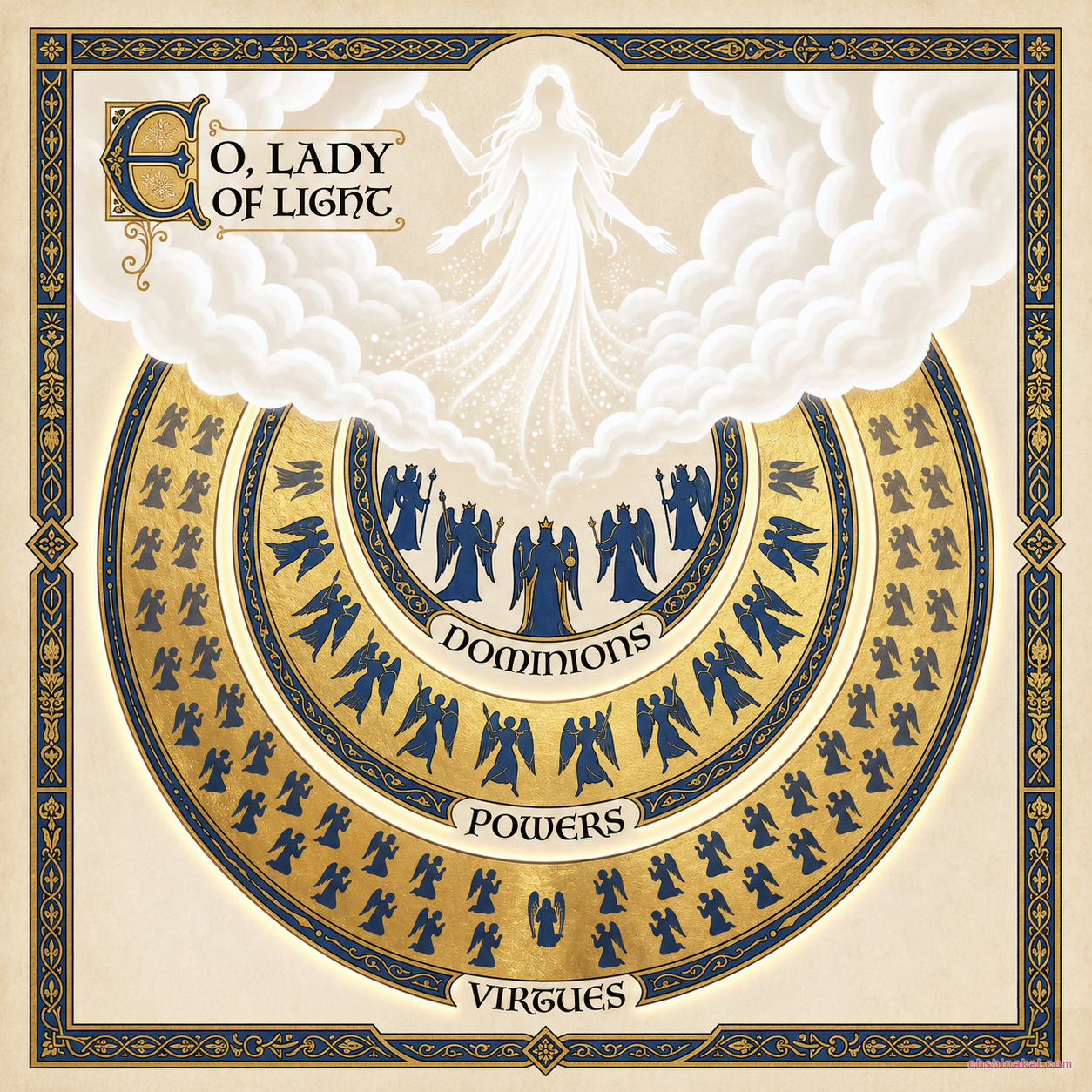
Empyrea is the heavenly realm, the abode of the Divine Hierarchy, the angelic races, and the mysterious figure known only as the Lady of Light, or Eo. But it is no simple paradise. It is a realm shaped by millennia of war, an uneasy peace enforced by a ruler who has since vanished, and the constant, grinding tension between eight distinct celestial races who each believe they know best how heaven should be run.
The setting draws heavily from syncretist religious traditions: early Christian Gnostic theology, Valentinianism, Chinese folk religion and Taoism, Sufi mysticism, Hindu and Buddhist cosmology, and Jain philosophy, blended into something new. Think of it the way Paradise Lost or Dante's Divine Comedy treated their source material: with deep respect for the theological traditions and absolute creative freedom in recombining them. If you're someone who finds comparative religion fascinating, Empyrea was built for you.
The world is structured around a central tension: the Mandate of Heaven. Eo established the Divine Hierarchy as a governing framework after ascending from mortality, modeled on the celestial courts of her mortal homeland. This hierarchy organizes angelic society into Dominions, Powers, and Virtues, a tiered system of authority and divine function. But embedded within that system is a corollary that has never stopped causing trouble: the right of rebellion against an unjust or unworthy ruler. Heaven is, in other words, a place where revolution is always technically legal.
The Realms Beyond
Empyrea doesn't exist alone. It sits at the center of a constellation of worlds connected by the Heavenly Pillars: a network of celestial gateways linking the divine realm to places like Barzakh, the liminal land of the exiled Zabaniyah; Pandemonium, home to the Eternal Prison; Hurakan, the perpetual storm-realm; Rangda, the world of monsters and dark sorcerers; and Duniya, the mortal Earth itself.
Each of these realms carries its own atmosphere, ecology, and lore, and together they form a cosmology that is genuinely strange and beautiful. Barzakh, for instance, is not the hell of popular imagination, it is something far more complex: a place of harsh volcanic geography and angular obsidian cities, occupied by celestials who believe, with deep conviction, that they were right all along. The Phantom Realm, caught between Empyrea and Duniya, is a place of sorrow and potential redemption. Even the darkest corners of this cosmology hold something worth understanding.
What This Series Will Cover
This series about Empyrea will cover the eight celestial races in depth: their physical forms, philosophies, relationships, and roles in the grand drama of Empyrea. You'll meet the major figures: the judges, the warriors, the muses, and the rulers. We'll explore factions and religious orders that operate at the intersection of mortal and divine. And scattered throughout, a series of behind-the-scenes posts will open the worldbuilding process itself: what worked, what was cut, what evolved, and what remains gloriously unresolved.
The world of Empyrea was built to feel lived-in, not merely a backdrop, but a civilization with its own memory. Every race has a grievance. Every faction has a theology. Every location has a history that bleeds into its present. The goal of this series is to make that world as accessible, vivid, and detailedly rich.