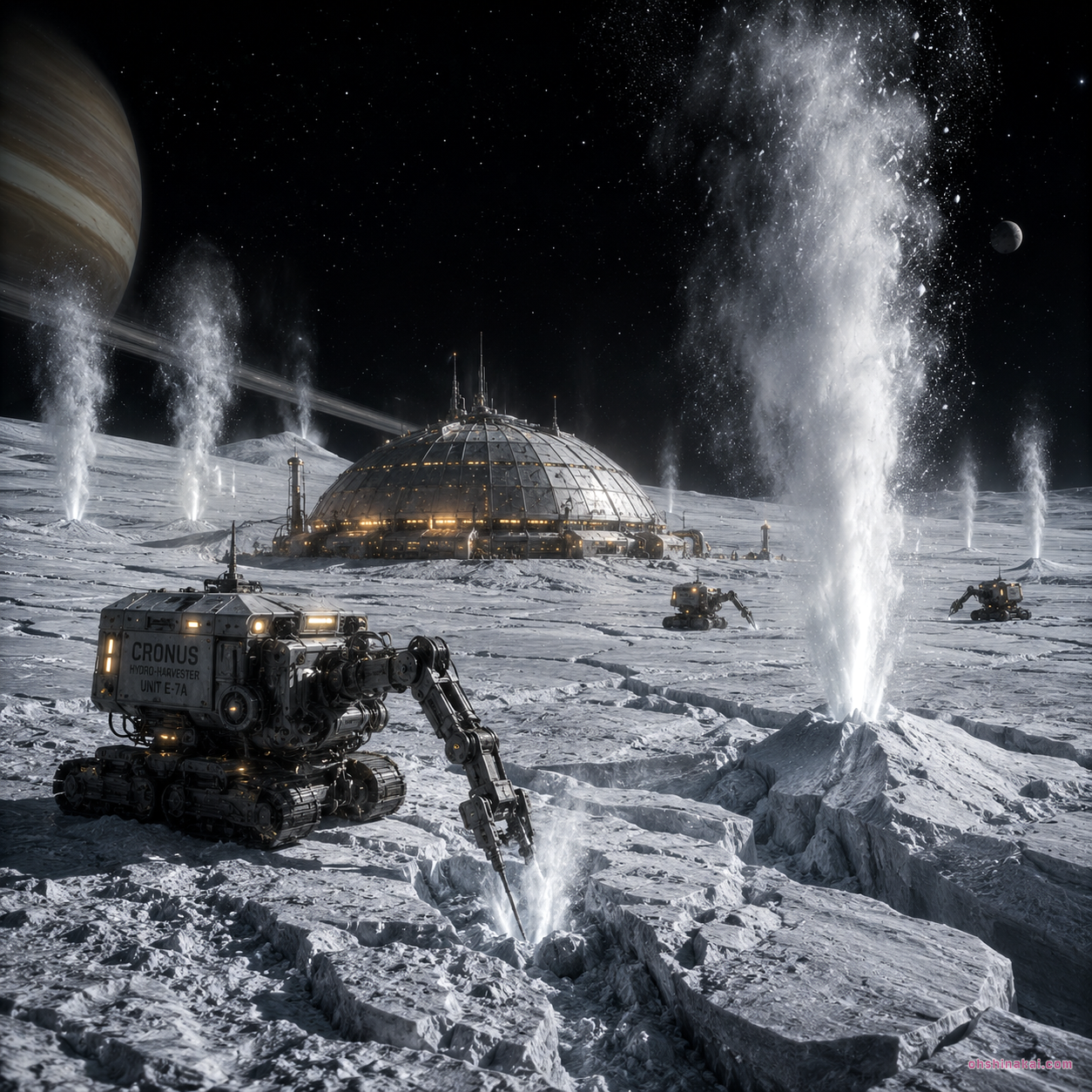
The Moons of Saturn: Water, Fuel, and the Orbital Dance


Saturn has 95 moons. Humanity has colonized a handful, industrialized three, and turned two of the smallest into one of the most unusual cultural experiments in the outer system. The Saturnian economy runs on the output of these moons, the fuel, the water, the rare metals, and the logistical infrastructure that keeps the outer system's supply lines functioning, and the people who live on them have built societies as varied as the moons themselves.
Titan: The Fuel Depot
Titan is the workhorse. Saturn's largest moon, shrouded in a dense orange haze of nitrogen and methane, is the system's primary source of hydrocarbon fuel. Its surface, lakes of liquid methane and ethane, plains of frozen organic compounds, and the occasional mountain range of water ice, looks like a petroleum geologist's fever dream, and the Saturnian economy has treated it accordingly.
The dome-cities of Titan are functional and pressurized, built to withstand an atmosphere that is breathable in terms of pressure but lethal in terms of composition. Inside, the settlements hum with the controlled activity of a refinery town: fuel processing, atmospheric chemistry, and the steady traffic of cargo shuttles lifting processed hydrocarbons to the orbital depots. The Titan Fueling Depots, designed with Martian-built robotic platforms, offer jump-drive refueling at prices that undercut the Jovian alternatives, and this price advantage alone has been enough to redirect the majority of outer-system freight traffic through Saturn's sphere.
Titan is also where the TIBC keeps its headquarters, which means the moon hosts an improbable collision of industrial workers and financial executives. The refineries are on the surface. The corner offices are in orbit. The relationship between the two groups is polite, distant, and shaped by the mutual understanding that the fuel workers make the product and the bankers make the product profitable.
Enceladus: The Well