
Azaniya: The Kingdom of Ancestral Whispers


"The lake speaks when it pleases, and it pleases when you have earned the right to listen."
– A spirit-binder of Hlamalani, to an Ondaran merchant requesting a divination
[IN-WORLD LORE]
The Kingdom Where the Dead Still Govern
The mist starts before sunrise and doesn't lift until midmorning. It rolls out of the east from Murkshore Lake in slow, heavy banks, threading through temperate forest and filling the fertile valleys with a damp grey light that softens every edge and muffles every sound. By the time the sun burns it off, the farmers in the lowlands have already planted, prayed, and received counsel from ancestors who have been dead for generations.
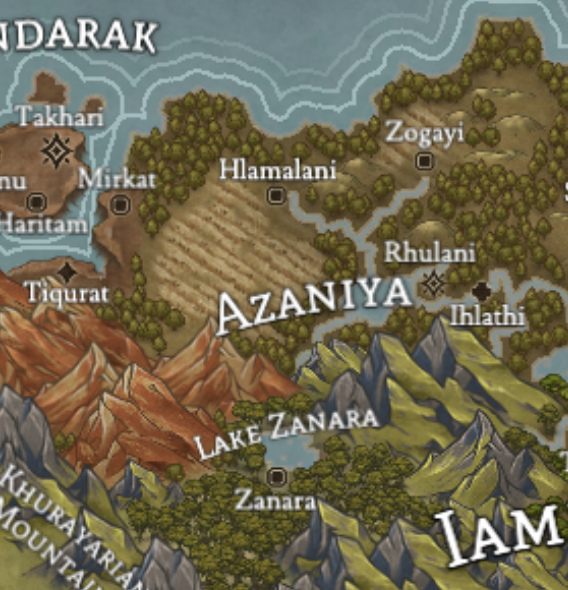
Azaniya sits at the western edge of Argania's central corridor, its territory stretching from the trade routes of Jalimariya and Sadoros in the west through temperate highlands and fertile river valleys, into vast forests in the east that deepen toward the sacred shores of Murkshore Lake. To the southeast, the land climbs sharply into the mountain chains that form the border with Imaia. The terrain is green, well-watered, and deceptively gentle. The spiritual landscape is anything but.
This is a kingdom where the ancestors are present. They linger in the mist. They whisper from the lake. They guide arrows, bless harvests, and curse the careless. The spirit-binders of Azaniya commune with these dead as a matter of governance, and the living rule only with the dead's consent.
The Clans and the Chosen Voice
Azaniya is governed by a confederation of ruling clans, each tracing their lineage through generations of ancestors who are venerated as active spiritual forces. The clans form the backbone of society, each governing a specific region and sending representatives to the Council of Unity, which advises the monarch on law, diplomacy, and resource distribution.
The monarch, titled the Chosen Voice, is understood to be the mouthpiece of the ancestors' collective will. The title carries weight precisely because it implies that the ruler's authority comes from below (the dead) rather than above (divine right or military conquest). A Chosen Voice who ignores ancestral guidance risks spiritual consequences that the spirit-binders are quick to identify and slower to forgive.
Inter-clan competition for prestige is constant but controlled. Open feuds are rare because the ancestors disapprove of fraternal bloodshed, and displeasing your dead is considered far more dangerous than losing face to a rival clan. Inter-clan marriages, joint festivals, and shared pilgrimages to Murkshore Lake maintain the balance.
Murkshore Lake and the Spirit-Binders
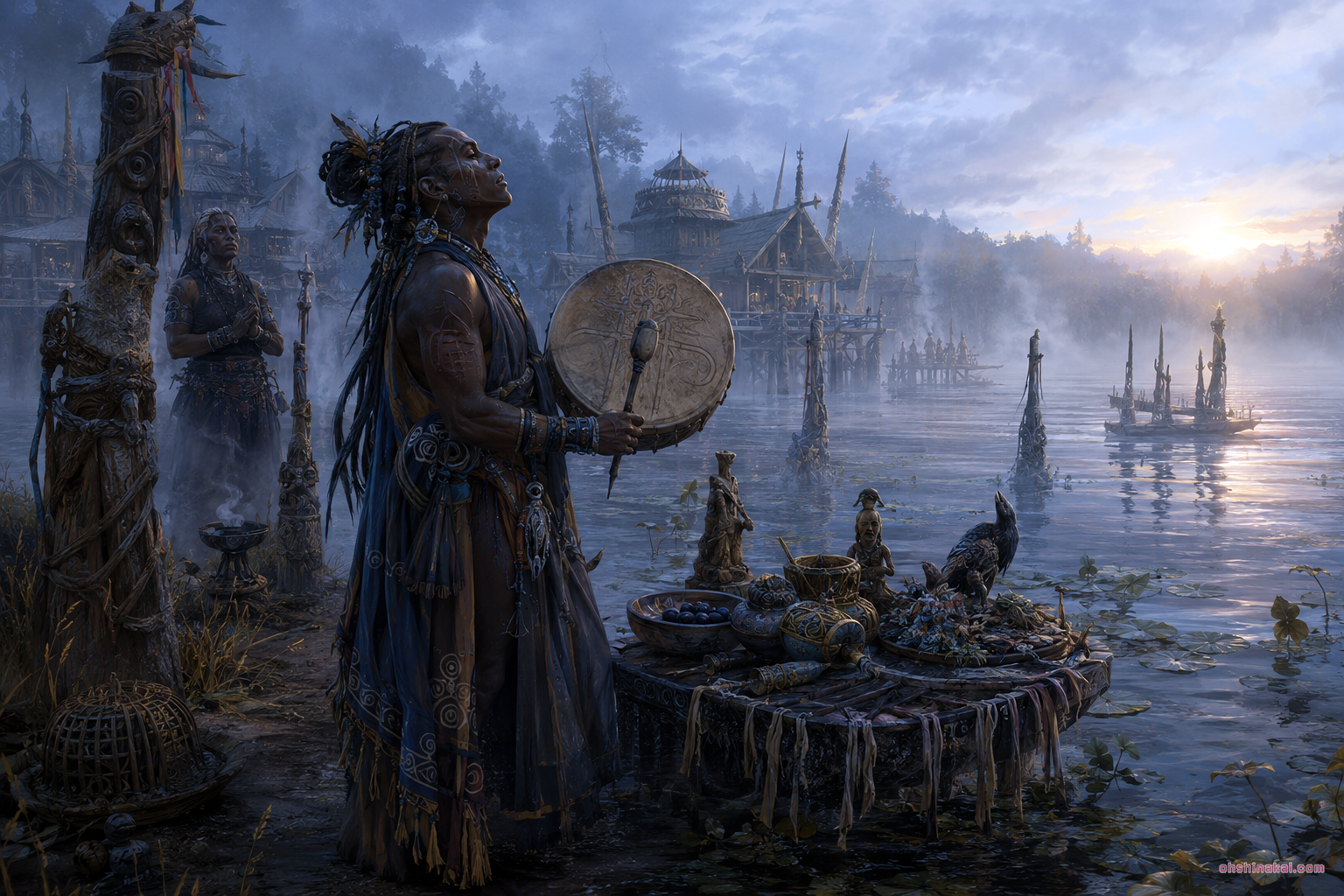
Murkshore Lake (known to the Azaniyans by its native name, a word that translates roughly as "the Water of Voices") sprawls across Azaniya's eastern lowlands, its mist-shrouded surface surrounded by dense temperate forest. The lake is the kingdom's most sacred site: a place where the boundary between the living and the dead is at its thinnest, and where the ghosts of ancestors are said to dwell just beneath the surface.
The spirit-binders of Hlamalani, the lakeside settlement, are trained at enormous personal cost to navigate the lake's mysteries. Their art involves song, drumbeats, symbolic crafts, and offerings of food and drink to forge and maintain bonds between the living and the dead. A spirit-binder can summon ancestral guidance for divination, channel protective energy into a warrior's weapon, or bind a malicious spirit that has grown restless from neglect.
The training is arduous and not without risk. Spirit-binders report that the lake's ghosts are not uniformly benevolent. Some ancestors carry grudges from life. Others have been forgotten by their descendants and grown bitter. The spirit-binder's skill lies in negotiation: knowing which spirits to consult, which to appease, and which to avoid entirely. Travelers to the lake are warned that the unprepared may fall victim to its specters, whose voices can draw the unwary into the water.
Rhulani, Ihlathi, and the Trading Town of Zogayi
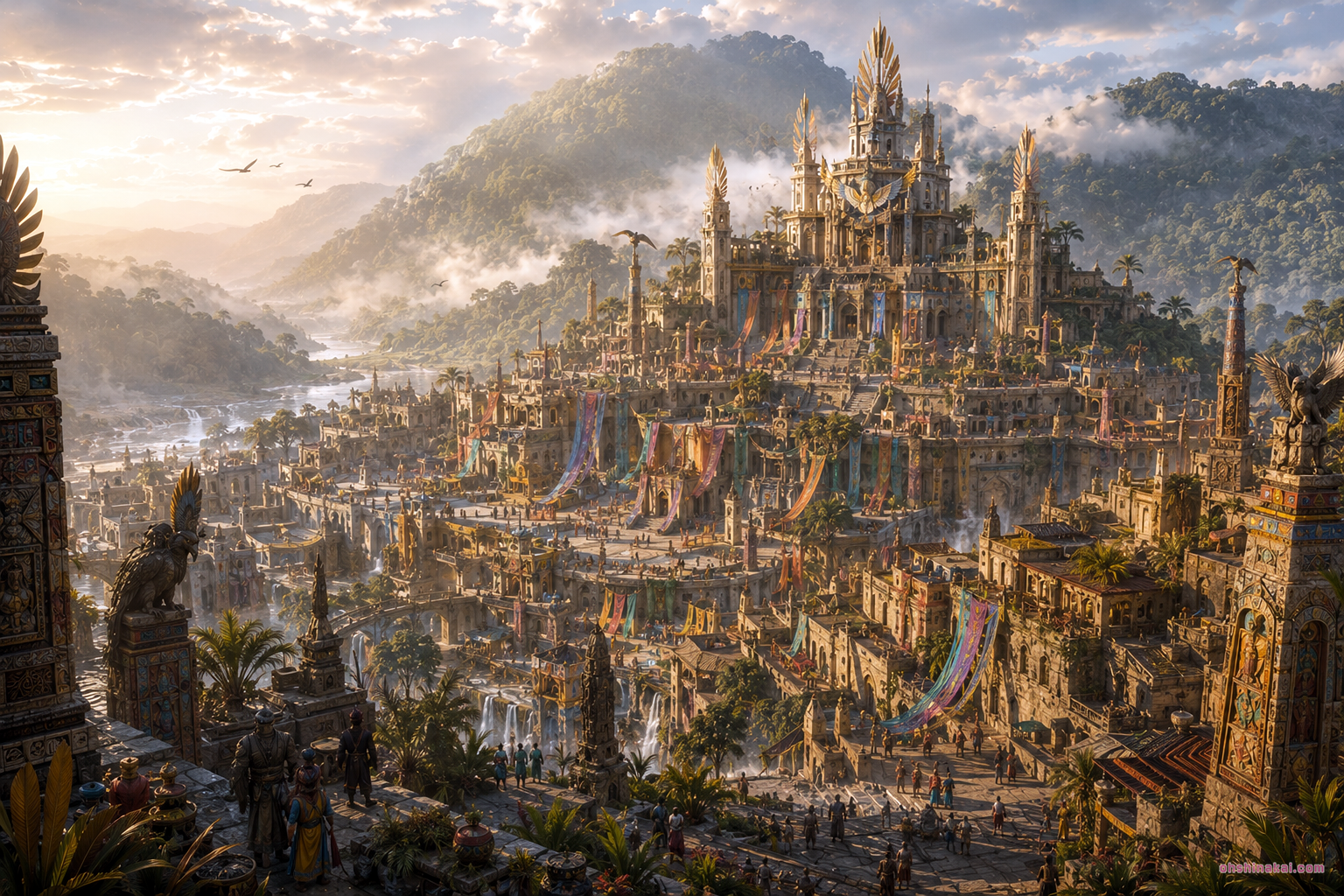
Rhulani, the capital, sits at the crossroads of ancient trade routes in a fertile valley east of the mountains. The city is a tapestry of terraced stone buildings, flowing banners in clan colors, and carved pillars adorned with ancestral glyphs. The central Palace of Songfeathers, crowned with adorned spires, serves as both court and spiritual nexus where chieftains, shamans, and merchants gather.
Ihlathi (The Mountain's Cradle) perches along the lower slopes of the southeastern mountains, tucked among cascading rivers and forested hills. Cliffside temples where priests chant prayers for the ancestors make it a pilgrimage site, and its blacksmiths are known for forging weapons said to channel ancestral blessings. The mountain trails near Ihlathi are marked by spirit totems carved into the living rock.
Zogayi, a bustling riverfront market town, connects Azaniya to Jalimariya, Sadoros, and the wider trade network through caravan routes. Its markets stock Azaniyan ivory, exotic herbs from the mountain forests, and carved talismans blessed by shamans. Zogayi's people are pragmatic traders who hold fast to traditional values, viewing travelers as both potential allies and potential threats in roughly equal measure.
Spirit-Bound Warfare
Azaniya's standing army is small, but its warriors are bolstered by spirit magic that makes them unpredictable and awe-inspiring opponents. Spirit-binders summon ancestral aid to channel strength, guide arrows, and curse enemies with misfortune. A warrior's weapon is often blessed at lakeside shrines or mountain temples, and combat is understood as a spiritual duty alongside a physical one.
The military's strength lies in defense and deterrence rather than conquest. Azaniya's mountainous southeastern border with Imaia and its temperate forests provide natural fortification, and any invader must contend with a landscape where the trees seem to watch, the mist conceals defenders, and the ancestors themselves are said to fight alongside their descendants.
Art, Craft, and the Living Tradition
Azaniyan artisans produce intricate spirit masks, woven cloth adorned with ancestral symbols, and talismans carved from bone and wood. Each piece is created during ritual, imbuing it with spiritual energy. Drumming and storytelling are central to cultural life, with every tale serving to entertain and to preserve the memories of past heroes. To forget an ancestor in Azaniya is a form of spiritual negligence: forgotten spirits grow restless and unpredictable.
[BEHIND-THE-SCENES]