Weeping Island: The Island Where We Laid Down Our Grief
Weeping Island raises three questions, and they come in order. The first is the name. The second is why anyone lives there. The third is what the Royal Air Force is guarding. The answers are classified, which on this island is less a bureaucratic label than a way of life. Eight hundred elves live on a volcanic rock in the South Atlantic, beside a military base they didn't ask for, carrying a grief they won't explain.

A Rock in the South Atlantic
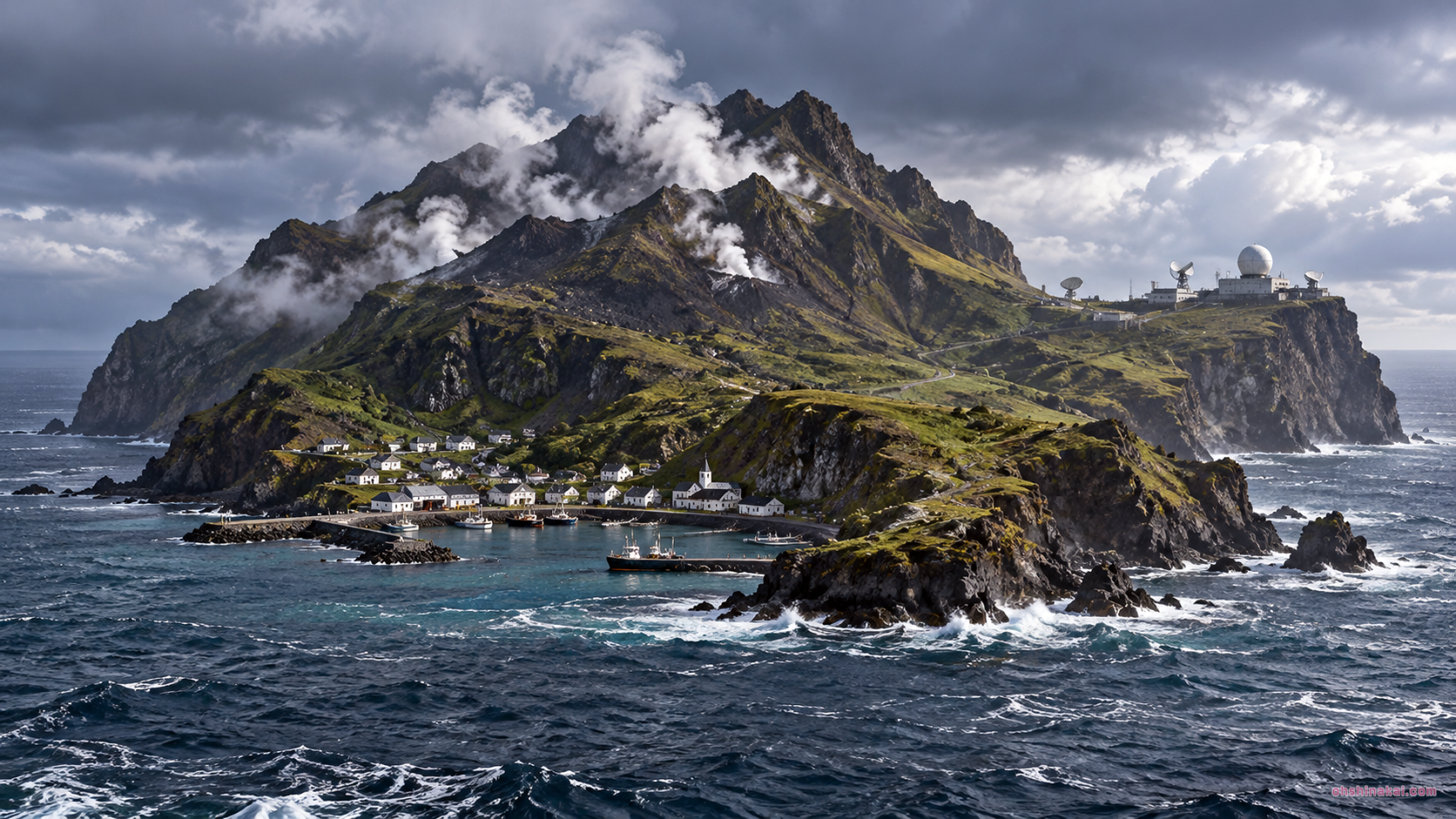
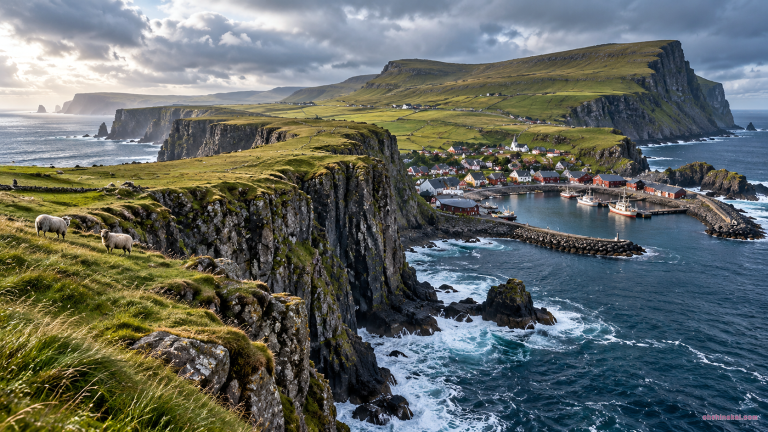
Weeping Island is a volcanic peak rising from the South Atlantic seabed, roughly 1,600 kilometres from Africa and 2,300 from South America. Its upper slopes are covered in sparse, wind-bent plants, and its lower slopes are scarred by lava flows and vents that release sulphurous steam. The climate is warm and humid, with sudden storms. It is a British Overseas Territory, and about 800 people live there.
There are four named places on the island:
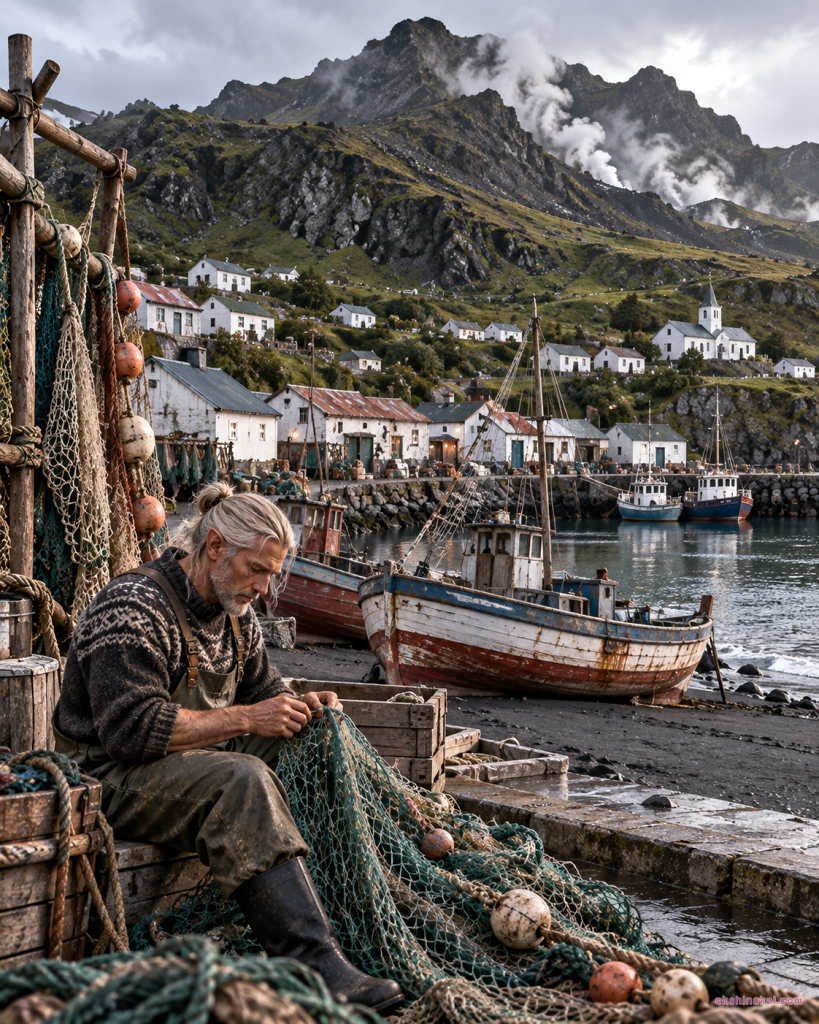
- Kamata Town (Khamatathorp), the civilian capital, in a sheltered bay on the leeward side. It has a school, a clinic, a general store, a fishing cooperative and a community hall that is assumed to double as a place of worship.
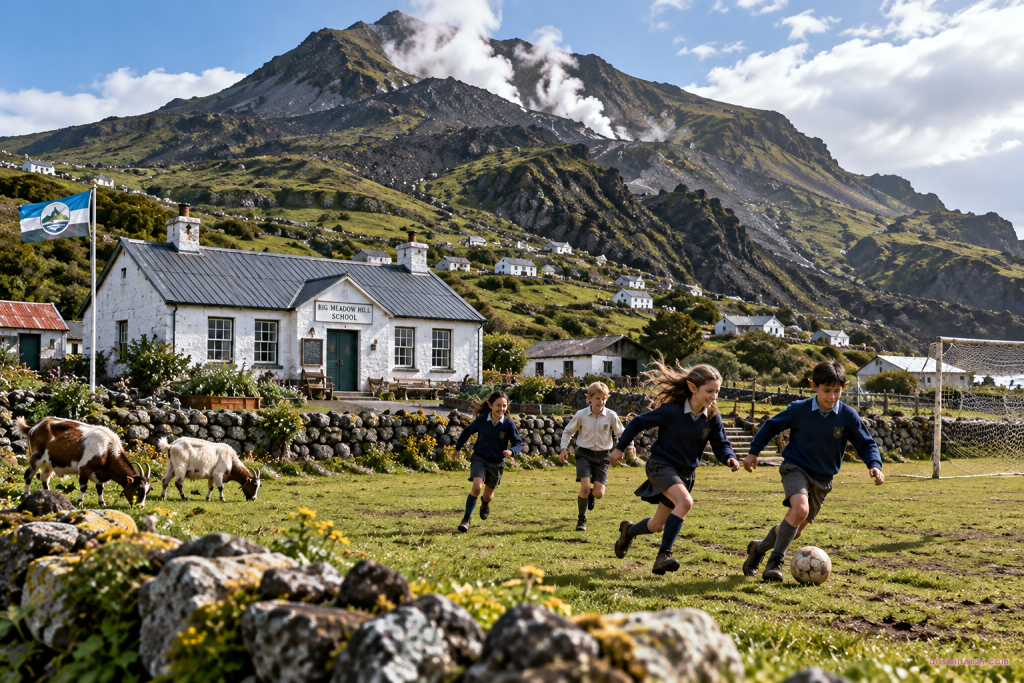
- Big Meadow Hill (Ghrössvanghrhöghi), the farming village on the only flat grassland on the island, with goats, vegetable gardens and the only ground flat enough for football.
- Wayfarer’s Pyre (Vandhrarbhrándhae), the Royal Air Force base on the northern headland.
- Kamata Airfield, the RAF station that serves it.
The languages are English and Elvish. The religion, officially, is undocumented.
The Name
Begin with the name, because everything else follows from it.
In English the island is Weeping Island. Its Thungalëthaur name is Waelthrághinsal, which on the surface breaks down as wael (sorrow), thrágh (time, age) and insal (island): the island of time’s sorrow. This is not a literal translation. The elvish name encodes something else, the community’s own name for their home: the island where we laid down our grief.
That phrase implies a story. It describes a people who arrived carrying something unbearable and chose this remote volcanic rock as the place to put it down. The obvious questions follow. What was the grief? When did they come? Why has every generation since chosen to stay?
Nobody on the island will say. The official record states that Weeping Island has been British territory since the nineteenth century and that its elvish community was established during the colonial period. But the island’s name predates British sovereignty, and its elvish community predates the British base. Whatever the colonial record says, the elves were there first.
A Grief Without a History
The elves of Weeping Island are polite. Ask about their history and they change the subject, courteously and completely. It is a politeness that is itself a wall.
A few things can be observed from outside. The islanders leave offerings at the volcanic vents in a way consistent with Freyjaist practice but not identical to any documented Freyjaist tradition. The community hall in Kamata Town appears to serve as their place of worship, though no visitor has been invited to a service. The island joined the OEA in 1946, after the Second World War, as part of the alliance’s post-war reorganisation, but it plays almost no visible role in OEA affairs.
The rest is speculation, and outsiders have produced plenty of it. Some think the grief belongs to a specific event in elvish history: a lost community, a massacre, a failed migration. Others think it is older than any recorded event. The islanders have never confirmed or denied any of it. The one visiting journalist granted access in more than a decade came back with the translation of the name and very little else.
There is a Shikarapuran word that may be the closest outsiders can get. Zharithi is the slow transformation of grief into strength over time. Whatever the islanders carried to Weeping Island, they seem to have spent generations doing exactly that, and they have decided the process is nobody else’s business.
The Base Nobody Asked For
The third question is the RAF. Wayfarer’s Pyre is far larger than an island of 800 people would seem to need. Its stated purpose is maritime surveillance of the South Atlantic. The satellite arrays, the restricted airspace and the twice-monthly supply flights from Ascension Island suggest it may do considerably more. The Elvish version of the base’s name, Vandhrarbhrándhae, means roughly “the wanderer’s pyre,” which is either an elvish joke or something less comfortable.
Relations between the island’s two populations are cordial and limited. RAF personnel rotate every six months; the elvish families have been there for generations. The children go to the same school. The adults drink in separate places.
There is also a quieter theory about why the RAF chose this island. Volcanic sites appear in several elvish traditions as places of unusual spiritual intensity. Offerings at volcanic vents are found in two places in the elvish world: here and in the Bakasura Islands in the Bay of Bengal. Some researchers suspect the two are connected. Whether the RAF knows something about that, or is simply guarding a strategic rock in the middle of the ocean, is one more thing the island doesn’t discuss.
Choosing to Stay
What stands out most about Weeping Island isn’t the secret. It is the staying. Elves live for eight centuries. An elf born on Weeping Island has time to leave, see the world, build a life in Aldermark or Shikarapura or a European city, and still return with most of her life ahead of her. Some presumably do leave. But the community has held at around 800 for generations, on an island with one fishing cooperative, one school and a military base that watches the sea. Each generation that grows up there makes the same choice its parents made.
Glossary of Thungalëthaur Terms
- Waelthrághinsal Weeping Island; encodes the community’s own name, “the island where we laid down our grief”
- Khamatathorp Kamata Town, the civilian capital
- Ghrössvanghrhöghi Big Meadow Hill, the farming village
- Vandhrarbhrándhae Wayfarer’s Pyre, the RAF base
- Zharithi The slow transformation of grief into strength (Shikarapuran)
You Might Also Enjoy These Posts
 Aldermark
 Aldermark
Join the conversation