The Long Bloom: Elvish Growth, the Decades-Long Adolescene, and What Humans Get Wrong
Put an elvish child and a human child side by side at ten and you would struggle to tell them apart, ears aside. At sixteen the elf is a head taller. At twenty the elf looks like a fully grown adult and is treated as one by every human institution she deals with. Her own people would say she is somewhere in the middle of growing up, and that she has about fifteen years to go.

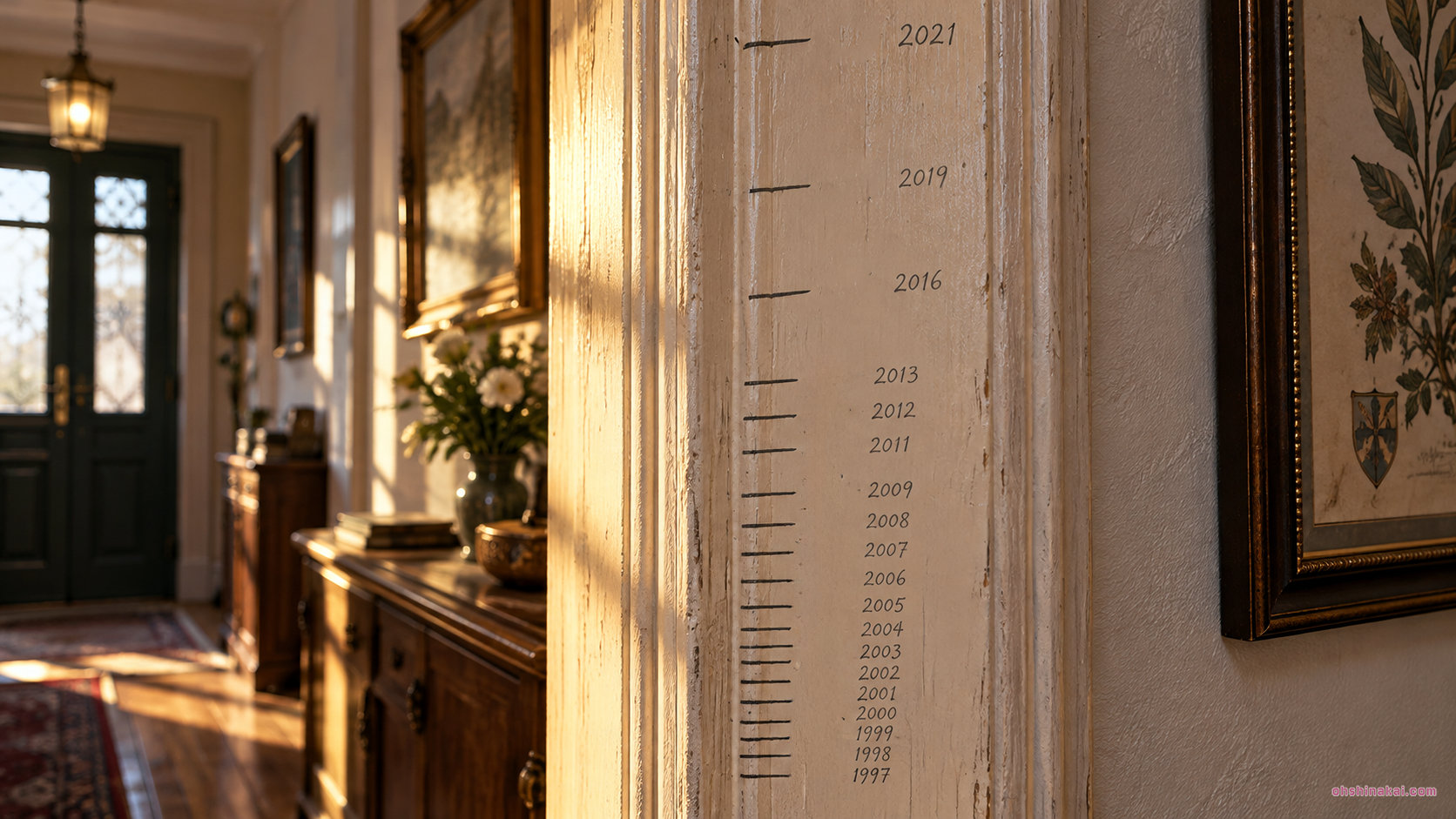
Childhood at a Human Pace
For the first fourteen years or so, an elvish child, a thelvarin, grows on roughly the same schedule as a human one. Walking, talking, reading and reasoning arrive at familiar ages. This is the part of elvish life that mixed communities find easiest. Elvish and human children can share a nursery, a playground and a primary classroom without anyone needing to adjust much.
The one consistent difference is altitude. Children raised in the mountains, dark elf children especially, come out sturdier than their lowland cousins: denser muscle, longer limbs, more stamina on a steep path. Aldermark paediatricians call it early robustness and treat it as normal for highland-born children. Lowland paediatric charts sometimes treat it as a growth anomaly.
The Growth Spurt
Somewhere around fourteen or fifteen, elvish growth leaves the human curve behind. The skeleton starts lengthening fast, and in a couple of years an elvish teenager can add more height than a human teenager gains across all of adolescence. The spurt tends to start a little earlier in girls than in boys, and boys usually add more muscle mass, but both end up much taller than their human classmates.
There was no everyday word for this in the lexicon, so this post coins one: vaxtsprungh, the growth-leap, built from vaxt (growth) and sprungh (leap). Elvish parents describe it the way human parents describe a toddler learning to walk, as a stage that takes over the whole household for a while.
The physical side is predictable. Growing teenagers sleep a great deal, eat enormous amounts, and complain about aching knees and shins. The limbs lengthen faster than the brain updates its map of where they are, so a year of tripping over doorsteps and misjudging handrails is normal. Elvish coaches know to ease off jumping and contact sports during the steepest months, because growth plates are vulnerable while they are working that hard.
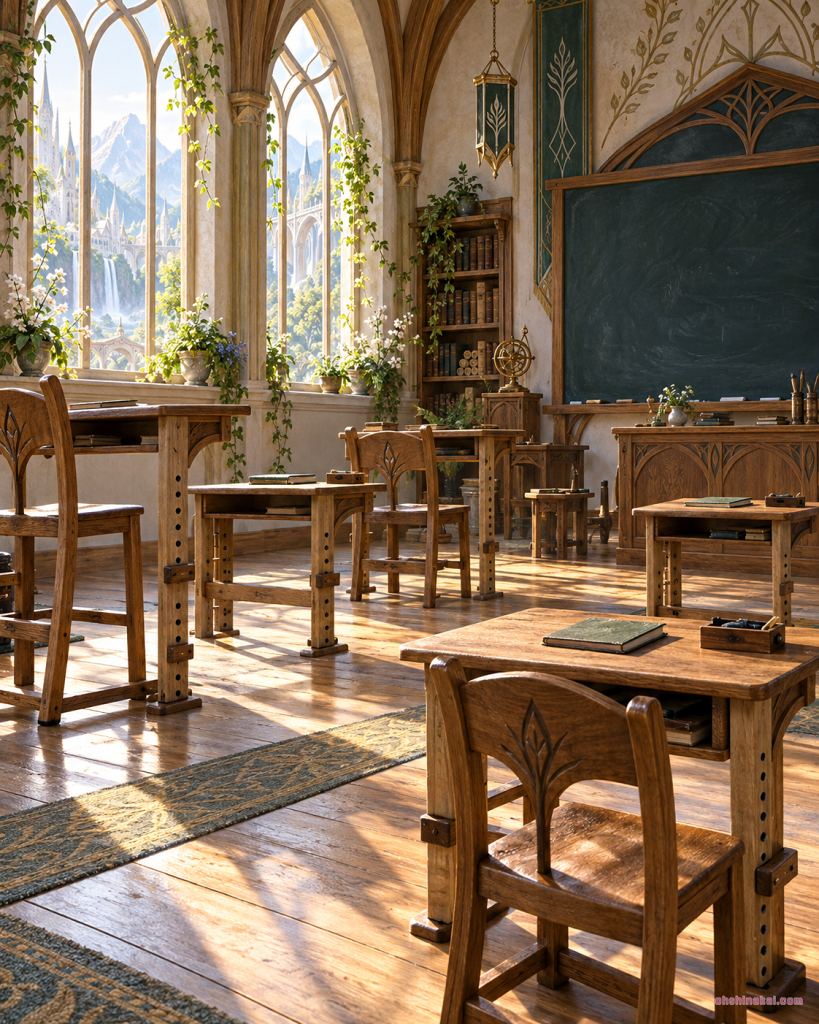
When the Growth Spurt Meets a Human School
In Aldermark and Shikarapura the thelvarinskola, the elfling school, is built around the growth-leap. Desks adjust. Uniform allowances assume replacement every few months. Physical education is planned in phases, with lighter loads for pupils in the steepest part of the curve.
Most elvish teenagers outside the OEA attend ordinary human schools, and those schools are planned around a human growth curve. The problems are mostly small and constant: furniture that stops fitting by spring, a uniform budget that runs out, sports teachers who see a tall fifteen-year-old and put her straight into the senior volleyball squad.
The more serious issue is medical. A human paediatrician looking at an elvish teenager on a standard growth chart sees a child far above the top percentile line and gaining height at a rate that, in a human, would suggest a pituitary disorder. Elvish families in Germany and the UK report referrals to endocrinologists, rounds of blood tests and, in a few documented cases, the beginning of hormone treatment to slow growth that was entirely normal for the child’s species. The OEA has published elvish growth charts since 1962. Uptake in human health systems is patchy, and the charts are still missing from most of the software that general practices actually use.
Grown Up, But Not Finished
By about eighteen to twenty, the elvish body reaches physical maturity and the spurt stops. Then something unusual happens: ageing nearly stops too. From here on, an elf ages roughly one “elvish year” for every five human ones. A forty-year-old elf looks, and biologically is, in her early twenties.
The brain does not keep pace with the body. Elvish neurological development keeps running long after the skeleton has finished, and the lexicon has a word for this stretch: langvaxt, extended adolescence, conventionally reckoned from fifteen to about thirty-five. During langvaxt, emotional responses run hot, moods move quickly, and long-term planning is weaker than it will be later. A twenty-four-year-old elf can look like a composed adult and still react to a setback the way a human seventeen-year-old might.
Elvish culture accepts this as part of the life cycle. Young adults in langvaxt are given real responsibility, but older relatives, guild mentors and the wider sipp are expected to keep an eye on them. Big irreversible commitments such as a sëlaethabhandh soul-oath, a lifelong guild contract or a large property transfer are informally discouraged before langvaxt ends. Nobody forbids them. People just ask, gently and more than once, whether it might be worth waiting a decade.
Thenethvaxt: The End of Growing
The formal marker of adulthood comes in the late twenties, traditionally around twenty-seven, which works out to eighteen in elvish reckoning. The ceremony is called thenethvaxt, and it marks the end of growing rather than the start of anything.
Practice varies. In Aldermark towns it is usually a clan gathering with a formal declaration before witnesses, a meal, and the giving of a working tool from an elder in the young adult’s chosen craft. Among dark elves in Daarikavan, some families keep an older custom of an endurance trial: a long solo walk across high ground, sometimes several days, followed by a return to the village and a meal laid out by the whole community. Freyjaist households add a blessing at the temple.
What the ceremonies share is timing. They come late enough that the person being recognised has already lived a decade as a physical adult, held a job, maybe lived away from home. Thenethvaxt does not grant independence. It acknowledges that the person now has the judgment to use the independence they already have.
Two Definitions of Adult
Human law treats eighteen as the line almost everywhere. That gap between the human legal adult and the elvish cultural one causes friction in several places.
Universities
Elvish students in human countries usually start at the same age as their human peers, then often stop, switch subjects or leave for a decade before coming back. Human admissions systems read this as instability. Elvish families read it as langvaxt behaving as expected.
Contracts and Money
An eighteen-year-old elf in Germany can sign a mortgage, take on consumer credit and enter a binding employment contract with no one from her sipp involved. Aldermark law allows the same things, but the social expectation of consultation is strong. Elvish advocacy groups in human countries report a steady pattern of young elves taking on long debts in langvaxt that their older selves then spend decades paying off.
Courts
Several European jurisdictions have now heard arguments over whether langvaxt should count as a mitigating factor for elvish defendants in their twenties, the way youth does for human defendants under eighteen. Courts have mostly declined to accept it, on the grounds that it would create a separate standard of responsibility for one species. Aldermark’s own courts have considered it as a matter of routine since the nineteenth century.
Insurance
Young-driver premiums usually drop sharply at twenty-five. Aldermark insurers drop them at thirty-five, and their accident data supports the decision. Human insurers have generally declined to apply a longer young-driver window to elves, which helps elvish drivers financially and probably understates the real risk.
Half-Elves, Again in Between
Half-elves follow the human schedule through childhood and grow into their late teens or early twenties. Their growth spurt is usually less steep than a full elf’s, and the slowdown in ageing arrives as it does in elves, once the body reaches maturity.
What nobody can yet say is how long a half-elf’s langvaxt lasts. Some half-elves describe themselves as feeling settled by their mid-twenties. Others report the restlessness and emotional intensity of elvish adolescence well into their thirties. There is too little systematic data to draw a curve, and half-elves who grow up in human countries often never hear the word langvaxt at all, so they have no frame for what they are going through. The half-elf post later in this series will come back to this.
A Slower Clock
Strip away the details and elvish growth comes down to two clocks running at different speeds. The body finishes on something close to a human timetable. The mind takes another fifteen years. Elvish culture is built around both clocks and gives young people room to finish growing up after they look grown.
Human institutions run on one clock, and they set it by the body. That works for humans because the two clocks are close enough together. For an elf it means being handed every adult responsibility at eighteen and being expected to have the judgment of an elder who has already had time to grow into it.
Glossary of Thungalëthaur Terms
- Thelvarin Elfling; an elvish child before maturity
- Thelvarinskola Elfling school; Freyjaist early education
- Vaxtsprungh Growth-leap; the rapid adolescent growth spurt
- Langvaxt Extended adolescence; conventionally age 15 to about 35
- Thenethvaxt Coming-of-age ceremony marking the end of langvaxt
- Sipp Clan; the extended kinship unit
- Sëlaethabhandh Soul-oath bond; the elvish marriage equivalent
- Aeldhlif The long life; elvish lifespan of about 800 years
- Halvlif Half-life; half-elf lifespan of about 200 years
Join the conversation