
Imaia: The Emerald Gateway


"You can hire an Imaian guide for any price you name. Whether they guide you to your destination or into a carnivorous orchid depends on whether they liked the way you asked."
– A Zakaidian mercenary captain, advising his company before entering the Imaian jungle
[IN-WORLD LORE]
The Kingdom That Wears the Jungle Like Armor
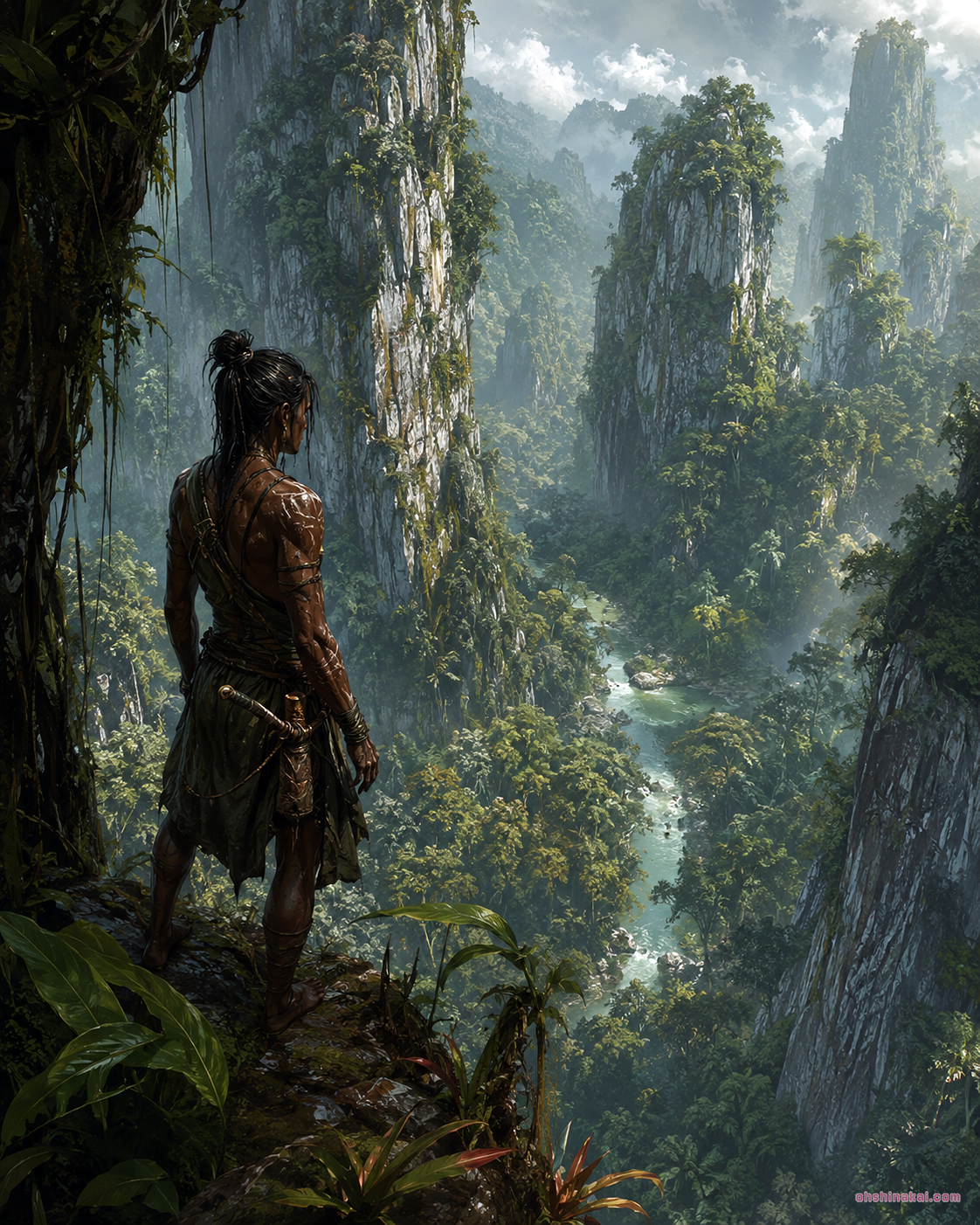
The karsts appear first: massive grey limestone towers rising out of the canopy like the bones of buried giants, their surfaces slick with moss and draped with hanging vines. Between them, the rainforest fills every gap with a density that turns midday into twilight and silence into a chorus of insects, birds, and the distant crash of waterfalls tumbling off cliff faces that no cartographer has ever accurately mapped.
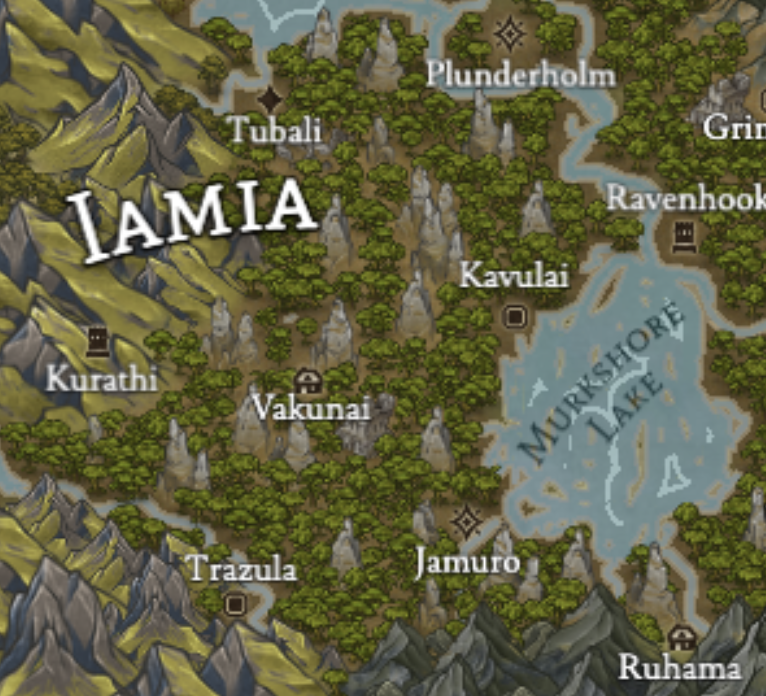
Imaia is a small kingdom that punches far above its weight. Enclosed by the Imaian mountain chains that stretch westward through Azaniya, Nyambra, Ondara, and Zakaid, its territory is a labyrinth of dense tropical rainforest, river deltas, and towering grey karst formations that make conventional military invasion somewhere between impractical and suicidal. To the east, the jungle opens onto the shores of Khal'uvesi (Murkshore Lake), giving Imaia access to the lake trade that also connects Azaniya, Zuleria, and Duskwater. To the south, the mountains descend into Ondara's highland forge-country. To the southwest, the terrain transitions into Nyambra's savanna.
The Imaians have turned this geography into their defining advantage. The jungle is their fortress, their pharmacy, their trading floor, and their weapon. Other nations have walls. Imaia has the canopy.
Trackers, Herbalists, and Headhunters
Imaian culture is built on three pillars: tracking, herbalism, and the headhunting tradition.
Tracking is Imaia's most famous export. Imaian scouts can read the faintest signs of passage through dense underbrush, moving through the jungle with a silence that borders on supernatural. Their track-and-trail knowledge is legendary across Mystaria, and hired Imaian guides have turned the tide of countless expeditions, battles, and caravans where navigational expertise meant survival. Merchant companies, foreign armies, and adventuring parties all pay premium rates for Imaian pathfinders, and the guides' reputation for competence (combined with a reputation for abandoning clients they don't respect) ensures that employers treat them well.
Herbalism is the kingdom's most lucrative trade. Imaia's rainforests contain some of Mystaria's rarest plants, herbs, and fungi, from potent healing poultices to exotic poisons that work in seconds. Imaian herbalists are master gatherers and mixers, and the kingdom jealously guards access to these resources. Certain rare substances leave Imaian hands only at prices that make Bravonian wine merchants blush. The complementary relationship with Tandarak's Castkeepers (bone-reading diagnosis paired with Imaian herbal treatment) has made the Imaia-Tandarak medical corridor one of Argania's most important trade routes.
Headhunting is the tradition that outsiders find hardest to accept. The taking and preservation of enemy heads is a grim but honored practice believed to bind dangerous spirits and prevent them from seeking vengeance. Skull shrines hidden deep in the jungle are places of reverence and cultural significance. The tradition is declining in some coastal communities but remains central to the identity of the interior clans.
The Karst Kingdoms
Imaia's grey karst formations are its most distinctive geographic feature and one of the most visually striking landscapes in Mystaria. These limestone towers, some reaching hundreds of feet, create a vertical world within the horizontal jungle. Caves, overhangs, and natural shelters honeycomb the karst, and several Imaian settlements are built into or around these formations.
The karsts also serve as natural fortifications. An invading army attempting to push through karst country faces a landscape of narrow defiles, blind corners, cliff faces that can't be scaled in armor, and overhead positions where a single Imaian archer with poison-tipped arrows can hold off a column indefinitely. Combined with the jungle itself (humidity that rots leather, insects that carry disease, trails that loop back on themselves), the karst terrain makes Imaia functionally unconquerable by conventional military force.
Jamuro, Trazula, and the Emerald Markets
Jamuro, the capital, sits on the edge of a sprawling river delta where the jungle meets navigable waterways. Wooden stilt houses and covered bridges rise above the wetlands, while dockside markets bustle with merchants haggling over exotic goods. The palace, a pagoda-like structure of dark jungle wood and ivory, is a seat of both ceremony and trade negotiation. Jamuro serves as the kingdom's political, cultural, and economic heart, with jungle trails and waterways radiating outward into the wilderness.
Trazula, perched in the foothills of the Imaian mountain chains, is a defensive fortress and westward trade hub. Its population relies on trade, foraging, and careful extraction of mountain minerals. Trazula's warriors are among Imaia's toughest, accustomed to the altitude and the cold mountain passes that connect Imaian territory to the Ondaran highlands.
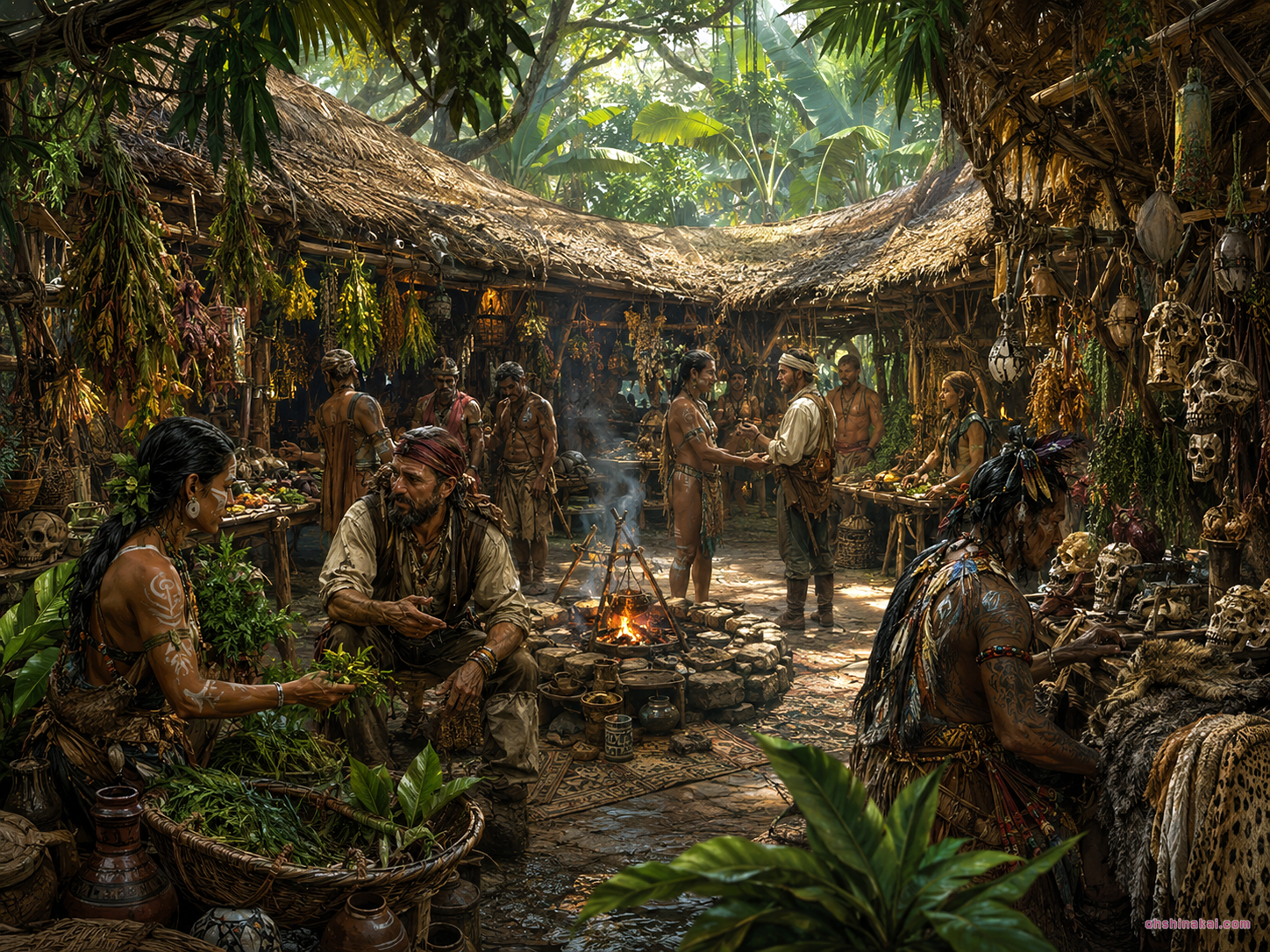
Scattered through Imaia's rainforest villages are the Emerald Markets: small but essential trading posts where merchants from distant lands barter with Imaian herbalists, hunters, and artisans for the jungle's rarest offerings. These hubs feature communal hearths, ritual shrines, and the constant hum of deals conducted in half a dozen languages.
The Border Settlements

Imaia's position between multiple powers has produced a ring of settlements whose identities are shaped by whichever neighbor they face.
Kavulai, on the northwestern shores of Khal'uvesi, is Imaia's primary lake port and its window onto the wider world. Imaian herbalists and Duskwater merchants exchange jungle goods for weapons, naval supplies, and manufactured items here. The relationship is wary but profitable: Duskwater pirates prize Imaian poisons and tracking expertise, and Imaian merchants prize Duskwater steel. A permanent Firebinder Guild agent maintains a discreet presence in the port, and the harbor's neutral-ground teahouses are where deals too sensitive for either capital get negotiated over strong drink and careful silences.
Ruhama, a fishing village downstream from Khal'uvesi on the western approaches to Zulerian territory, sits at a point where Imaian and Zulerian waters blur. Ruhama's fisherfolk share the lake with Zulerian ore barges, and the village has become an unofficial meeting point for parties who need to negotiate without either capital watching. The elders maintain a studied neutrality, selling fish to both sides and information to neither.
Tubali, in Imaia's northwestern jungle, is a truce-ground trading post on the Zulerian frontier where Imaian and Zulerian traders meet under agreed terms to exchange goods. Imaian herbs and rare plants flow out; Zulerian copper tools and raw ore flow in. The truce at Tubali is one of the few points of peaceful contact between the two kingdoms, and both sides maintain it carefully because the alternative is fighting through karst country where the Imaians hold every advantage.
Kurathi, a highland village in the southwestern mountains not far from Tumai (the Nyambran capital), has developed into a unique crossroads between Imaian herbalism and Azaniyan spirit-craft. Imaian herbalists and Azaniyan shamans meet here to exchange knowledge, and Kurathi's healers have developed a hybrid practice that draws on both traditions. Its proximity to Nyambra means griffon riders occasionally land at the village's small plateau clearing, and Nyambran merchants make the mountain crossing for Imaian medicinal goods that are cheaper here than at the coastal ports.
The Deep Interior
Vakunai lies deep in the karst country, built into and around a cluster of massive grey limestone formations where the jungle is densest and the old ways hold strongest. Vakunai's people are among the most traditional Imaians: headhunters, skull-shrine guardians, and keepers of the oldest oral histories. The karst caves serve as both homes and defensible positions, and outsiders who reach Vakunai without an Imaian guide have either been invited or are about to have a very bad day. The skull shrines here are considered the holiest in Imaia, and clan leaders from across the kingdom make pilgrimages to consult the shrine-keepers on matters of spiritual significance.
Jungle Spirits and the Warrior's Blade
Imaian spiritual life is animistic. The spirits of animals, rivers, and plants are believed to guide and protect the people, provided proper offerings and ceremonies are performed. Rituals honoring the jungle spirits and ancestors are central to daily life, accompanied by drumming, chanting, and intricate dances performed in vibrant costumes.
Imaian warriors carry intricately forged machete-like swords called larukas, designed for both combat and survival in the jungle. A laruka is a personal weapon, forged by the warrior's own clan and blessed at a jungle shrine. Losing one in battle carries spiritual weight, and recovering a fallen warrior's laruka is considered as important as recovering the warrior themselves.
The military is built for guerrilla warfare. Imaian warriors emerge from the rainforest in swift, precise strikes before vanishing into the canopy. Poison-tipped arrows, ambushes, and environmental traps are standard tactics. The kingdom's scouts and guides are its most valuable military export, and their expertise has shaped the outcome of conflicts they had no political stake in, simply because whoever hired the better Imaian pathfinder won.
[BEHIND THE SCENES]