
Cambions: The Gardeners of the Spirit


"We did not bring new gods. We showed you the gods that were already here."
– From the teachings of Ilyrianah, recorded in the Caldorian Mangrove Scrolls
[IN-WORLD LORE]
The Children of the Balance
Before the gods had names and before mortals built empires, there were two primordial forces: Light, the force of creation, order, and existence, and the Void, the force of unmaking, silence, and potential. Their eternal struggle was so immense it threatened to tear the young cosmos apart.
In a moment of perfect, impossible equilibrium, where neither could gain purchase over the other, something was born in the space between them. The cambions' oldest texts call this the First Breath: the instant the universe exhaled and produced a people who belonged to neither side. They were the children of the threshold, shaped by the pressure of two forces that could destroy everything and held in balance by neither winning.
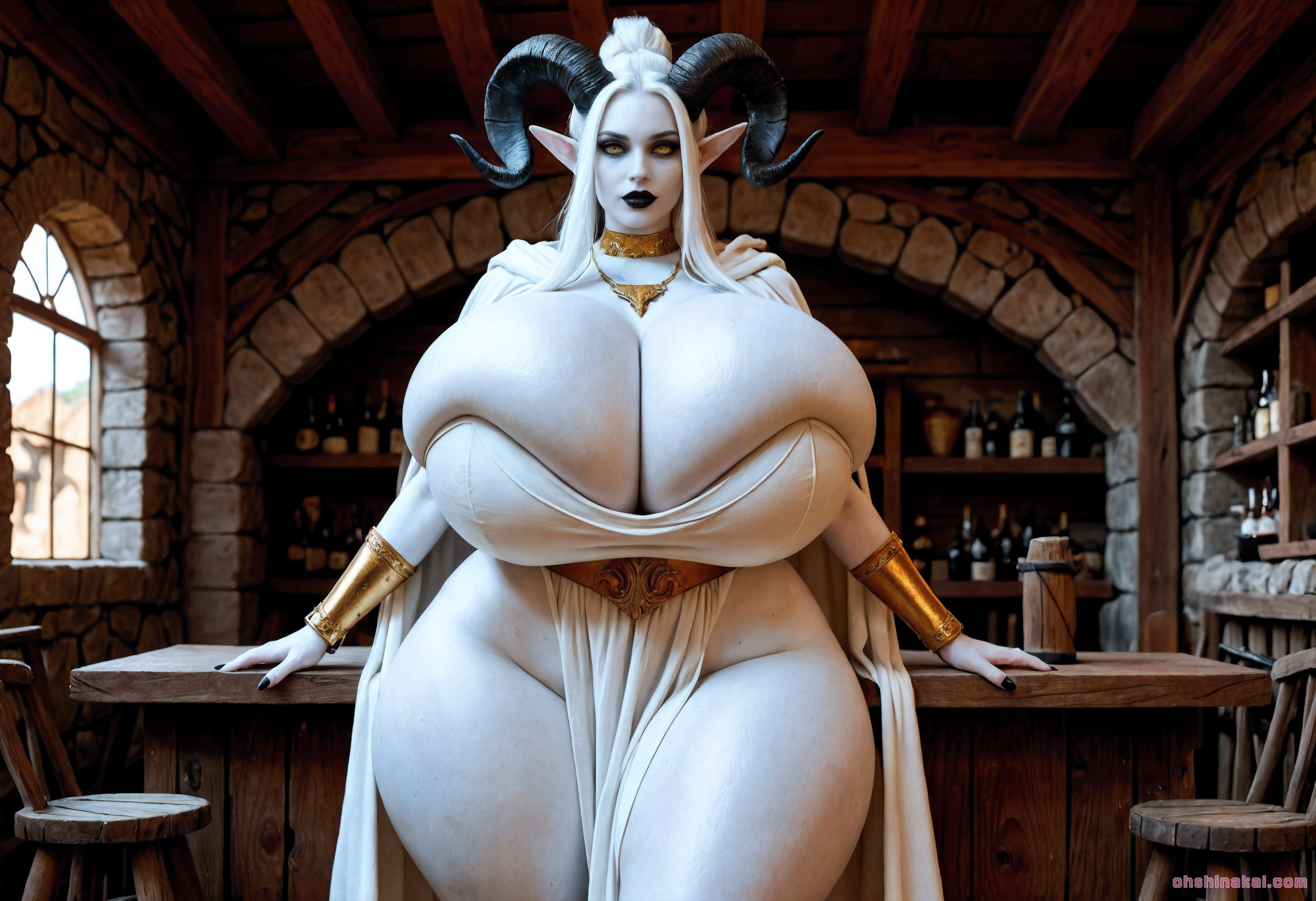
The cambions carry this origin in their bodies. Their horns, curved like a goat's, are said to symbolise the duality of their birth: one reaching for the heavens of creation, the other for the silent depths of the void. Their presence in a room subtly shifts the emotional temperature toward equilibrium. They did not come to Mystaria to conquer. They came because the world was out of balance and they could not stay away.
The cambions are among the most influential and least feared peoples of Mystaria, a combination that is itself remarkable in a world where power usually demands blood.
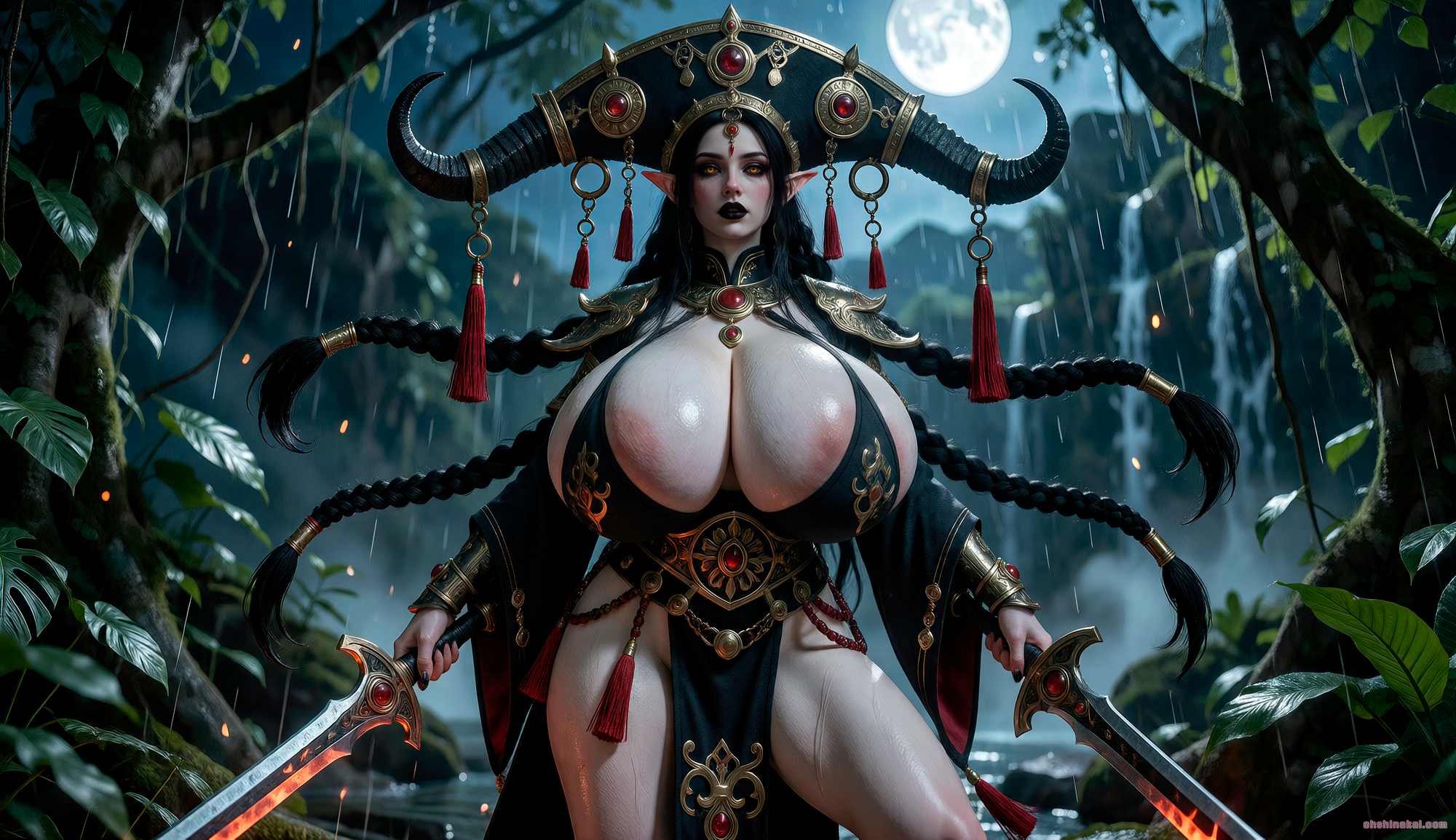
They are striking in appearance. Their skin ranges through shades of white, red, deep brown, and black, and their features hold an otherworldly beauty that catches the eye before the mind can decide whether to be fascinated or unsettled. The males often display either bald heads or long, straight black hair carefully pulled back, conveying an aura of austerity and concentration. The females wear their long black, blonde or white hair either cascading freely or styled into braided ponytails, enhancing an ethereal quality that hints at supernatural origins. Their distinctively curved goat-like horns rise from the crown or upper temples of their skulls, and a sinuous tail extends from the base of their spine. These features distinguish them at a glance, but it is their cultural legacy that leaves the deepest mark.
Cambions do not originate from Mystaria. They arrived over a thousand years ago through shimmering portals called the Star-Roads, in scattered bands, from realms of cosmic balance and harsh faerie politics. Their own records describe the journey as a peaceful exodus: seeking a more tranquil world in which to serve. They found Mystaria in pain, its mortal races adrift, worshipping vengeful spirits and living in fear. They could have conquered. They chose to teach.
What they taught became the most widespread religion in Mystaria: the Nine Fortunes.
The Nine Fortunes
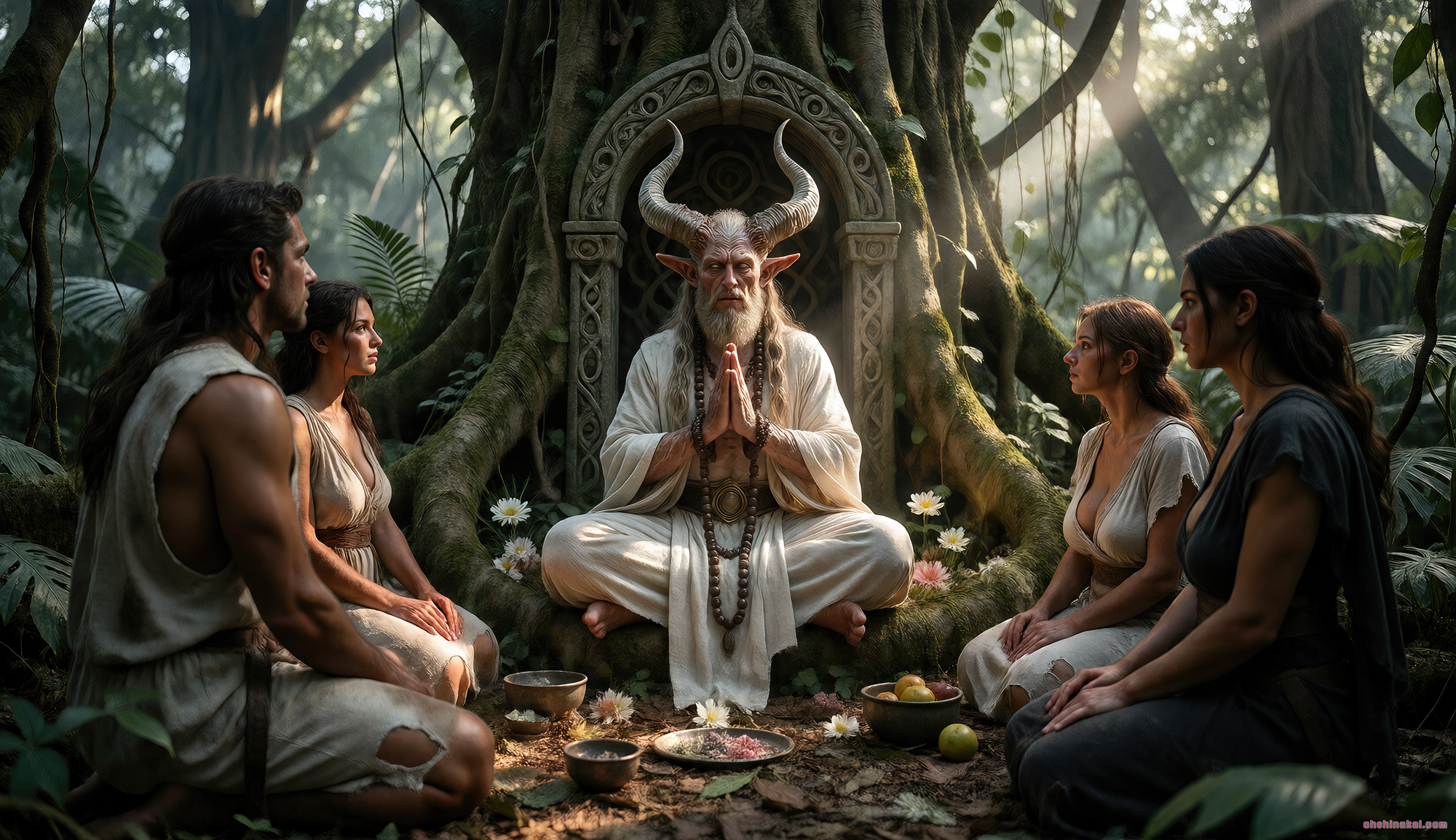
The Nine Fortunes is a complex, polytheistic faith centred on an all-female pantheon representing the fundamental virtues and forces that govern existence. The cambions did not invent these goddesses. They taught mortals how to find the divine principles already present in the world around them and gave those principles names.
Halana̅nyan, the Sun Goddess of Wisdom and Knowledge. Za̅hrani, the Victorious Goddess of Duty and Honour. Ma̅rziah, the Merciful Goddess of Healing and Herbs. Ghaidahah, the Dragon Goddess of Balance. Luwana̅h, the Humble Goddess of Peace. Aya̅nah, the Mischievous Goddess. Nailaina̅, the Goddess of Abundance and Hearth. Nellithi, the Lion Goddess of Glory, Strength, and Conquest. Jahara̅h-Nijamah, the Two-Faced Goddess of Death and Rebirth.
Above the Nine stands Rayya-Sa̅hamarah, the Primordial Mother: the cosmic source from which all the Fortunes flow. Rayya-Sa̅hamarah is not worshipped by mortals. She is the axis of the divine order, acknowledged but not petitioned, her presence felt in the spaces between prayers rather than in the prayers themselves. Only cambions maintain a direct devotional relationship with the Primordial Mother, and even among cambions, that relationship is one of quiet contemplation rather than active worship.
The faith's core tenets are simple and radical: reverence for all living things, the inviolability of hospitality, the possibility of redemption for all, the cyclical nature of existence, and the duty to protect the weak and resolve conflict through dialogue. These principles have proven extraordinarily adaptable. In every nation where the Nine Fortunes has taken root, local spirits, customs, and traditions have been absorbed into its framework rather than displaced. The Caldorian tribes blended their rainforest animism with the Fortunes, interpreting their existing spirits as manifestations of the Nine. The Phazani adopted the faith around 482-462 BFE. Verdania, Lumindale, Hallgilda, Falentia, Lavinia, Bravonia, and Sadoros followed.
The faith's spread was achieved without a single war of conversion. This is the cambions' most remarkable accomplishment, and the one they are least interested in receiving credit for.
The Parable of the Nine Gifts
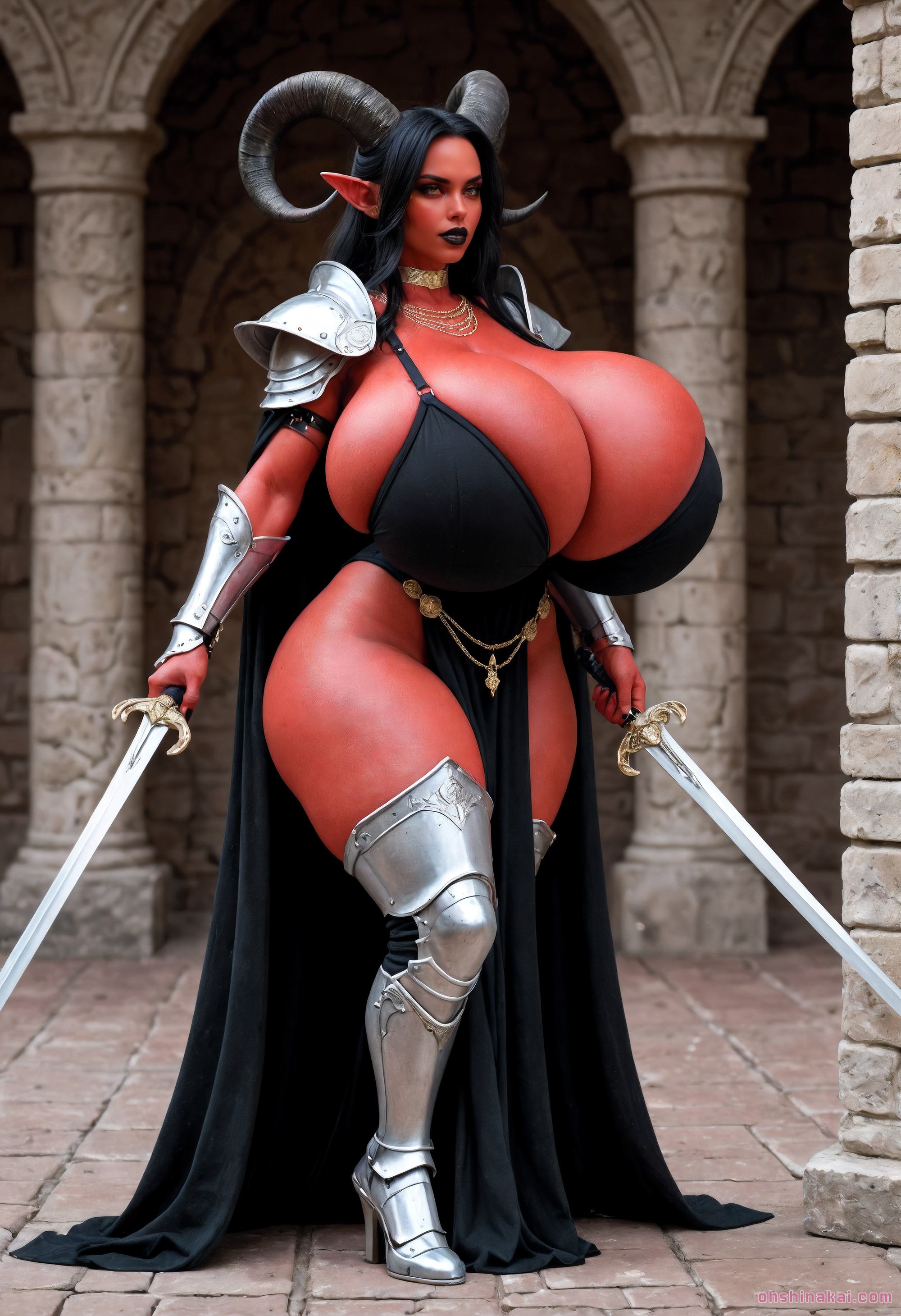
The most famous teaching story in cambion tradition tells of Ilyrianah the serene and Kyrus the pragmatic, two of the first cambion arrivals in Mystaria. They found a land where nine great spirits were at war: the Sun Spirit burned the fields in pride, the Water Spirit drowned them in sorrow, the Forest Spirit choked all paths with thorns.
Kyrus argued that the spirits must be dominated and forced into order. He raised his power to bind them, but this only made them fight harder, threatening to shatter the land.
Ilyrianah walked among the mortals instead. She taught them to honour the Sun as a source of Wisdom. She showed them that the raging Water was a symbol of Adaptability. She helped them understand the Forest as a font of Renewal.
One by one, she taught the people to see the virtues within the spirits, transforming them from warring elements into the Nine Fortunes: a pantheon of guiding principles. Seeing the world healed not by force but by understanding, Kyrus laid down his power and became the first guardian of Ilyrianah's temples.
The parable is the foundation of everything the cambions believe about power: that the universe already contains its own solutions, and the role of the wise is to help others find the order that was always there.
A People of Soft Words and Hard Convictions
Cambions are renowned throughout Mystaria for their diplomatic abilities and their almost preternatural calm. They are naturally soft-spoken, preferring measured discourse to raised voices, and their skill with words is so refined that mortals sometimes describe it as almost magical. They are adept negotiators and respected peacemakers, frequently leading conflicting parties away from disaster through persuasive speech and patient listening.
Their gentleness coexists with real power. Cambions resort to violence only as a last option, but they are capable of wielding potent magic when pressed, and their infernal lineage grants them reserves of power that most mortal mages cannot match. The difference is that a cambion who uses force considers it a failure. Their priests act as teachers and mediators. Their settlements became sanctuaries for the weary, the sick, and the persecuted.
Their diplomatic talents are grounded in biology as much as culture. Cambions were born from the balance between Light and Void, and that origin left a mark on their presence. Their innate harmony subtly influences the emotional atmosphere around them. A room with a cambion in it is, measurably if inexplicably, calmer. Negotiations conducted with a cambion mediator resolve more often than those conducted without one. Whether this is magic, charisma, or something more fundamental is a question that cambion theologians answer with a smile and a refusal to commit.