
The Nine Fortunes: A Complete Guide to the Sa̅hamarahist Pantheon


"Mortals may pray to all the gods except one. Only the cambions may pray to Rayya-Sa̅hamarah." - Sa̅hamarahist teaching, origin unknown
The Goddesses Who Hold the World Together
Sa̅hamarahism is the most widespread religion in Mystaria, and its heart is the Nine Fortunes: nine goddesses whose domains span war and mercy, industry and wildness, conquest and peace. They are not distant abstractions. They run markets, staff hospitals, arm soldiers, feed villages, and judge the dead. Their clergy walk the same roads as the people who pray to them, and their temples are as likely to resemble guild halls or soup kitchens as they are cathedrals.
Above the Nine stands a tenth figure who is not one of them: Rayya-Sa̅hamarah, the Sleeping Mother who created the gods and then chose to sleep so that reality could continue. She is the most important deity in Sa̅hamarahism and the one nobody is allowed to worship. That paradox defines the religion.
Rayya-Sa̅hamarah - The Sleeping Mother
The Sleeping Mother, Origin and Ending of All
Rayya-Sa̅hamarah is not worshipped in the way other gods are. She is the source of divinity itself, the primordial earth-mother who created the other gods and then willingly surrendered herself to sleep so that the worlds might endure. Sa̅hamarahist doctrine teaches that if Rayya awakens, existence will not merely end. It will be recast, with gods and mortals alike judged unworthy or reborn in new forms. Because of this, Rayya is feared with reverence rather than adored with prayer.
Only cambions may address her, and even they do so obliquely. Her sanctuaries are sealed sanctums rather than temples, often built into bedrock, mountains, or deep caverns where the world feels heavy and old. These places are silent, undecorated, and lightless, for illumination is believed to disturb the rhythm of her slumber. The most sacred of these sites lies at Mount Rayya in Caldoria, believed to be the physical place where her divine body rests, kept in eternal sleep by the endless song of Kha̅laina-Madani.
Rayya's priesthood consists of cambion Dream-Wardens whose role is to maintain cosmic stillness rather than to invoke miracles. They wear undyed grey garments, avoid ornamentation, and live ascetically. They accept no coin, believing wealth to be meaningless before a goddess who predates value itself. Their sustenance comes from shared cambion labour and tithes quietly delivered by other Fortune cults, for even the gods rely on Rayya's sleep.
Rayya is not counted among the Nine Fortunes. She is the ground from which the Nine emerged: older, greater, and apart. Her function is paradoxical: she does nothing, and thus everything continues. Her faith teaches restraint, humility before existence, and the terror of renewal. She is the god the gods fear.
Halana̅nyan - The Sun Goddess
The Sun Goddess, Light of Wisdom and Industry
Halana̅nyan is the most visibly present of the Nine Fortunes in daily life. She is the sun that rises over markets, workshops, and halls of learning, embodying the belief that wisdom is forged through effort. She rewards clarity, diligence, and innovation rather than mystery or martial glory.
Her temples are architectural marvels designed to capture sunlight at specific hours. Many are open-roofed or built with mirrored stone, allowing the sun to illuminate altars at dawn or noon. In major cities, her temples often double as guild halls or centres of arbitration, where contracts are signed beneath her gaze. Merchants, scholars, engineers, and artisans pray to her for insight and steady hands rather than luck.
Her priests, called the Illuminants (sometimes Dawn-Scribes in older traditions), dress in practical garments of white, cream, or pale gold trimmed with copper or bronze thread. They are educators as much as clergy, trained in mathematics, law, rhetoric, and at least one practical craft. An Illuminant who cannot explain how something works is considered unfit to speak in Halana̅nyan's name. Rank within the priesthood is determined by demonstrated expertise and service rather than seniority.
Halana̅nyan's temples are wealthy, supported by merchant tithes, guild patronage, arbitration fees, and the certification of standards and measures. Yet her doctrine condemns hoarding. Temple wealth must circulate into education, infrastructure, innovation, and public works. A temple that grows rich while its surrounding district stagnates is said to have "fallen into shadow." Her primary divine role is to civilise labour, ensuring that progress remains honest, structured, and beneficial.
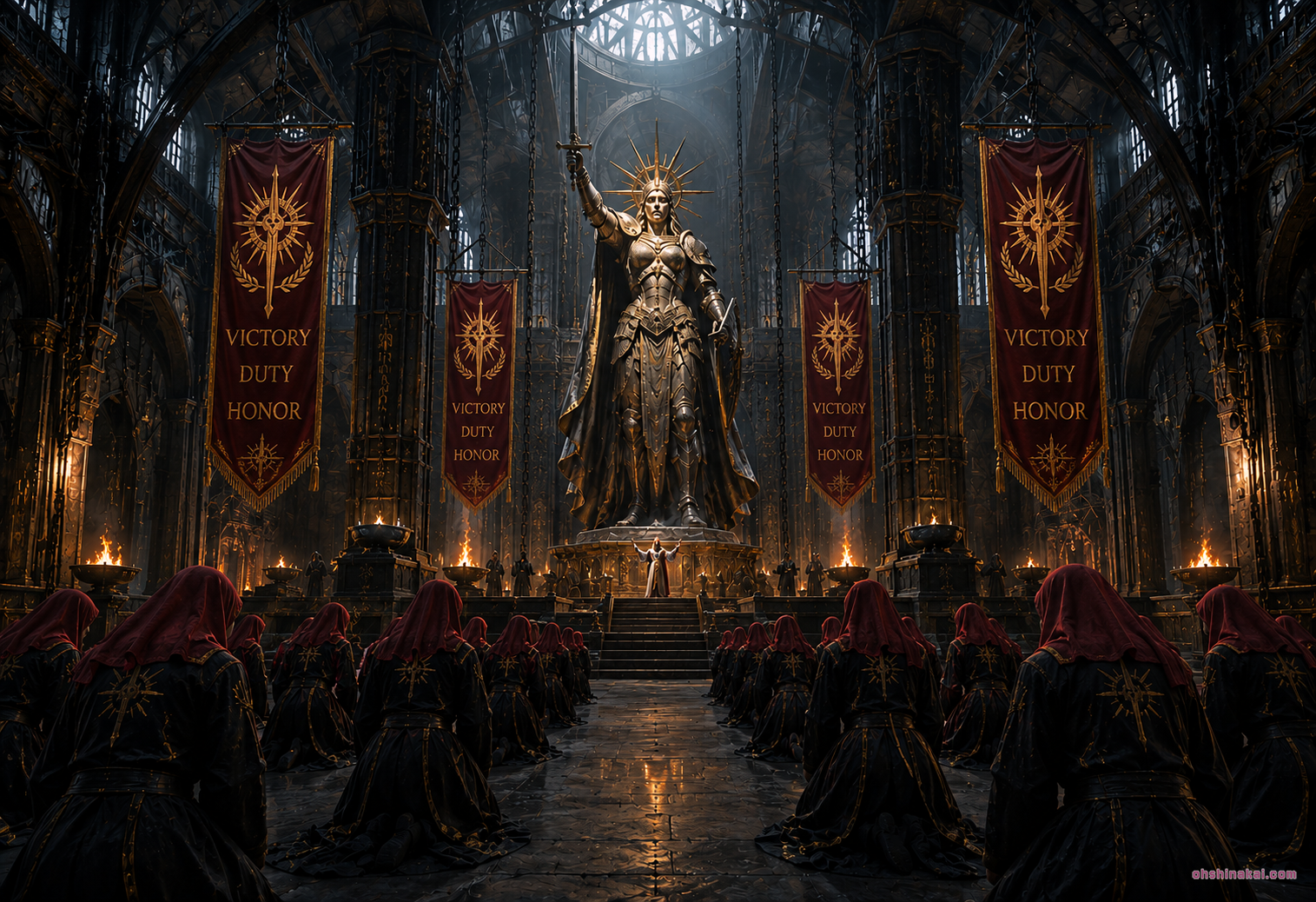
Za̅hrani - The Victorious Goddess
The Victorious Goddess, Lady of Duty and Truth
Za̅hrani stands at the crossroads of war and morality. She is the embodiment of just victory, demanding honour, discipline, and truth from those who fight in her name. Her faith is strongest among soldiers, knights, guardians, and judges who wish to legitimise authority through moral clarity rather than brute force.
Her temples resemble fortresses or martial cloisters, often positioned near city gates, border roads, or judicial centres. Worship takes the form of oath-swearing, ritual drills, and remembrance of the fallen. Oaths sworn in her name are considered binding socially and spiritually. To break one is to invite divine judgement, often believed to manifest as failure at the moment trust is most needed.
Her priesthood, the Sisters of Endurance, are typically veterans who have proven themselves in both courage and restraint. They wear armour-robes in red, white, and iron-grey, symbolising blood, truth, and duty. They carry ceremonial blades within temple grounds, but these are never drawn except during rites of judgement. Many bear ritual scars as marks of oaths kept under duress rather than battles won. Rank is determined by proven integrity.
Za̅hrani's cult is funded through military stipends, state patronage, and the offering of arms retired from service. Her divine role is to guard mortals, ensuring that war remains a tool of defence, justice, or necessary conquest rather than cruelty for its own sake. She stands in quiet opposition to Nellithi, whose cult sanctifies dominance, and her priests often clash with rulers who prefer obedience over justice.
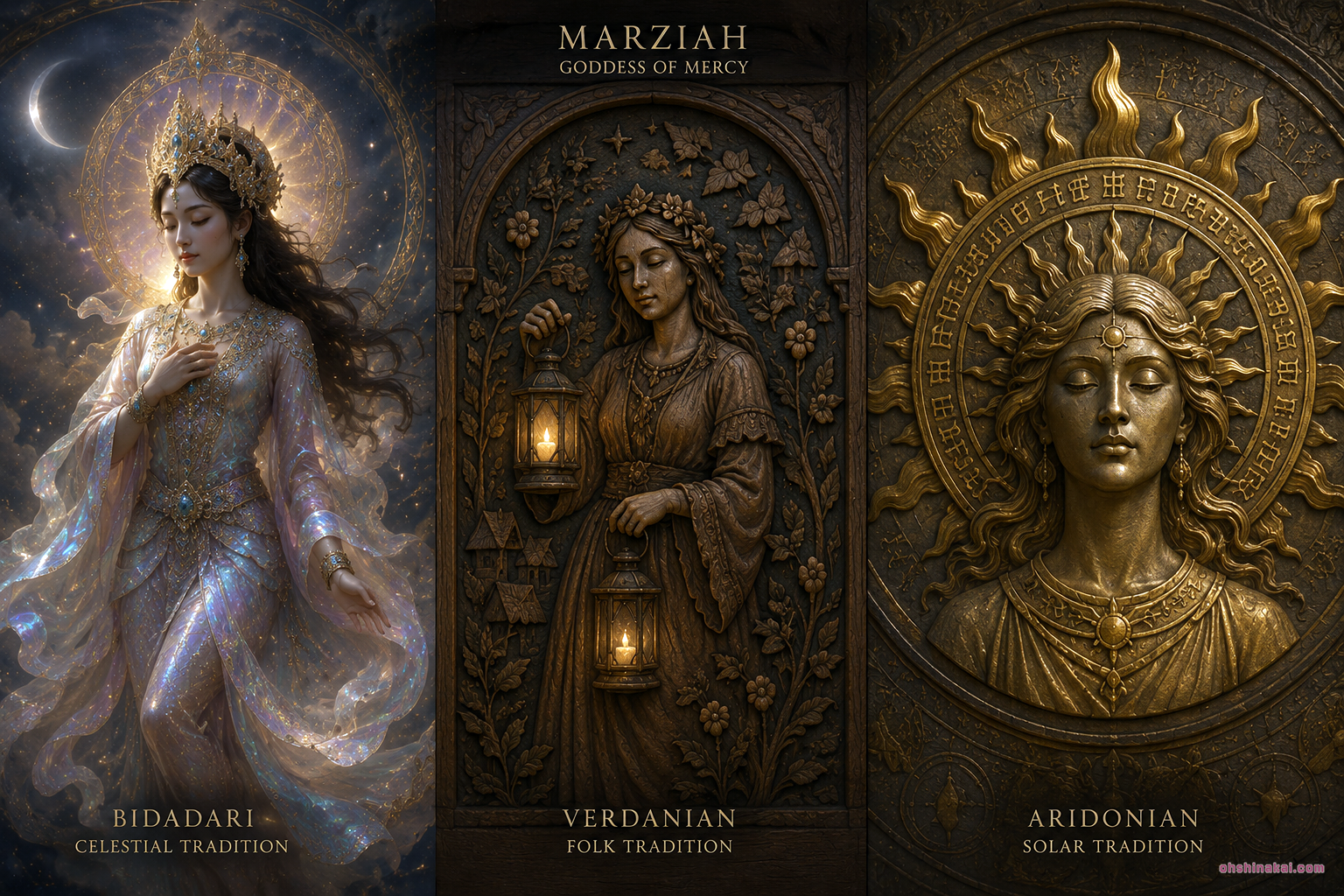
Ma̅rziah - The Merciful Goddess
The Merciful Goddess, Healer of Body and Soul
Ma̅rziah represents compassion that costs something. She governs healing, forgiveness, and penance as acts of service rather than abstract virtues. Her presence is strongest in places of suffering: hospitals, refugee sanctuaries, plague districts, battlefield edges, and pilgrimage roads. Ma̅rziah is the patron goddess of the bidadari, who reside in the Kingdom of Palangi Sari.
Her temples are built with deliberate openness. Doors remain unlocked, windows unbarred, and thresholds wide enough for the wounded to enter without hindrance. Many of her sanctuaries resemble hospices or waystations rather than traditional temples. The presence of a Ma̅rzian sanctuary signals that no one is beyond care, even those society has condemned.
Her clergy, known as the Hands of Ma̅rziah, wear simple robes in pale blues, greens, or white, often stained from their work. Weapons are forbidden within her sanctuaries. Many Hands are former criminals, soldiers, or survivors who have chosen Ma̅rziah out of necessity rather than purity. The cult actively welcomes those burdened by guilt, believing that those who understand pain are best suited to heal it.
Confession in Ma̅rziah's faith is a process of acknowledgement, restitution, and change rather than a transaction that erases wrongdoing. Forgiveness is never forced. Victims are not compelled to absolve those who harmed them. Ma̅rziah's cult survives almost entirely on voluntary support. Her divine role is to temper justice with humanity, ensuring that societies do not destroy themselves through vengeance or despair.
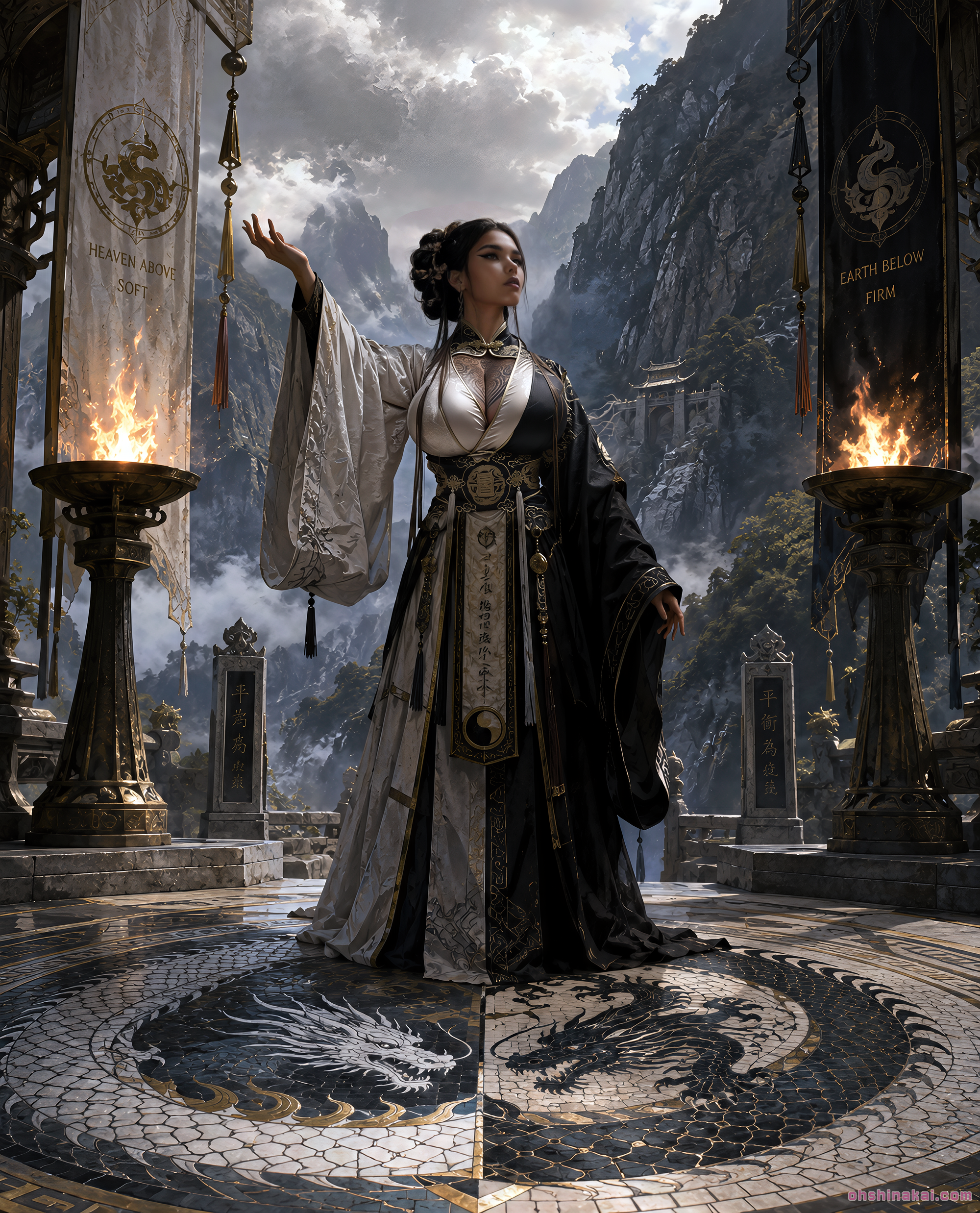
Ghaidahah - The Dragon Goddess
The Dragon Goddess, Warden of the Celestial Measure
Ghaidahah is the goddess who rules because nothing else can be allowed to dominate. She governs the fragile equilibrium between extremes: order and chaos, power and restraint, creation and destruction. Where other gods embody impulses, Ghaidahah exists to prevent any single impulse from devouring the whole.
Her temples are built at thresholds: mountain passes, ley line intersections, borders between biomes, and cities where cultures collide. Architecture emphasises symmetry without ornamentation. Light and shadow are deliberately equalised. Flames burn in paired braziers. Water flows in channels designed to meet and part again.
Her priesthood consists of Balance Guardians: observers, arbiters, and correctors trained to recognise when forces tip too far. Their vestments are scale-patterned garments split between light and dark hues, with dragon motifs paired with geometric measures. Balance Wardens are feared because they withdraw support rather than wield armies. Trade routes fail. Ley lines destabilise. Ghaidahah rarely strikes directly. She removes counterweights and allows collapse to correct itself.
Among draconians and saurians, Ghaidahah is revered as a literal mother. Magicians often attribute the Draconic Thread as originating from her. Her cult is funded by arcane academies, imperial treasuries, and magical licensing. Her divine role is to impose order upon power, ensuring that dominance remains answerable to balance.
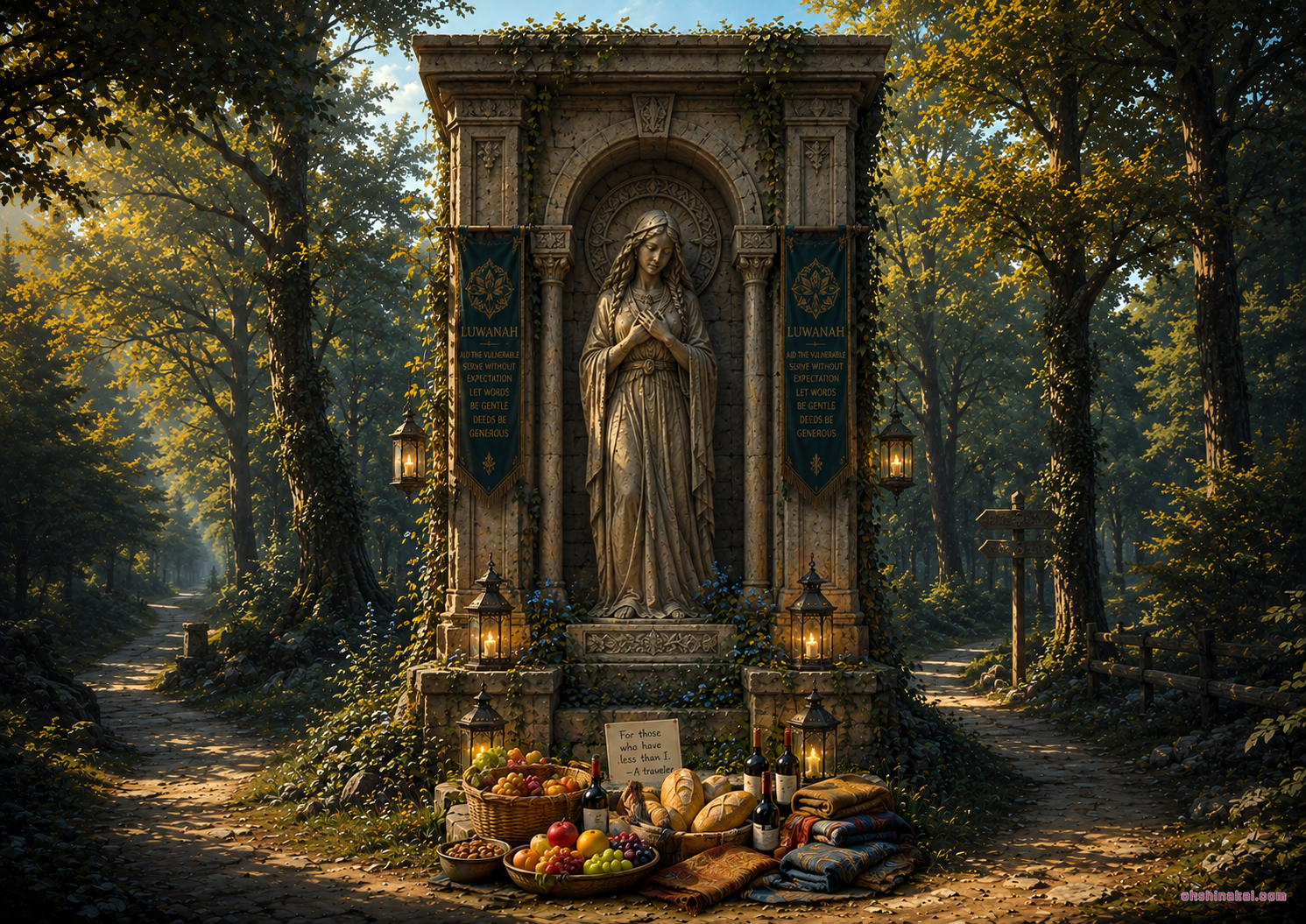
Luwana̅h - The Humble Goddess
The Humble Goddess, Bringer of Peace
Luwana̅h embodies restraint, humility, and charity. Her faith teaches that peace is a discipline requiring constant effort rather than a natural state. She is the goddess least spoken of in triumph and most present in aftermaths.
Her shrines are deliberately unimpressive: roadside chapels, garden alcoves, communal kitchens, mediation halls, or open courtyards with a single bench and bowl. There is rarely an altar in the traditional sense. A shared table, a water basin, or a communal fire marks the sacred space instead. In many places, her shrines lack doors entirely, symbolising that peace cannot be locked away.
Her servants, commonly called Peace-Keepers, wear plain undyed cloth and avoid titles or insignia. They are mediators, caretakers, hospice attendants, and keepers of communal resources. They accept no mandatory payment. Their survival depends on voluntary generosity, shared labour, and communal trust. This dependency is theology rather than flaw: to serve Luwana̅h is to live within the same vulnerability one seeks to ease in others.
Luwana̅h's divine role is to hold society together, preventing cycles of revenge and inequality from tearing communities apart. Communities shaped by her values are difficult to radicalise, resistant to demagogues, and slow to fracture. They do not rise quickly, but they endure.
Aya̅nah - The Mischievous Goddess
The Mischievous Goddess of Fortune, Trickery, and the Thousand Ancestral Gods
Aya̅nah is the unpredictable smile of fate. She governs luck, chance, prosperity, and ancestral fortune, delighting in cleverness and adaptability. She is also the goddess of the Thousand Ancestral Gods, embodying the idea that fortune is inherited through stories, habits, and forgotten bargains as much as through blood.
Her shrines appear where paths cross and outcomes remain undecided: markets, docks, crossroads, gambling dens, caravan camps, theatres, and festival grounds. Fox imagery dominates her worship. Her altars are rarely permanent. A fox charm tied to a post, a painted symbol on a dice table, a ribbon knotted around a signpost: these are sufficient. A shrine that remains unchanged too long is said to grow "predictable," and thus blind to fortune.
Her clergy, known as Luck-Bringers, dress flamboyantly in bright colours and mismatched patterns, often wearing masks and jingling ornaments. They embrace fluid identities, reflecting her disdain for rigid order. Aya̅nah's priests rarely issue commandments. They ask questions, offer riddles, or present choices without guidance. A Luck-Keeper who grows consistently wealthy is suspected of cheating fate rather than honouring it.
Aya̅nah's divine role is to remind mortals that certainty is a comforting lie, and that survival often belongs to the clever and the adaptable rather than the strong.
Nellithi - The Lion Goddess
The Lion Goddess, Lady of Conquest
Nellithi is raw strength sanctified. She embodies glory, conquest, and endurance, revered by warlords, mercenaries, and imperial powers. She does not ask whether victory is just. She demands only that it is achieved through undeniable dominance.
Her temples are monumental war-shrines built from stone, iron, and bronze, adorned with lion statuary and the spoils of past victories: captured weapons melted into altars, enemy banners nailed to walls, chains taken from defeated foes. In conquered territories, the construction of a Nellithian shrine is often one of the first acts of occupation, signalling permanence as much as victory.
Her priests, sometimes called Lion-Bearers, wear heavy armour in gold, crimson, and black, often stylised to resemble leonine forms. Ritual scars are common, each marking a campaign survived or an enemy defeated. Nellithi's priesthood is openly hierarchical, unlike most Fortune cults. Rank is determined by conquest and command rather than learning or compassion.
Her cult is funded by conquest tithes, mercenary contracts, and spoils of war. Her temples are flush after campaigns and nearly empty in peacetime, which her priests interpret as a sign that conquest must resume. Nellithi's divine role is to drive expansion and supremacy, placing her in constant ideological conflict with Luwana̅h and Ma̅rziah. Where they heal and restrain, she conquers.
Nailaina̅ - The Swollen Goddess
The Swollen Goddess, Hearth-Mother of Abundance
Nailaina̅ is the most intimate of the Nine Fortunes. She governs food, family, hearth, and peaceful abundance. Her worship takes place primarily in homes rather than temples, making her presence universal and constant. Nearly every household that honours the Nine Fortunes maintains some sign of Nailaina̅, even if no shrine to any other goddess exists.
Her shrines are shared hearths: communal ovens, longhouse fires, granary altars, public kitchens, and even taverns that maintain quiet dedications to her. Among gnomes, huldras, and sylvanorans, her shrines are often entwined with living structures: root-cellars grown from trees, moss-lined pantries, or hearthstones warmed by natural springs.
Her clergy are informal: elders, midwives, bakers, brewers, farmers, and household stewards who are recognised rather than ordained. Titles vary by region (Hearth-Mother, Grain-Father, Oven-Warden) but none confer authority beyond trust. Her servants do not proselytise. To pressure someone into honouring abundance is seen as contradictory.
Nailaina̅'s divine role is to sustain life itself. Her theology teaches that abundance is enough, sustained, and that peace is the presence of sufficiency rather than the absence of conflict. Wars begin when kitchens empty. To keep people fed is to prevent violence before it forms.
Jahara̅h-Nijamah - The Two-Faced Goddess
The Two-Faced Goddess, Guardian of Souls
Jahara̅h-Nijamah holds two truths at once: that death is inevitable, and that death is just. One face looks toward the living with the calm patience of someone who has already seen the end. The other looks toward the dead with the severity of a judge who cannot be bribed, flattered, or moved by grief.
Her temples are built at thresholds between the living and the dead: near cemeteries, at the edges of cities, beside rivers believed to border the underworld, and on ground where battles were fought and never fully cleared. Many are partially underground, their architecture descending as one moves deeper, symbolising the soul's journey downward toward judgement. Light enters through narrow channels designed to cast a single beam across a central set of scales, her most sacred symbol.
Her most devoted servants are the Voiceless Sisterhood, an all-female monastic order dedicated to the Quiet Goddess, an incarnation of Jahara̅h-Nijamah. The Sisters take three inviolable vows: silence, chastity, and service. They prepare the dead for burial, serve as silent mourners for those with no family, and hunt necromancers and undead wherever they are found. They communicate through a gestural language known as Jahara̅h-Nijamah's Cant. It is said that when a Voiceless Sister tends to your corpse, "your death will be seen and sanctified."
Jahara̅h-Nijamah's divine role is to ensure that every life is weighed and that the weighing is fair. Her scales do not measure good against evil in simple terms. They measure what was done against what was possible. A farmer who fed her village honestly may outweigh a king who conquered justly but could have done more.