
Nyambra: Land of the Griffons


"The griffon does not carry you because you are strong. It carries you because you listened when the wind spoke."
– A Wind-Speaker at the High Nest flight academy
[IN-WORLD LORE]
The Kingdom That Conquered the Sky
You hear the drums before you see the city. And you see the griffons before you see the drums.
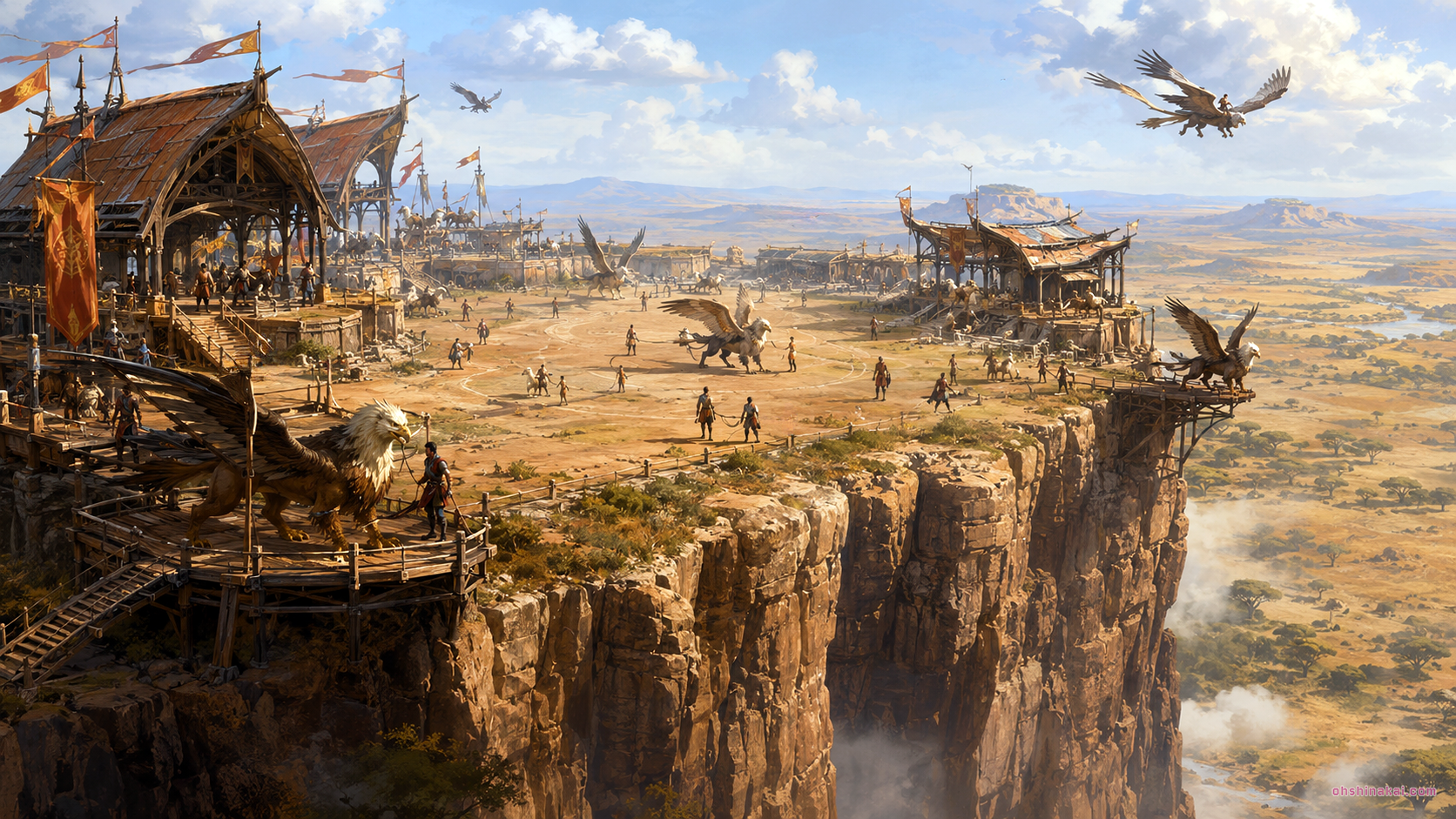
They ride the thermals above the savanna in lazy spirals. Eagle-lion hybrids the size of warhorses, their feathers dyed in clan colors (sunset orange, deep indigo, forest green), catching the light in patterns visible for miles. Below them, the golden grasslands roll toward every horizon, broken by acacia and baobab, threaded with rivers. And anchoring it all, the sky mesas: towering plateaus that serve as aeries, training grounds, and the spiritual heart of a civilization that decided, generations ago, that the sky was not a limit but a home.
Nyambra is a kingdom of sun-drenched savannas, tropical rainforests, rocky highlands, and windswept coastal cliffs. It is a land of music, masks, and flight. And at its heart, soaring above everything else, are the griffon riders: elite warriors, sky-couriers, and living symbols of a national identity built on the bond between human and beast.
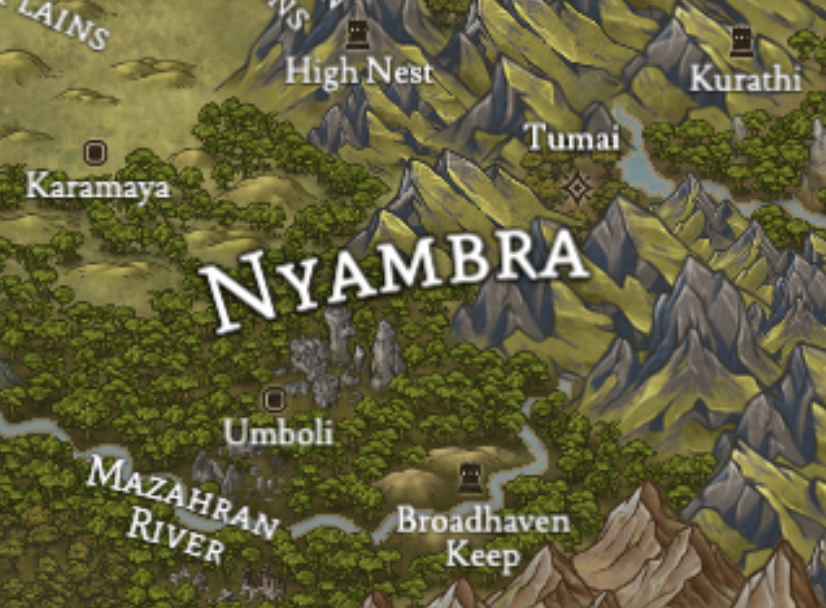
Tumai, Lake Zanara, and High Nest
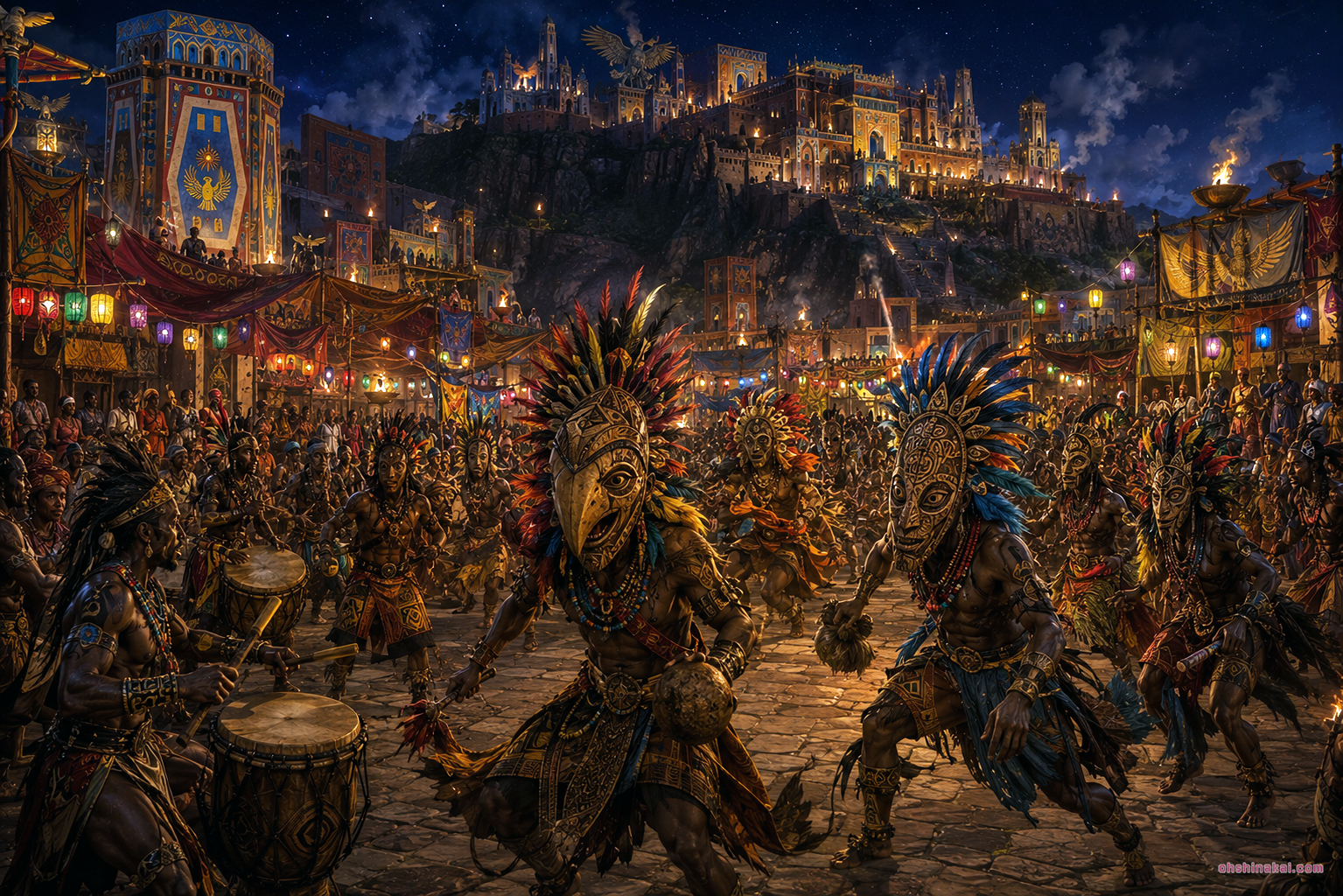
Tumai, the City of Masks, is Nyambra's capital: a city of grand avenues, mask-makers' guilds, and the dazzling annual Festival of Masks. The royal palace perches atop a sprawling plateau with sweeping savanna views. Wide plazas serve as both marketplace and tournament ground for the griffon-riders, and the mask-making tradition that gives the city its name is one of Nyambra's most distinctive art forms: carved wooden masks that encode clan lineage, spiritual identity, and personal history in their designs. Everyone in Tumai wears a mask for ceremonies. The mask you wear tells the city who you are, who your ancestors were, and what you've done worth remembering.
Lake Zanara is Nyambra's principal trade port, a fortified lakeside city connecting inland caravans with ocean-going vessels. Its markets overflow with ivory, gold, spices, fish, and the vibrant textiles that Nyambran weavers are famous for. Ancestral stilt villages and merchant enclaves line the lakefront, and the dockside is the most cosmopolitan space in Argania south of Khurayari.
High Nest, built upon a soaring mesa in the west, is the spiritual and logistical heart of the griffon-rider tradition. Grand aeries overlook the land below, and the main flight academy trains young sky-riders while maintaining the kingdom's griffon herds. The bonding trials that pair a rider with their griffon are overseen by Beast-Wardens, spiritual specialists who read the signs and declare whether the bond has formed. The Beast-Warden doesn't choose the pairing. The griffon does. A rider who tries to force a bond is rejected, and no amount of skill or courage can substitute for the griffon's judgment.
Deep in the southern rainforest, Umboli preserves some of Nyambra's oldest oral histories and sky-magic traditions, its people serving as shamans and storytellers whose knowledge predates the flight academy by centuries. And at the border with Jalimariya, the trade town of Karamaya hosts diplomatic pavilions where envoys from across Argania meet.
Wind-Speakers, Beast-Wardens, and the Sacred Drum
Nyambran religion is animistic, ancestral, and inseparable from the land and sky. There is no central temple, no scripture, no formal ordination. Authority comes from demonstrated ability to communicate with spirits, read natural signs, and maintain the relationships that sustain Nyambran life.
Wind-Speakers communicate with sky spirits, storm forces, and elemental powers, reading omens in clouds, wind patterns, and griffon behavior. Beast-Wardens maintain the sacred bond between humans and griffons, overseeing bonding trials, healing injured animals, and ensuring the relationship stays partnership rather than domination. Ancestor-Keepers maintain oral genealogies, lead funerals, and commune with ancestor spirits at sacred rock formations and lake shrines. To forget an ancestor is danger, not sin: forgotten spirits grow restless and unpredictable. Memory is worship.
The drum is the universal instrument. Nearly every spiritual leader carries one, carved from hardwood, covered with treated hide, each personally made and tuned. Different rhythms serve different purposes: calling spirits, calming storms, announcing ceremonies, communicating between distant shamans across the savanna. Ceremonial masks are equally central: Wind-Speakers wear sky-motif masks, Beast-Wardens wear griffon masks, and Ancestor-Keepers wear stylized human faces painted with clan patterns. The mask, the drum, and the griffon together form the three pillars of Nyambran identity.
The Code of Hospitality
The Nyambran code of hospitality demands generosity to strangers. Feasts of grilled meats, roasted tubers, honey-wine, and fruit are common at communal tables, and refusing to share food is considered a spiritual failure rather than merely a social one. Lively markets fill Tumai and the lakeside cities, drawing traders from Bravonia, Khurayari, and beyond. Nyambran artistry, carved masks, vibrant textiles, ceremonial jewelry, is world-renowned, and the culture's integration of music, drumming, and poetic storytelling into daily life gives Nyambra a warmth that visitors from colder, more formal nations find genuinely transformative.
[BEHIND THE SCENES]