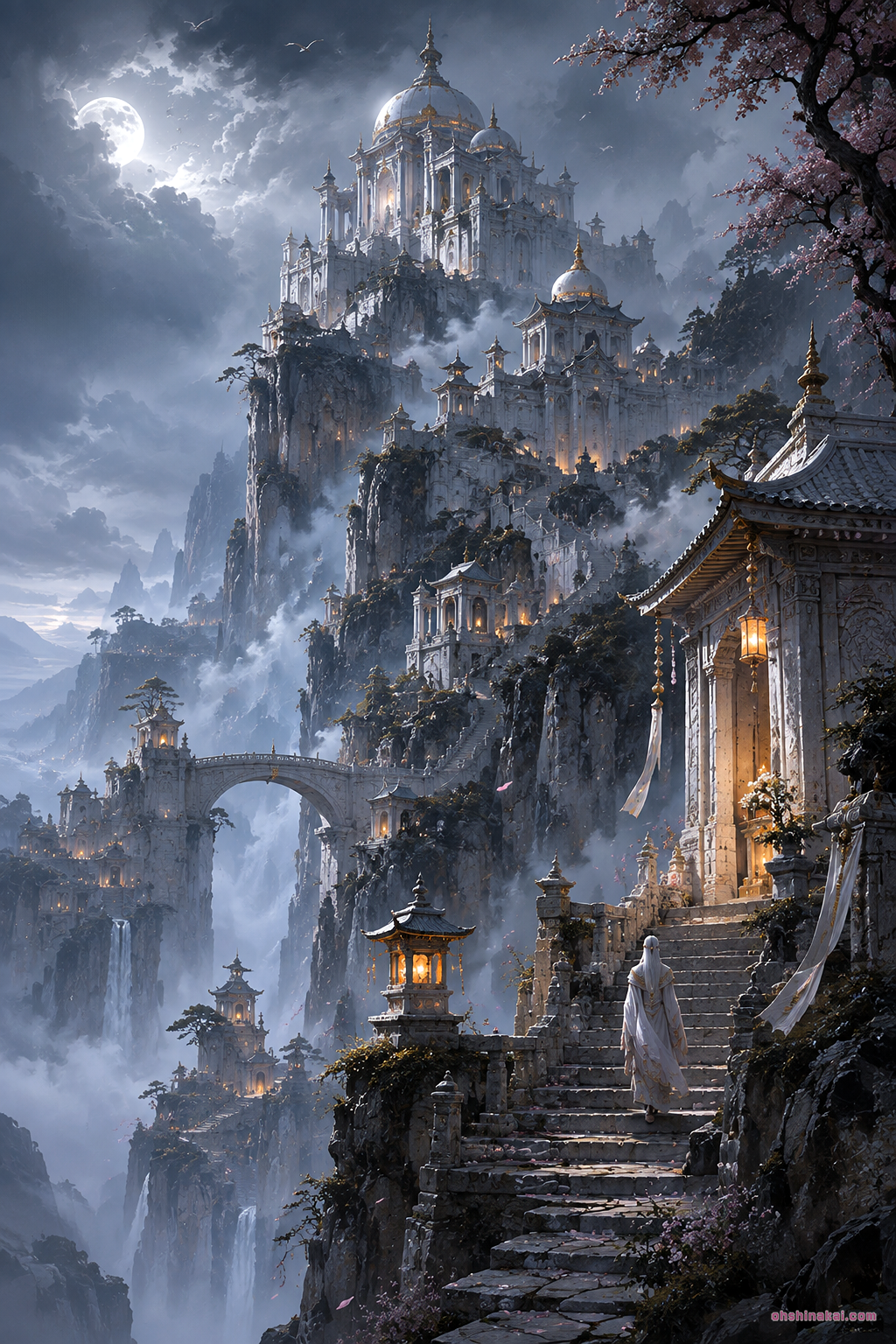
Yamatajima: Serpent Isles of the East


"The serpent does not coil to rest. It coils to remember."
– Inscription at the Shrine of the Bladed Serpent, Kusanagi
The Islands That Dream in Scales
The mist arrives before the land does. Travelers crossing the eastern Arashiman Ocean report seeing it hours before the coastline resolves: a pale, shifting veil that clings to the water's surface as though the sea itself is breathing. When the islands finally appear, they arrive in fragments. A cliff face. A crescent of dark sand. The suggestion of a hillside wrapped in fog. And through all of it, the feeling that something very large is watching from just beneath the surface of the world.
Yamatajima lies far to the east, southeast of the Arashima Islands and deep in the heart of the Arashiman Ocean. Known as the Serpent Isles, its culture and identity are steeped in the mythology of a divine serpent whose coils shaped the coastline and whose wisdom permeates every stone, shrine, and harvest prayer. The land is mist-cloaked hills, ancient rock formations, and tranquil villages where life moves with the slow deliberation of a people who believe that patience is a form of strength and that the serpent sees everything, eventually.
Three islands form the nation: the crescent-shaped Northern Island, known for its lush rolling hills and tranquil villages; the Southern Isle, famed as the home of the legendary sword Kusanagi; and a smaller western island cloaked in permanent fog, where the mysterious city of Yomishima lies.
The Serpent in Every Stone
The serpent is not a deity in the conventional sense. It is the founding metaphor of Yamatajiman civilization: a force of wisdom, transformation, and rebirth whose presence is felt in the twisting coastline, the spiral of a hill path, the coil of incense smoke, and the shed skin that symbolizes renewal. According to island myth, the land was carved from the coils of a divine serpent whose tail was severed in a great battle of the gods, giving rise to Yamatajima's distinctive geography.
This mythology permeates daily life. Serpent motifs appear on buildings, clothing, weapons, and ceramics. The spiral is the most common architectural and decorative element. Healing rituals invoke the serpent's shedding as a metaphor for recovery. And the island's relationship with its landscape is understood as a relationship with the serpent's body: the hills are its coils, the rivers its veins, the mist its breath.
The Northern Island
The crescent-shaped Northern Island is Yamatajima's cultural heart.
Yasakani ("At the Eight Slopes") is a picturesque town whose streets wind up and down eight distinct hills believed to symbolize the cardinal directions and cosmic harmony. Pilgrims climb each hill in sequence to perform meditative rites. The town is renowned for its ceramics and lacquerwork, and its seasonal festivals feature dances honoring the serpent's energy at sunset atop the highest hill.
Shiraishi ("White Stones"), along the crescent's southern edge, is built amid pale rock formations weathered over millennia. The Stone Pillars of Shiraishi, covered in ancient inscriptions, are thought to be part of an enchantment protecting Yamatajima from supernatural calamity. The town's dye-makers produce distinctive ghostly white and luminescent green fabrics.
Urako ("Scale"), on the southern tip of the crescent, is a thriving port city home to the Draconian warrior monks: reptilian beings who patrol the city and its surroundings as vigilant protectors. The Temple of the Scaled Shrine, adorned with scale-like tiles in emerald and obsidian, embodies martial discipline and spiritual reflection.
Kaminda ("Field of the Divine Names") sits inland as Yamatajima's agricultural heart, blanketed by rice paddies and fields of sacred herbs. Priestesses of Ma̅rziah guide the ritualistic farming, and Kaminda's herbal remedies and rice wines are sought across Mystaria.
At the northern tip, Yakumo ("Eight Clouds Village") is a small, picturesque village revered for its panoramic skies. Believed to be a favored resting place of the celestial serpent, Yakumo draws artists, philosophers, and starwatchers. The Hall of Dreams, a secluded hilltop shrine, is where oracles commune with divine forces.
The Southern Isle
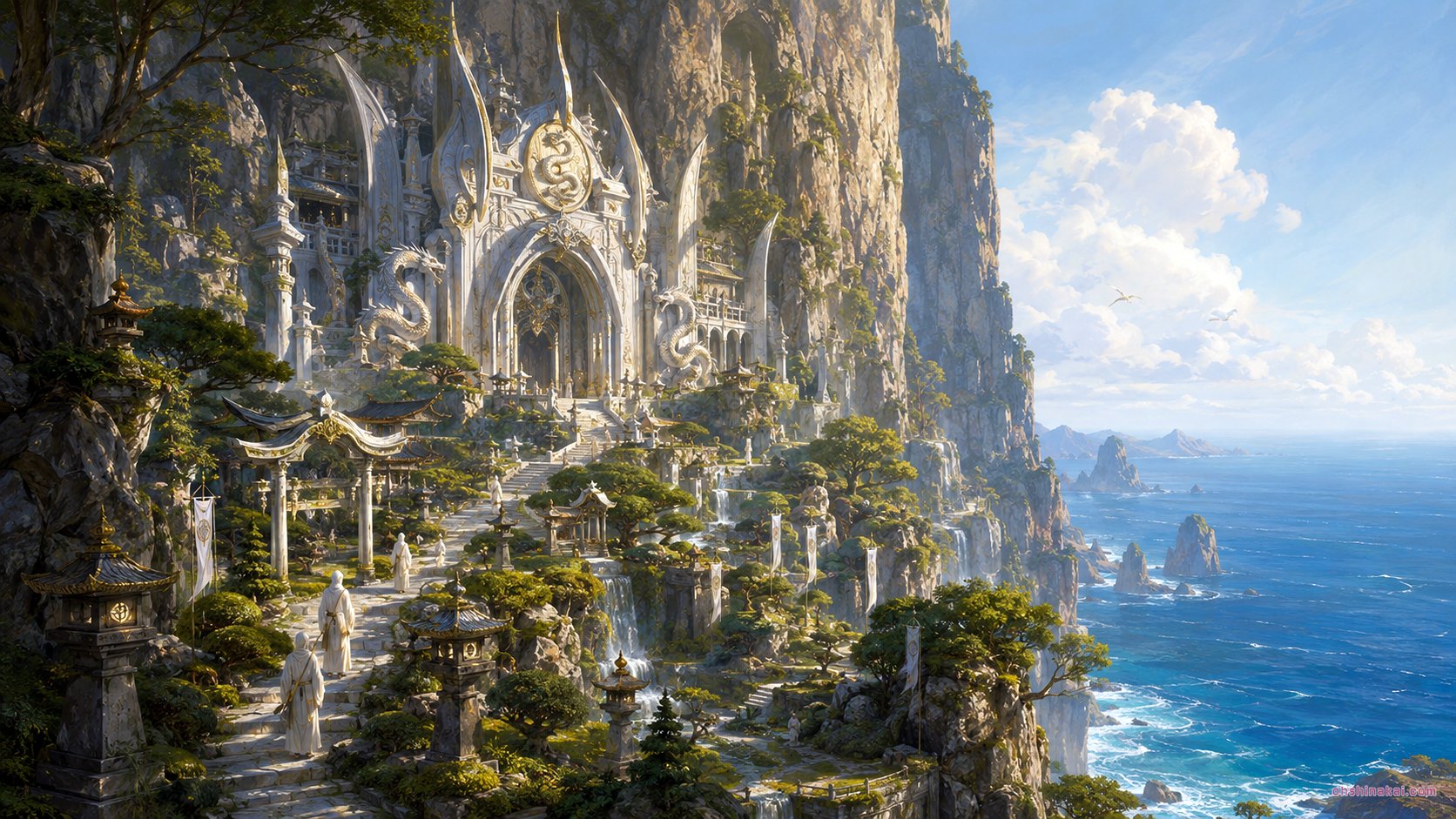
Kusanagi, at the southern tip, is named after the legendary sword said to have been discovered in the tail of a divine beast. The city is a place of reverence and peace: serene gardens, bamboo wind chimes, and the Shrine of the Bladed Serpent, a towering structure carved into a cliff overlooking the sea. A fragment of the mythical blade is said to rest within.
The Western Island: Yomishima
Yomishima, the City of the Dead, is veiled in permanent mist on Yamatajima's western island. An ancient burial city said to be ruled by its founder, an enigmatic figure rumored to have transcended mortality nearly four hundred years ago, Yomishima draws necromancers, sorcerers, witches, and shamans seeking forbidden knowledge and communion with spirits. The fog obscures pale stone mausoleums on craggy cliffs, connected by winding pathways. Some claim the city itself is alive, its layout shifting to confound travelers without pure intentions. The Mausoleum of the Eternal Founder is the central crypt, where those who seek an audience must offer something irreplaceable in exchange for the truths they desire.