Bastille Saint-Estelle: The Elvish Town That Chose Both Faiths
The monastery bells in Bastille ring at six every morning and six every evening, and they have done so for five hundred years. The sound crosses the whole town in under three seconds. A nun in the herb garden can hear a conversation at the mayor's office, and the mayor can hear the choir practising. In a place that small, everyone hears everything, and the townspeople have developed an unusually refined culture of saying nothing.

The Smallest Founding Member
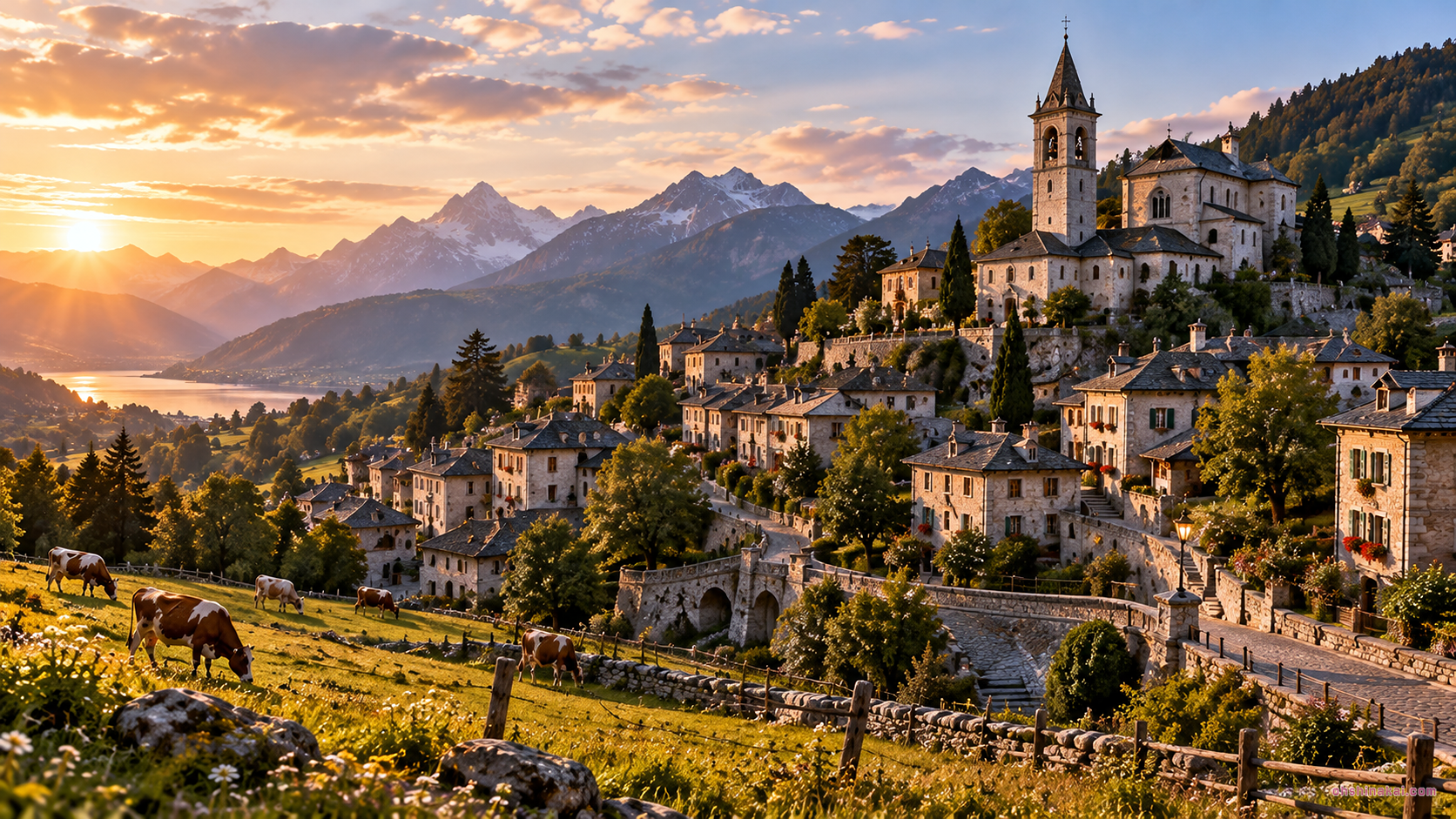
Bastille Saint-Estelle, known in Thungalëthaur as Bhastilae Santh-Estellae and to its residents simply as Bastille, is an elvish exclave entirely surrounded by the French département of Haute-Savoie. It covers 12.37 square kilometres and has 3,494 inhabitants. Two-thirds are elvish; the rest are French, Swiss, Austrian and Italian. Its official languages are Elvish and French, it uses the euro, and its government consists of a mayor and a deputy mayor. The Mayor’s House, a modest stone building, doubles as the town’s only inn.
Its legal status is as unusual as everything else about it. Bastille counts as one of the special territories of the European Economic Area, but it sits outside both the Schengen Area and the EU customs union. It is also a founding member of the Organization of Elvish Alliances, one of the five states that met in Salzheimen in 1893. Few of the delegates at that founding meeting represented fewer people.
Orphaned by Two Churches
Bastille began as a monastery. In the late medieval period, a community of elvish Christians settled in this valley. They had been shaped both by Gnostic philosophy and by Freyjaist mysticism, and they named their town after the patron saint of young Christian girls. Their aim was to join Christian devotion to elvish communal life.
That aim left them stranded. As Freyjaism hardened into a monotheistic theology, and as the Vatican hardened its position on elvish spiritual practice, Bastille found itself theologically orphaned: too Christian for the Freyjaists and too Freyjaist for the Christians. Nobody claimed it, because nobody knew what to do with it.
The Bastillesi turned this into a strategy. A town that both great faiths consider heretical is a town neither wants to take responsibility for. Five centuries on, Bastille is still independent, and the explanation usually given is that it is simply too strange to conquer.
A Christianity That Believes in Freyja
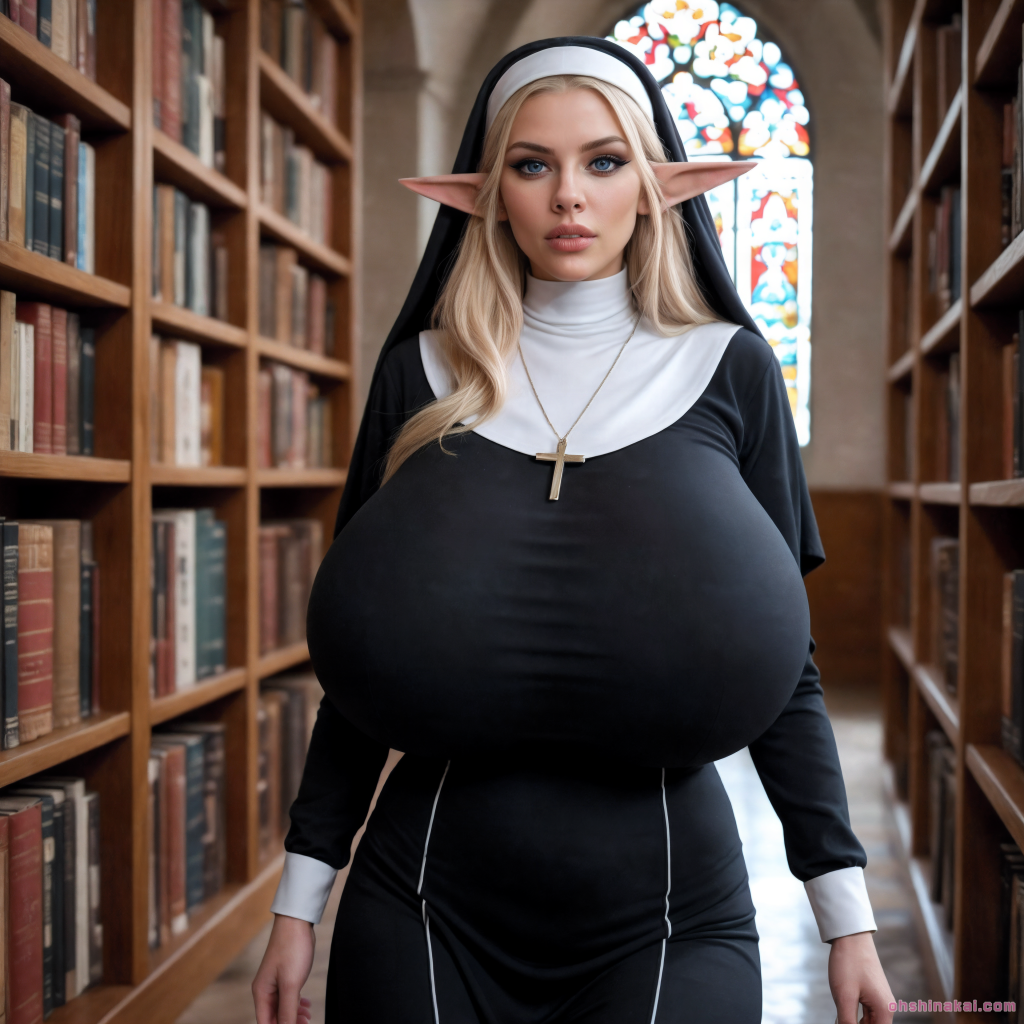
Elvish Christianity is the faith of 89.3 percent of Bastille, and almost nobody else’s. A few monasteries in the former Duchy of Halindor share it, along with Friedenburg Abbey, but Bastille is its home.
Its theology answers a question the rest of Christianity has struggled with since elves and humans first met. The Catholic position, broadly, is that elves are God’s creatures and elvish spiritual powers are natural phenomena, not revelation. Gnosticism takes the opposite view. It holds that Freyja is real: one of many emanations of the divine light through which God’s creative power works, with the Christian God still the ultimate source. In Gnostic teaching the physical world is a veil over a deeper reality, and Freyja is one of the ways that reality shows itself.
Both the Vatican and the Freyjaist Convocation consider this heretical. The Convocation’s view of Bastille is warmer, though. In the map of interfaith relations, Bastille is the friendliest Christian territory Freyjaism has, because it is the only one that treats Freyja as more than a misunderstanding.
The Order of St. Mathilde
At the top of the town stands Santh Mathildhaekhlosthri, St. Mathilde’s Monastery, the spiritual and physical centre of Bastille. Its order lives a contemplative life that combines Christian liturgy with Freyjaist meditation. Its library holds mystical texts that draw scholars of both traditions. Its healing workshops combine Christian prayer with elvish herbal medicine, using plants from the beech and pine forests around the town and rare Alpine herbs grown in the monastery gardens.
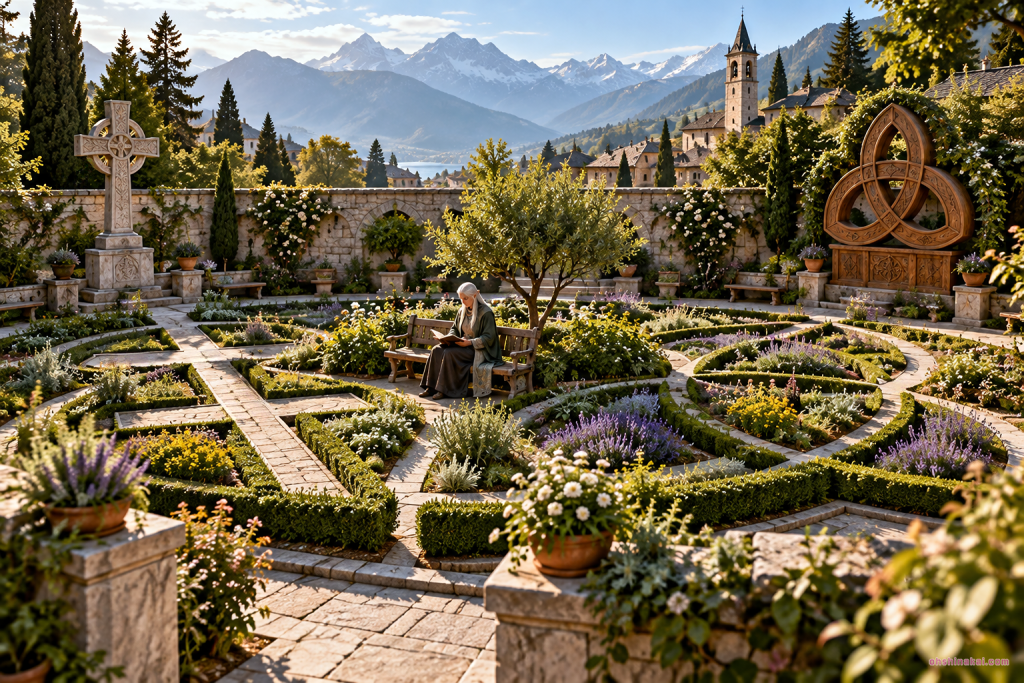
Daily life follows the monastery’s schedule: bells, communal meals and a festival calendar that mixes Christian and Freyjaist observance in ways that would cheerfully scandalise purists on both sides. Below the monastery lies the Valdhrismothgharthen, the Interfaith Garden, a public garden laid out in both Christian and Freyjaist sacred geometry. The name combines the Elvish words for wisdom, assembly and garden.
For a town of under 3,500 people, Bastille feels oddly cosmopolitan. Pilgrims, visiting scholars and the simply curious come and go all year. It is also home to the Aldermark Imperial Bank of Development, an international development lender founded in 1976 with offices in Kaiseringaden and across the Baltic, which may make Bastille the smallest place in Europe to host the headquarters of an international bank.
Half-elves and the Blessing
Bastille has one of the largest half-elvish communities in the elvish world, and its theology shapes how half-elves are seen there.
The earlier post about half-elvish bodies described a condition common among half-elvish women: a strong sensitivity to hormones that can produce considerable breast growth, especially after pregnancy. In Bastille this is read religiously. Local tradition treats it as a sign of Freyja’s favour, and of the blending of two peoples that the town itself was founded to achieve. Women who have it are honoured in festivals and some hold respected ceremonial roles.
Not every woman in Bastille wants that role. As the earlier post noted, some find the reverence a burden, especially when they want medical treatment. The town’s monastery runs healing workshops, and its herbalists and physicians, by local custom, will treat anyone who asks, however she is regarded in church. Bastille’s habit of holding two beliefs at once applies here too: honour the tradition, and respect the person.
Strategic Silence
Anyone who spends time in Bastille keeps coming back to one feature of its life: silence. In a town where a bell can be heard everywhere within three seconds, privacy is a skill. The Bastillesi know when not to speak, what not to repeat and which questions to leave unasked.
That habit serves them well beyond the town walls. Bastille has survived five centuries between two powerful religious institutions, each of which has reasons to be uncomfortable with it, by being too small to threaten, too useful to scholars to close, and too discreet to provoke. It is the same skill that keeps the town’s internal peace, applied to international politics.
Consider the kind of controversy Bastille is built to absorb. Imagine a young Christian nun, living quietly in a cell at St. Mathilde’s, who writes a text describing visions of both the Virgin Mary and Freyja at once. The Vatican would condemn it. The Freyjaist Convocation would be intrigued. And Bastille would do what it has always done: protect the nun, shelve the text in the library beside everything else neither church wanted, and ring the bells at six.
The Town That Kept Both
Most of the elvish world spent the past five centuries choosing: integration or withdrawal, Freyja or the Church, Aldermark or Shikarapura. Bastille’s founders refused to choose, and their descendants have made that refusal into an identity.
It isn’t a model that scales. A town of 3,500 can live on discretion and theological ambiguity in a way a nation can’t. But in a setting full of hard lines between peoples and faiths, Bastille is a reminder that some of the most durable answers are the ones that never fully settle the question.
Glossary of Thungalëthaur Terms
- Bhastilae Santh-Estellae Bastille Saint-Estelle
- Santh Mathildhaekhlosthri St. Mathilde’s Monastery, Bastille’s spiritual centre
- Valdhrismothgharthen The Interfaith Garden of Bastille
- Fridhenbhurghabhtei Friedenburg Abbey, the Gnostic-Freyjaist monastery
- Thungalëbhandh The Organization of Elvish Alliances (OEA)
You Might Also Enjoy These Posts
 Aldermark
 Aldermark
Join the conversation