
The Tribelands: Realm of the Untamed


"We have one law. The Tribelands remain free. Everything else is open to negotiation."
– A clan chieftain, addressing a Phazani envoy at the annual moot
[IN-WORLD LORE]
The Land That Refuses to Be Ruled
Many kingdoms in Mystaria have attempted to tame the Tribelands. The Theodassan Empire sent its legions. Joram sent their border armies. Lavinia sent diplomats (and then armies when the diplomats failed). Bravonia, Lhakira, and Verdania sent merchants, mages, and scholars, to trade and study them from a safe distance.
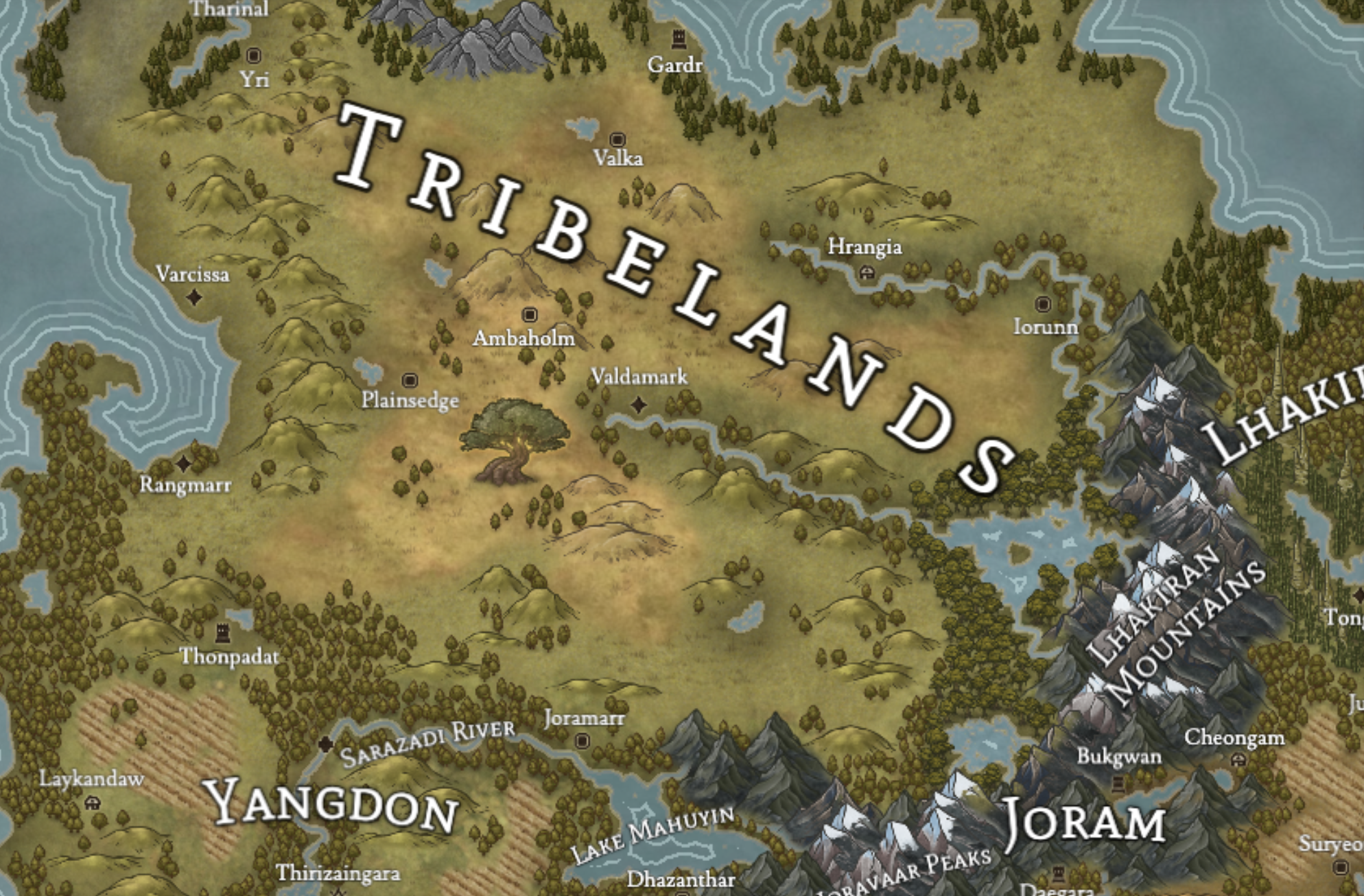
The Tribelands are still free. The vast grasslands, rolling savannas, and windswept steppes that stretch between Yakhuli to the northwest, the Lhakiran Mountains to the east, and the Sarazadi River and Yangdon to the south, are home to a patchwork of barbarian tribes bound by kinship, totems, and ancestral tradition. There is no king. There is no capital. There is no standing army. What there is, spread across a territory larger than most organized kingdoms, is a population of fiercely independent clans who have been fighting, trading, raiding, and feasting with each other for centuries, and who put all of that aside the moment an outsider tries to tell them what to do.
The Way of the Clan
Tribelander society is semi-nomadic, organized into clans that range across the plains with their flocks, herds, and hunting parties. Camps are temporary: movable tents of hide and bone, raised for a season and struck when the grazing shifts or the spirits counsel a move. Some clans claim the open steppe, others the river valleys, others the remote hill country, each with their own totems, legends, and tales of spirits encountered.
Chieftains and warlords are chosen through displays of prowess, personal charisma, and renowned deeds. Inheritance counts for little. A chieftain's child who cannot fight, ride, and lead is passed over in favor of whoever can. The system produces leaders who are competent because the alternative is irrelevance, and irrelevant chieftains in the Tribelands don't last long enough to cause problems.
While inter-tribal skirmishes and clan rivalries are constant, there exists an unspoken law that overrides all others: the Tribelands must remain free from foreign conquest. Clans that feud for generations will unite overnight against an external threat, fight side by side with absolute commitment, and return to feuding the moment the threat is gone. This capacity for instant coalition is what makes the Tribelands unconquerable. You can defeat a clan. You cannot defeat the idea that being defeated together is preferable to being ruled separately.

The Shamans and the Spirits
At the heart of Tribelander culture lies shamanism. Each clan is guided by shamans or spirit-speakers who serve as intermediaries between the mortal world and the spirits that dwell in every river, stone, ancient oak, and thunderstorm. Powerful beings (Bidadari, huldras, fomorians) may be revered as local spirits, ancestors, or guardian beings depending on the clan's tradition.
Totem poles, painted stones, sacred groves, and ritual dances mark the land as sacred. Before hunts, battles, or seasonal gatherings, offerings are made and omens read by the clan's shamans. The spirits' blessing is sought for every significant undertaking, and their displeasure is feared more than any mortal enemy.
The grand seasonal moots, when dozens of clans gather beneath the open sky, are Tribelander civilization at its most impressive. Disputes are settled, marriages arranged, trade conducted, stories shared, and the spirits honored through days of ceremony, competition, and feasting. The moots are the closest thing the Tribelands have to a government, and they work precisely because attendance is voluntary and decisions are made by consensus rather than decree.
The Sabretooth Riders
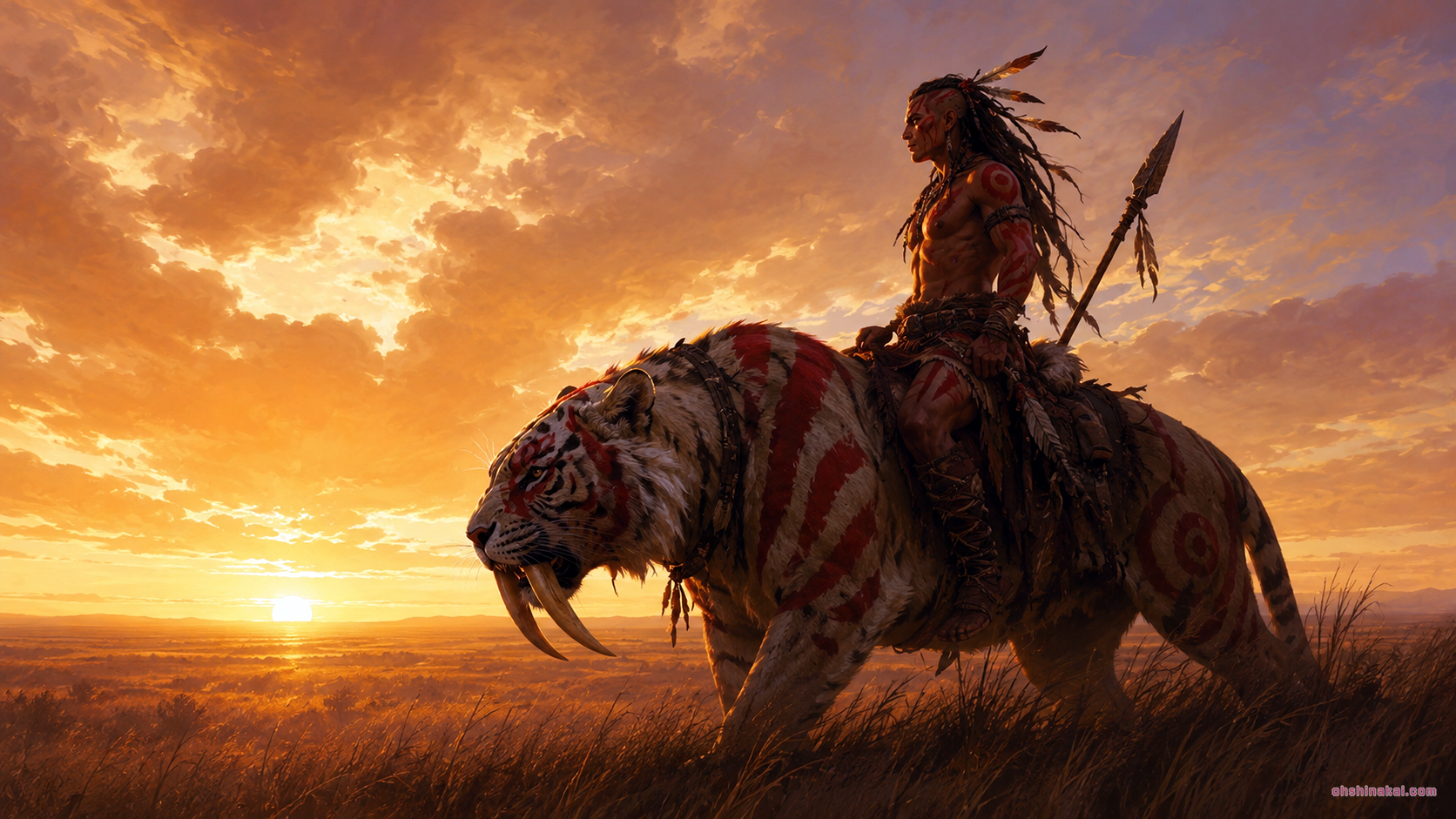
Between 600 and 400 BFE, the Tribelander clans perfected the domestication of the sabretooth tiger. These powerful, ancient felines, known for their massive fangs and muscled frames, became invaluable as personal companions, ceremonial animals, and fearsome battle-mounts. Tribal warriors ride sabretooths into skirmishes and shock assaults, the combined weight of rider and beast crashing into enemy lines with devastating effect.
Sabretooths are raised alongside chieftains' children, featured in cultural stories and festivals, and mourned with the same rites as human clan members. The distinctive sight of a chieftain astride a massive sabretooth, lacquered war paint on both rider and beast, has become the defining image of Tribelander identity: a symbol of pride, unity, and the refusal to be anything other than free.
The Settlements
Though the Tribelands are defined by their nomadic traditions, several permanent or semi-permanent settlements anchor the landscape.
Valdamark, in the heart of the nation far west of the Lhakiran Mountains, is the most feared settlement in the Tribelands. Its barbarians are the dread of the open steppe, known above all others for their mastery of sabretooth riding. Valdamark's tattoos and bone torcs honor the spirits of both human and feline kin, and its warriors are swift, terrifying, and absolutely convinced that they are the finest fighters in Mystaria.
Plainsedge, near the Tribelands' western reaches and rolling hills, blends tradition with faith. Its wooden shrines and lion-masked festivals are famous, and Plainsedge warriors are inspired by defending their people and their beliefs rather than by raiding for plunder, often targetting the port city of Varcissa.
Ambaholm, northwest of Valdamark, is a center of trade and alliance. Its bustling market tents and lively gatherings make it a vital crossroads, with barter and festival welcoming outsiders and Valdamark kin alike. Ambaholm's artisans are known for finely carved bone and antler, and for their willingness to mediate disputes among the tribes.
Rangmarr, located in the southwest corner of the Tribelands near the borders of Yangdon, is a town built for mobility and vision. Known for its fishing, wind-tanned sails, and heroic horsemen, Rangmarr's location makes it a sentinel facing the wider world.
Valka, on the broad plains in the northern part of the Tribelands, is the most outward-looking of Tribelander settlements. The Valka are often employed as mercenaries or caravan guards by neighbors and far-off kingdoms, wearing woven belts that identify their far-traveling exploits.
Yri, nestled in the rolling hills in the northwestern part of the Tribelands, guards one of the key roads leading toward the Yakhuli walled city of Tharinal. Its warriors are wary of the Wanderweavers' strange magic, holding the passes tightly and exacting tolls from travelers whose motives they don't trust.
[BEHIND THE SCENES]