
The Forge: What Mars Does to the People Who Stay


Martians have a word for what their planet does to people. They call it the Forge. It is not a metaphor. It is a civic philosophy, a child-rearing principle, and the closest thing to a secular prayer the red planet has produced. The idea is simple: hardship is not something to be survived. It is something to be used. Mars does not coddle. Mars burns away what is weak and leaves what is strong, and if you cannot take the heat, the airlocks are clearly marked.
This is, of course, propaganda. But it is the kind of propaganda that works because it is also, on a practical level, true.
The Landscape
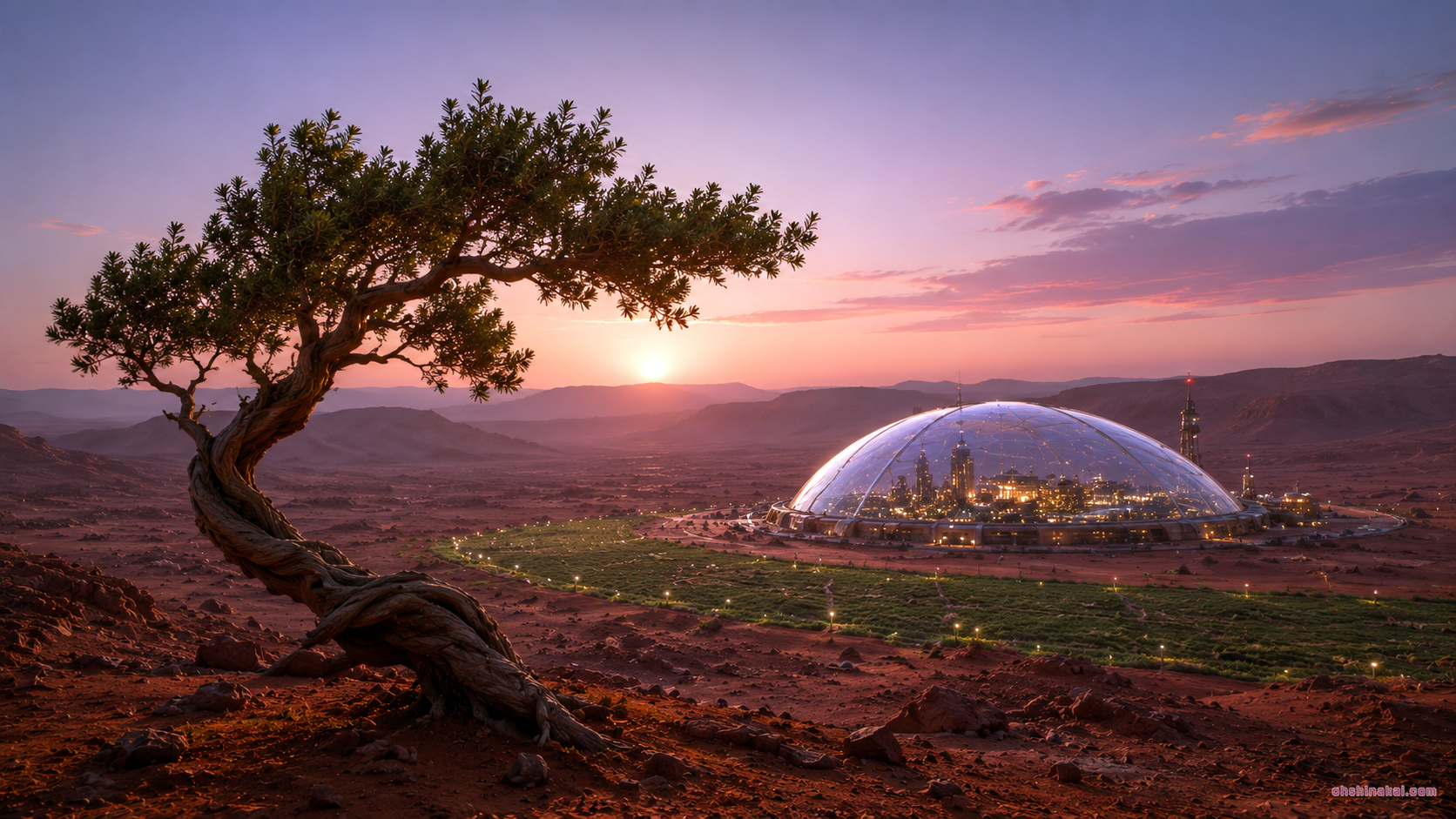
The surface of Mars is not a place that forgives inattention. The iconic red deserts remain vast, mostly untouched, and revered by Martians as the "honest soil", the original Mars, before humanity started trying to improve it. Cutting across these plains are the green scars: terraformed belts of genetically-engineered flora, rugged and pragmatic, designed for maximum oxygen output rather than beauty. The atmospheric processors hum without stopping. Storm barriers, some of them kilometers tall, rise from the plains to channel the planet-spanning dust storms that can rage for weeks and reduce visibility to arm's length.
Martian cities are armored. New Ares City, the capital, sprawls through the Valles Marineris canyon system under transparent plasteel canopies built to shrug off micrometeorite impacts. Inside the domes, the architecture is brutalist by instinct: functional, angular, undecorated except where decoration serves a purpose. Vertical farms are integrated into air-recycling systems. Greenery exists, but it is infrastructure, not landscaping. Silent maglev trains glide along canyon walls. Drones pattern the sky in efficient formations. Everything works. Nothing is wasted.
Outside the cities, the industrial heartlands, Hellas Planitia, the Cydonia plains, the Olympus Mons estates: are the roaring engine rooms of the planet. Hellas Planitia alone, a repurposed impact crater the size of a small continent, accounts for nearly half of all Martian exports: iron, nickel, titanium, deuterium from the fusion plants. The Elysium Ring Orbital Elevator lifts cargo into orbit in a continuous, automated stream. The annual Elysium Prosperity Conference brings corporate and military leaders together in the crater's heart to discuss expansion, and the dust never quite settles between sessions.