
The Faerie Thread: The Magick of Suggestion


"Reality is just the story we all agree to tell. I know other songs."
— A Glimmorian saying, attributed to the first Faerie singers
The Loophole in the Law
If the Draconic Thread is the law, the Faerie Thread is the loophole.
It is the magick of chaos, emotion, perception, and art. Woven by the first fae when they spilled through the ancient portals from Glimmermoor, these threads do not command reality. They persuade it.
The Tapestry is semi-sentient. It can be charmed. It can be sung to. It can be tricked, emotionally swayed, or distracted long enough for a clever caster to slip an alteration past its notice. Faerie magick operates on the principle that the universe is a deeply impressionable audience, and the right song will bend it almost as effectively as a thousand Old Draconic commands.
To cast Faerie magick is to perform.
The Language: Glimmorian Songs
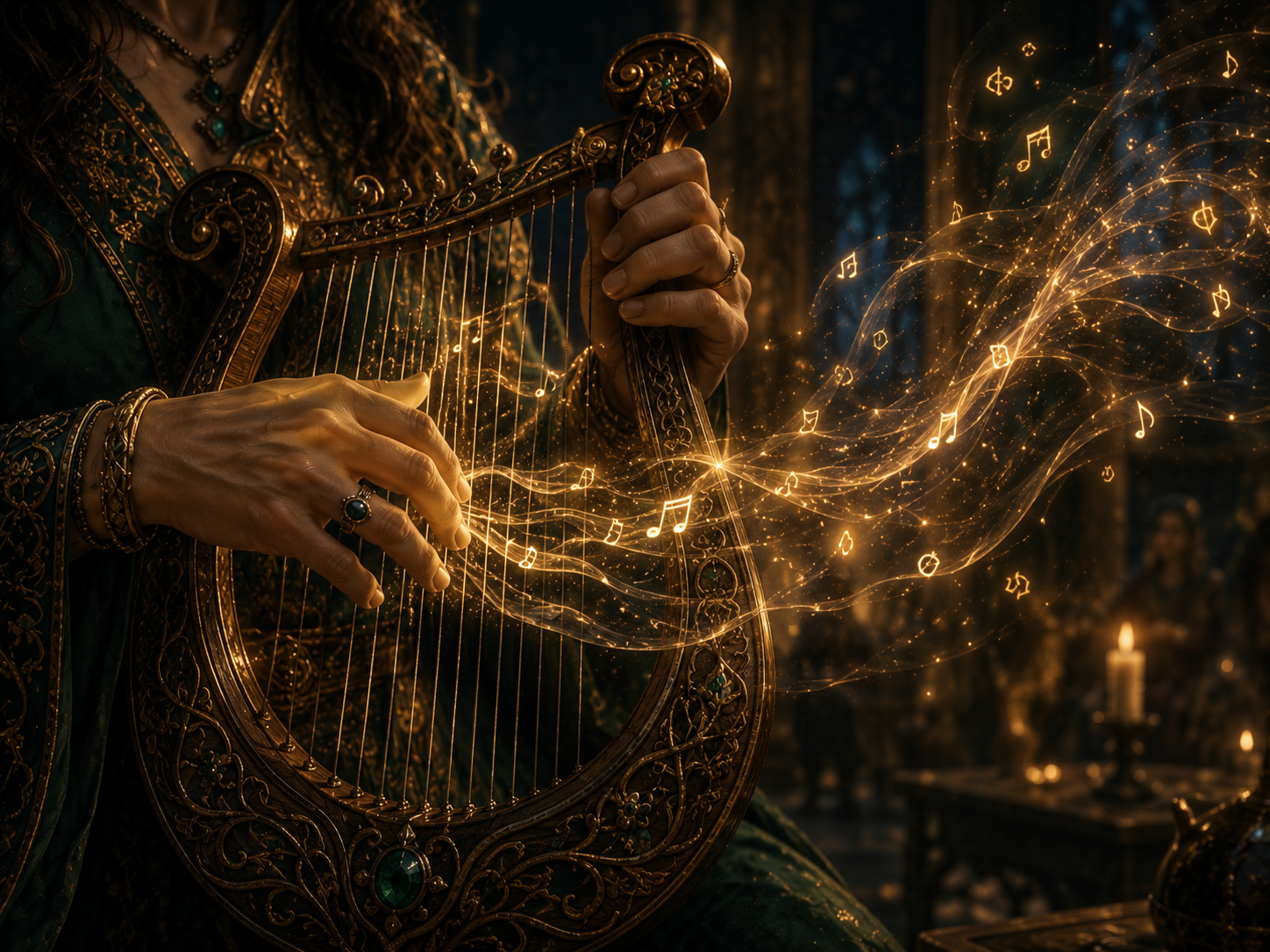
Faerie magick is not spoken in any conventional sense. It is sung, hummed, harmonised, or, at advanced levels, layered into instrumental music. The language is called Glimmorian Song, and it has no grammar in the way Old Draconic does. It has moods.
The same melody, sung with joy, might call dancing lights into being. Sung with sorrow, it might summon a clinging mist that mutes every sound for miles. Sung with longing, it might open a path to a place that didn't exist before the singer began. The emotional texture of the song is the spell. Two casters singing the same melody can produce wildly different effects depending on how they feel that day.
This makes Faerie magick beautiful, expressive, and almost impossible to standardise. The Phazani battle-magi tried to weaponise Glimmorian Song for decades. They mostly failed.
Who Uses It
Faerie threads are favoured by:
- Illusionists, enchanters, and bards across every kingdom
- The Sisterhood of the Secret Flame in the Witching Isles, the most esteemed Faerie practitioners on the continent
- The huldras of Amaranthis for whom Glimmorian Song is a cultural birthright
- Pact Scribes who use Faerie magick to weave magically binding contracts
- Goblins, pixies, sky elves, nix, korrigans, and fox spirits, the entire family of fae-blooded peoples, who use the thread instinctively
It is the most common of the three threads, but also the most misunderstood. Faerie magick at its lowest tier is parlor tricks. At its highest tier, it can rewrite a person's memory of their own childhood. Both are pulled from the same source.
The Transformation
Casters who rely heavily on the Faerie Thread find their connection to stable, predictable reality slowly fraying.
A young Faerie user is creative. Expressive. Emotionally fluent.
A mid-career one is mercurial. Their moods shift like weather. They lose interest in static realities. They start to find ordinary truth boring, the kind of boring that you fix by embellishing slightly. Then by embellishing significantly. Then by embellishing entirely.
An old Faerie caster is something you can no longer fully trust to remember the difference between what happened and what would have made a better story. They speak in metaphor by reflex. They struggle to give a straight answer to a direct question. The most powerful Faerie singers may eventually prefer the perfect worlds they create to the flawed reality they inhabit, and some have, over the centuries, simply stayed inside their own illusions until they faded out of mortal perception altogether.
- Stage One - The Dreaming: The caster becomes more mercurial, their emotions shifting as fluidly as their illusions. They begin to see the world not as a set of rules, but as a collection of stories waiting to be rewritten. They develop a sharper sense of beauty but a weaker grip on the mundane.
- Stage Two - The Blurring: They struggle to distinguish memory from dream, truth from perception. Their eyes develop an iridescent quality, shifting colour with mood. Others find them magnetic but unsettling: their laughter arrives at wrong moments, their sadness feels performed even when genuine.
- Stage Three - The Unmooring: They become dangerously capricious, embodying the beautiful, creative, and terrifying chaos of the fae themselves. Reality and illusion become indistinguishable to them. They are creatures of pure story: brilliant, unpredictable, and no longer entirely present in the world the rest of us inhabit.