
Tianlu: The Highland Kingdom the World Forgot to Conquer


"We were not lost. We chose to be elsewhere"
— Inscription above the Pass of Zhinlian
A Plateau Above the World
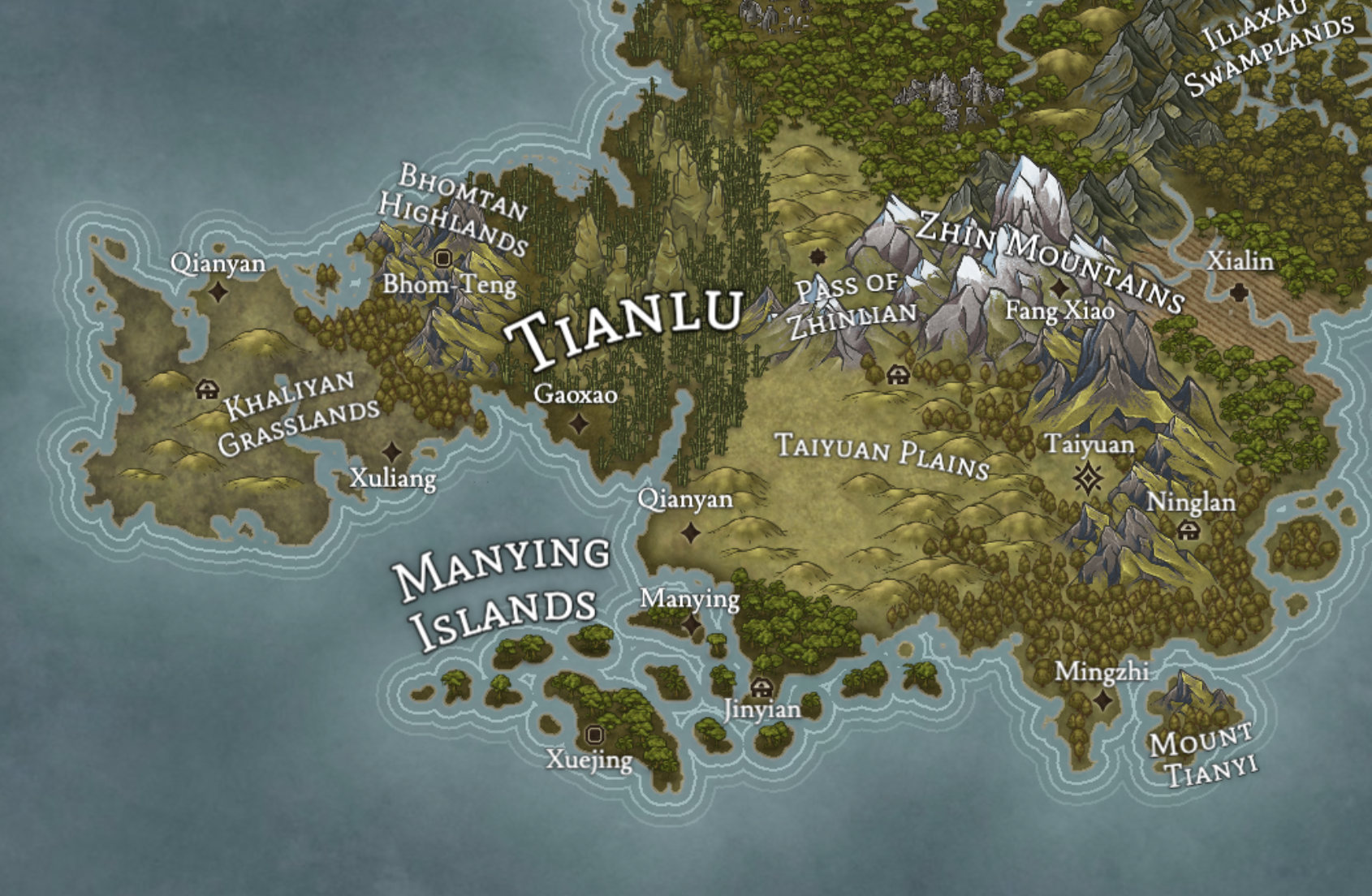
Five hundred years ago, when the Citadel at Taiyuan was completed and the Kingdom of Tianlu formally took shape, the lowland kingdoms of Mystaria barely noticed. Tianlu had been there all along, high on its stone-walled plateau, behind its Zhin Mountains and its Taiyuan Plains, governed by ancient clans who had repelled every invasion the lowlands had ever tried.
Tianlu was not founded. Tianlu consolidated. The plateau had been inhabited for over a thousand years before there was a kingdom there. The kingdom is, in a real sense, the youngest layer of a much older civilisation.
This is the kingdom of the Tianlu, Bhomtan, and Khali peoples, three ethnic groups with distinct languages, traditions, and customs, bound together by their shared reverence for the land and their shared, hard-won independence from a world that mostly cannot reach them.
A Land That Defends Itself
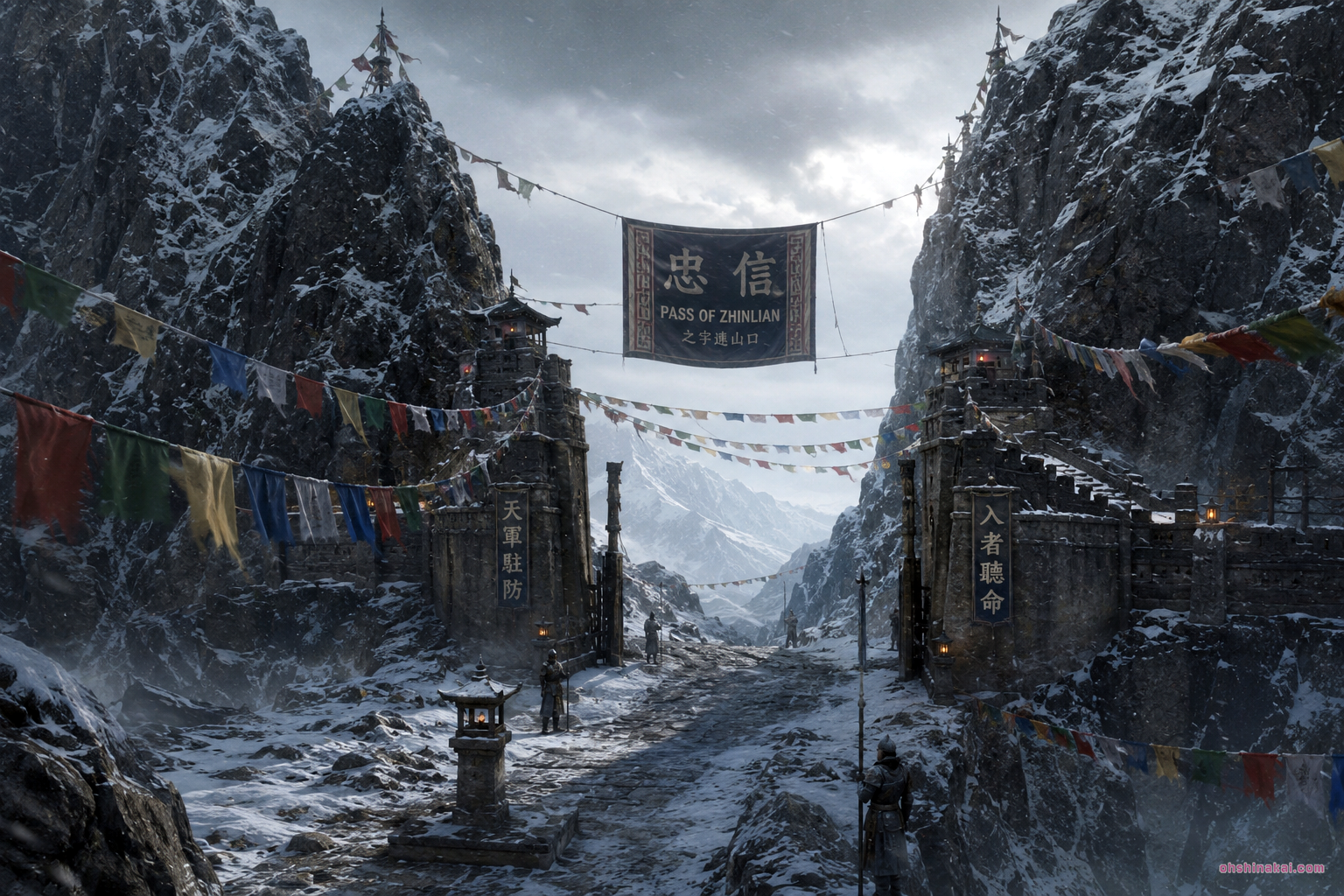
Tianlu's geographic defenses are the reason it survives. The Zhin Mountains form a natural fortress to the north and east. Thick forests and bamboo groves guard the southern and southeastern interior, while the Bhomtan Highlands and the vast Khaliyan Grasslands shield its western borders. The few practical entry points, the Pass of Zhinlian chief among them, are narrow, defensible, and have been the site of every serious military engagement in Tianlu's history.
The kingdom isolated itself behind the Pass around c. 1200 BFE, after observing what was happening to its lowland neighbours. The decision was not paranoid. The decision was correct. While the rest of the continent endured imperial collapse, plague years, Caldorian invasions, and the rolling violence of the post-Theodassan era, Tianlu's villages, citadels, and golden-grass valleys remained largely untouched.
The trade-off was centuries of cultural isolation. The kingdom is only now, in the past decade, beginning to open formal diplomatic and trade relations with the wider world, most notably the Plum Wine Trade Accord with Bravonia, signed in 2 BFE.
Three Peoples, One Plateau
The Tianlunes people are the largest of the three ethnic groups and the original settlers of the plateau. Their traditions emphasise harmony with the land, ancestor reverence, and the Spring Blossom Festival that marks the end of winter.
The Bhomtan arrived through migration and conquest in the centuries after the original settlement. They are most numerous in the Bhomtan Highlands and the high mountain valleys to the west, and their warrior traditions remain distinct. Bhomtan archers are reputed to be the finest in the kingdom.
The Khali are the smallest of the three groups, distinguished by their nomadic herding traditions across the western grasslands and their expertise with the plateau deer, a hardy native species the Khali alone have learned to ride for long-distance travel.
Conflicts between the three groups were once common. They are now ritualised. The Harvest Moon Celebration annually features competitive games and trade exchanges between Tianlunese, Bhomtan, and Khali communities, with the winners receiving honor rather than territory.
A Culture Rooted in the Land
Tianlunese culture treats the plateau itself as a divine gift. The golden grasses, the rich skies, the rare wildlife, including the spotted Tianlu fox, the plateau deer, and the legendary silver-winged lark, are all considered sacred.
Artisan skills are highly valued: weaving, pottery, metalwork, and the lacquer-and-wood armor characteristic of Tianlunese warriors. Music and dance feature heavily in ritual life. Every festival ends with the entire community singing the long, slow songs that pre-date the kingdom by centuries.
The Tianlunese are, as a people, robust and indomitable. They are also famously patient with outsiders. Once you have proven you are not a conqueror, they are warm hosts, generous traders, and surprisingly curious about the wider world they have spent a thousand years choosing not to join.