
Zuleria: The Land of Copper and Conquest


"Copper doesn't rust. Copper doesn't break. Copper doesn't forgive. Neither do we."
– Warlord Tarok, addressing a newly conquered mining settlement
[IN-WORLD LORE]
The Kingdom That Bleeds Metal
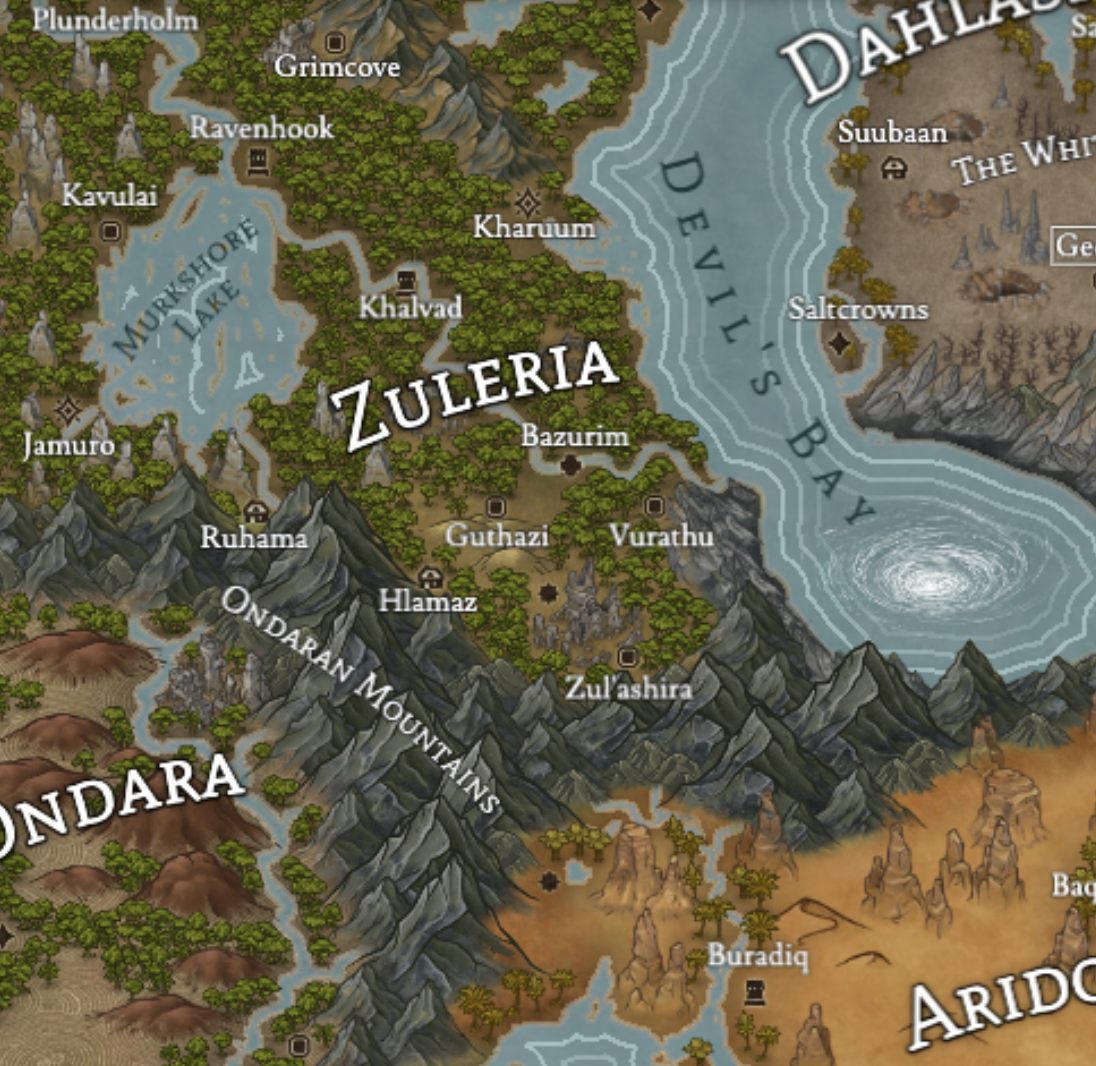
Zuleria is a rugged, violent kingdom wrapped in dense tropical rainforest, its hills and badlands shot through with veins of copper ore that have shaped every aspect of its people's lives: their economy, their warfare, their art, their religion, and the brutal hierarchy that keeps the whole enterprise from collapsing into chaos. To the west and north, the vast body of water that Duskwater's pirates call Murkshore Lake (the Zulerians know it as Khal'uvesi, "the Copper Mirror," for the way its surface catches sunset light in bands of burnished orange) forms a natural boundary. Beyond the lake lies Azaniya's misty eastern shore. To the east and south, the rainforest thickens into the hunting grounds of Imaia and the trackless jungle interior. And to the north, across the lake's widest reaches, Duskwater's lawless coastline is the only neighboring power.
That single neighbor matters. Duskwater is Zuleria's primary trading partner, its most frequent raiding target, and its most dangerous enemy, sometimes all three in the same week. The relationship is transactional, hostile, and utterly indispensable to both sides.
The Warlord and the Warbands
Zuleria is ruled by strength. The political structure flexes and shifts according to the whims and conquests of the ruling warlord. The current holder of that position, Warlord Tarok, is a towering figure encased in battered copper-plated armor who rose through cunning diplomacy and battlefield ferocity to unite Zuleria's fractious warbands under a single iron command.
Tarok maintains power through a network of loyal captains, bloodbound warriors, and opportunistic merchants who owe their fortunes to his conquests. He tolerates no dissent. Uprisings are crushed with a precision that borders on theatrical, because the message matters as much as the outcome. His council consists of chosen captains whose loyalty is transactional: they serve because serving pays, and the moment it doesn't, someone will try to replace Tarok. He knows this. He ensures the payment never stops.
Beneath the warlord, local chieftains and captains dominate their own territories, enforcing rule over mining villages and trade routes. Alliances are forged with blood and gold, and shifting allegiances between captains produce regular skirmishes and internal rivalries. Tarok manages this chaos deliberately, ensuring no warband grows powerful enough to challenge his rule by manipulating clans against each other when necessary. The system is unstable by design: a unified Zuleria under anyone other than Tarok would threaten Tarok, so he keeps the parts moving.
Copper Runs Through Everything
Copper is more than a resource in Zuleria. It is woven into identity itself. Artisans craft ornate copper tattoos into armor, weaponry, and skin, with intricate designs marking victories, family heritage, or debts unpaid. Copper jewelry shaped like chains is worn by women and blacksmiths, symbolizing both the weight of responsibility and the strength to endure it.
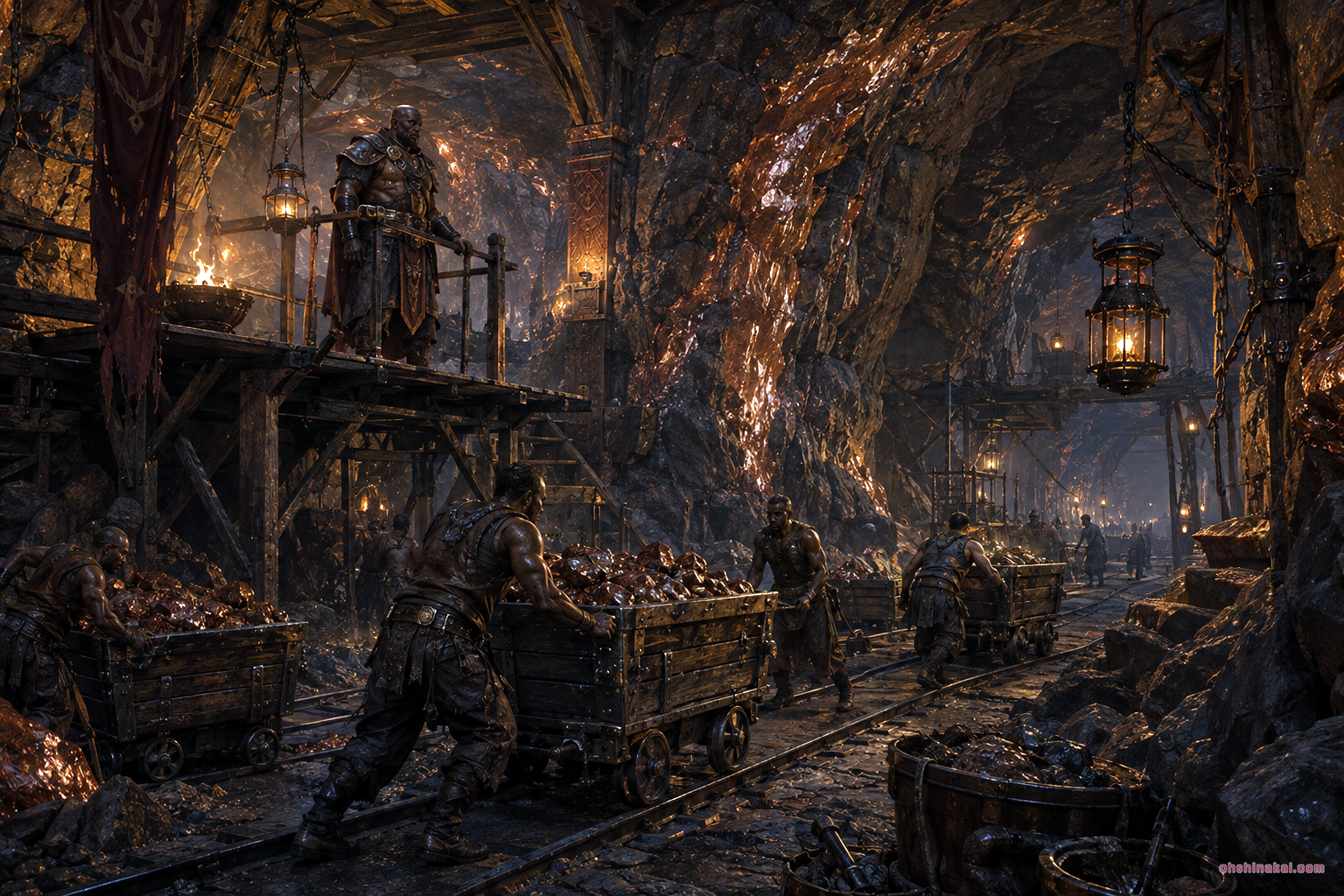
The mines are Zuleria's lifeblood and its shame. Labor is brutal. Prisoners, indentured servants, and defeated enemies are consigned to the dark tunnels alongside local miners hardened by generations of dangerous work.
Zulerian copper is prized for its purity and abundance, traded raw to nations like Ondara (which transforms it into finished goods worth far more than the ore), Nyambra, and even distant Ralinga. The value-chain tension with Ondara is a permanent source of resentment: Zulerian warlords see Ondaran smiths as middlemen who profit from Zulerian labor without Zulerian risk. The Ondarans see Zulerian metalwork as crude. Both sides have a point, and neither will concede it.
The Settlements of Zuleria
Kharuum, the capital, squats on the northeastern coast near Devil's Bay, close enough to Duskwater's Gallow's Point that the two settlements can see each other's signal fires on clear nights. The fortress-city rises from marshland in layers of jagged stone walls crowned with iron spikes and copper-clad watchtowers. Markets, barracks, and tent camps spread outward in crowded rings around the Warlord's Hall at the center, its scarred gates decorated with copper reliefs depicting Tarok's victories. Kharuum's position on Devil's Bay makes it both Zuleria's political heart and its most exposed settlement: Duskwater pirates raid its outer harbors regularly, and Tarok's garrison never sleeps.
Hlamazi, in the southwest at the slopes of the Ondaran Mountains, is Zuleria's richest mining settlement. The deepest copper veins run through the rock here, and Hlamazi's tunnels extend further underground than any other mine in the kingdom. The settlement is a grim place of slag heaps, ore carts, and the constant clang of extraction, its population divided between hardened miners and the captains who keep them working. The proximity to the Ondaran border means Hlamazi's copper sometimes crosses the mountains through unofficial channels, feeding the very smiths that Zulerian warlords resent.
Vurathu, on Zuleria's eastern flank, is the most defensible garrison in the kingdom. Built into a rocky ridge overlooking the jungle approaches from Imaia, Vurathu's walls have never been breached. Its warriors specialize in jungle interdiction, patrolling the contested borderlands where Zulerian prospectors and Imaian scouts play a constant game of ambush and counter-ambush. Vurathu's captain answers directly to Tarok and considers the garrison's independence from the warband politics of Kharuum a point of pride.
Khalvad sits on the main river leading to Khal'uvesi, serving as Zuleria's inland port and the staging point for the armed ore convoys that cross the lake to Duskwater. Every copper shipment bound for the outside world passes through Khalvad's warehouses and docks, making the town a permanent target for raiders, thieves, and Duskwater pirates testing the river approaches. The garrison is large, well-paid, and perpetually on edge.
Bazurim, downstream from Khalvad on the river that flows to Devil's Bay, is the kingdom's smelting capital. The largest furnaces in Zuleria burn here day and night, processing raw ore into trade-grade copper ingots. The heat from the furnaces keeps the surrounding jungle cut back in a permanent circle of scorched earth, and the smoke from Bazurim's stacks is visible for miles. The settlement's smelters are considered the most skilled metalworkers in Zuleria (a distinction that means little to Ondaran Voicebrands but everything to Zulerian pride).
Guthazi, in the hilly interior of central Zuleria, is a rare pastoral settlement in a highland clearing where Zulerian goat-herders maintain the livestock that feeds the mining camps and warbands. Guthazi is considered low-status by the captains and warlords, its people dismissed as mud-walkers and grass-counters. The dismissal is unwise. Without Guthazi's herds, the mining settlements would starve within months, a fact that Guthazi's elders understand perfectly and leverage with quiet, stubborn effectiveness whenever the warbands forget who fills their bellies.
Zul'ashira, in the far south, occupies a narrow canyon that glows faintly during moonlit nights. The glow's source is debated (residual Copper Serpent energy, phosphorescent minerals, or something older), and the warband that claims the ravine discourages outsiders from investigating. Zul'ashira guards a treacherous mountain pass that connects, through a network of underground river tunnels, to Aridonia on the far side of the mountains. Few make the crossing. Those who do speak of lightless waterways, ancient carved walls, and the sound of the Serpent's breath echoing through the stone. The pass is Zuleria's most closely guarded secret: a back door to the southern kingdoms that bypasses the lake entirely.
Khal'uvesi and the Duskwater Connection
The great lake that outsiders call Murkshore has two faces. For Azaniya on its western shore, it is the Water of Voices, a sacred place where the dead speak. For Zuleria on its southern and eastern shores, it is Khal'uvesi, the Copper Mirror, named for the way its surface catches sunset light and burns orange.
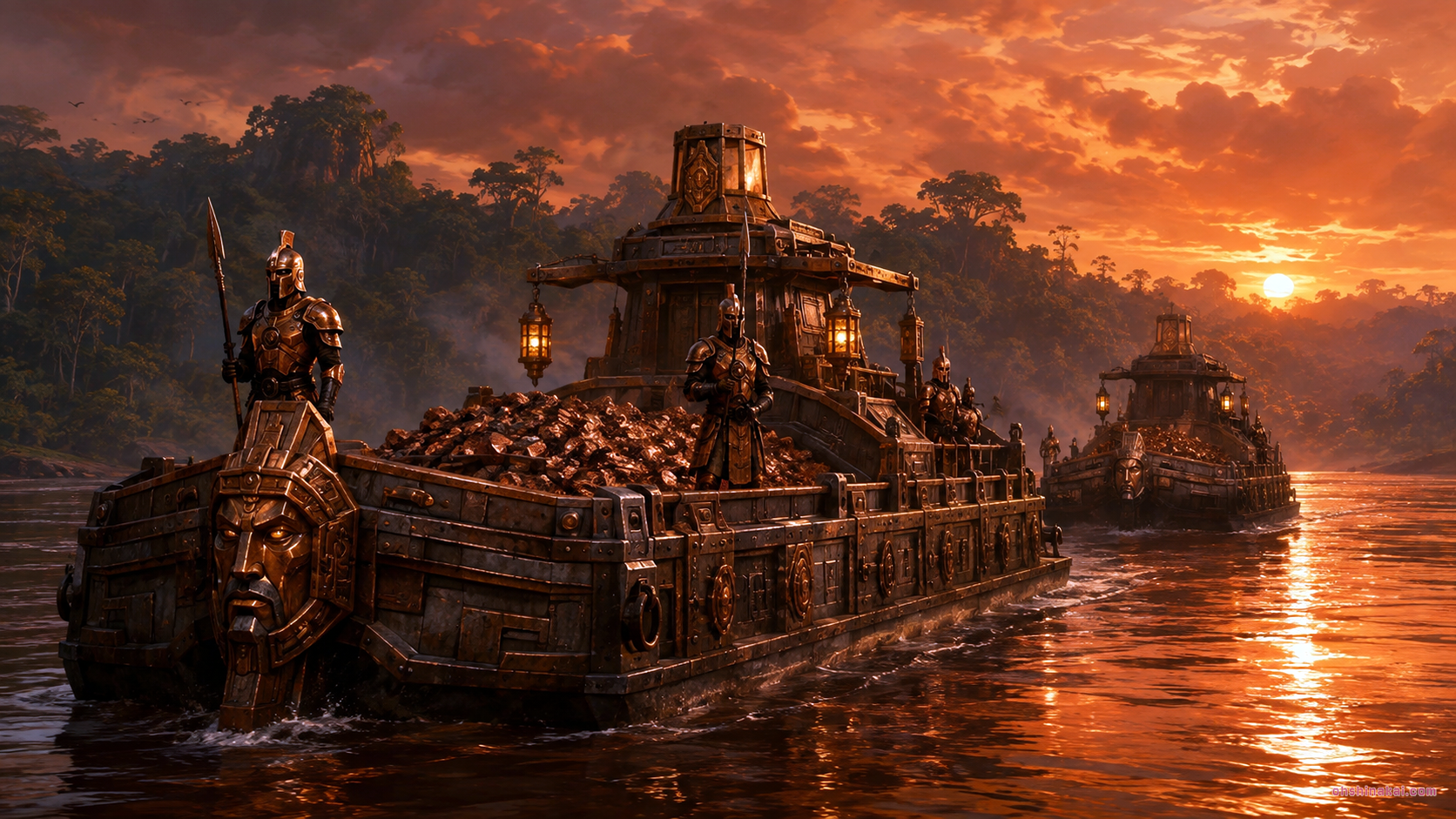
The Zulerians don't worship the lake the way the Azaniyans do. They use it. Khal'uvesi provides freshwater, fish, and (most importantly) the water routes that connect Zuleria to Duskwater's pirate ports in the north. Zulerian ore barges cross the lake in armed convoys, trading raw copper for Duskwater's weapons, gunpowder, and the manufactured goods that Zuleria's warband economy can't produce for itself. The convoys are frequently raided by Duskwater pirates who didn't get the contract, which means every ore barge carries enough armed guards to fight off the very people they're sailing to trade with.
The relationship works because both sides need it. Duskwater needs Zulerian copper for the Firebinder Guild's forges at Port Blackspire. Zuleria needs Duskwater's weapons and trade connections to the wider world. The mutual dependency creates a partnership held together by profit and the shared understanding that betrayal would be more expensive than cooperation. Barely.
The Copper Serpent and the Old Pact
Zulerian spiritual life revolves around the founding myth of Zula the Scarred and the Copper Serpent, a primordial entity (part god, part living vein of metal) that demanded tribute of blood in exchange for the land's mineral wealth. Zula struck a bargain: her people would serve the Serpent and mine its blood (the copper ore), and in exchange, they would own the weapons forged from it.
The pact was sealed when Zula plunged her hand into the Serpent's heart and drew forth a shard of living copper. Her descendants carry that metallic essence in their identity, wearing serpentine symbols, forging their skin in the shapes of scales, and some are said to hear the Serpent's whispers in the deep mines. The wisest chieftains know that the thirst for copper is a hunger that can be channeled but never satisfied.
[BEHIND THE SCENES]