A Body Built Differently: Elvish Physiology From the Inside Out

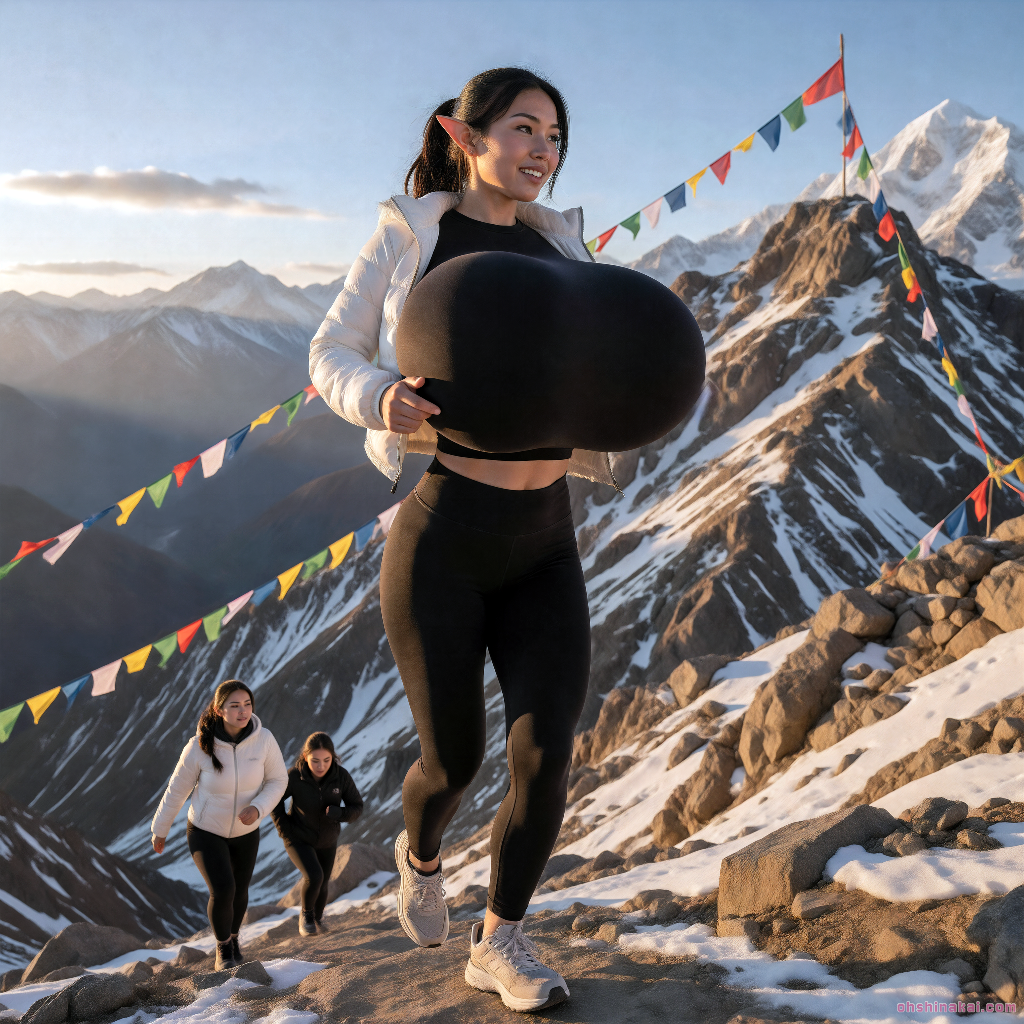
Everyone pictures the ears first. When I started writing elvish biology properly, the ears turned out to be the least interesting thing about them. The real differences sit lower down: in the blood, in the bones, in how many cells line the back of the eye. Most of them trace back to one fact. Elves are a mountain species, and almost everything about their bodies is an answer to thin air.
Start with the Blood
An elvish body carries more oxygen in every millilitre of blood than any human population on Earth. Haemoglobin concentrations run higher, red cells move oxygen faster, and the lungs are larger in proportion to the torso. Thungalëthaur has a word for the whole package: lungathru, the deep mountain breath.
The practical result is that an elf can keep working at four or five thousand metres without the dizziness, nausea and broken sleep that flatten an unacclimatised human. Tibetan and Andean peoples carry similar adaptations, and the overlap is more than coincidence (more on that below). Elves simply carry more of it, and they carry it across every sub-population, including families that have lived in lowland German cities for three hundred years.
Dark elves talk about altitude as something they feel. The Shikarapuran word tashivi names the awareness of thin air sitting in the lungs, a kind of internal altimeter. A Daarikah herder will tell you she knows roughly how high she is by how her chest feels. There is also khuravi, the warmth that rises from the chest during hard exertion in the cold, which mountain elves describe as the body lighting its own stove: it is the same physiology that lets a bar-headed goose fly over the Himalaya, pushed a little further.
Bones That Look Fragile
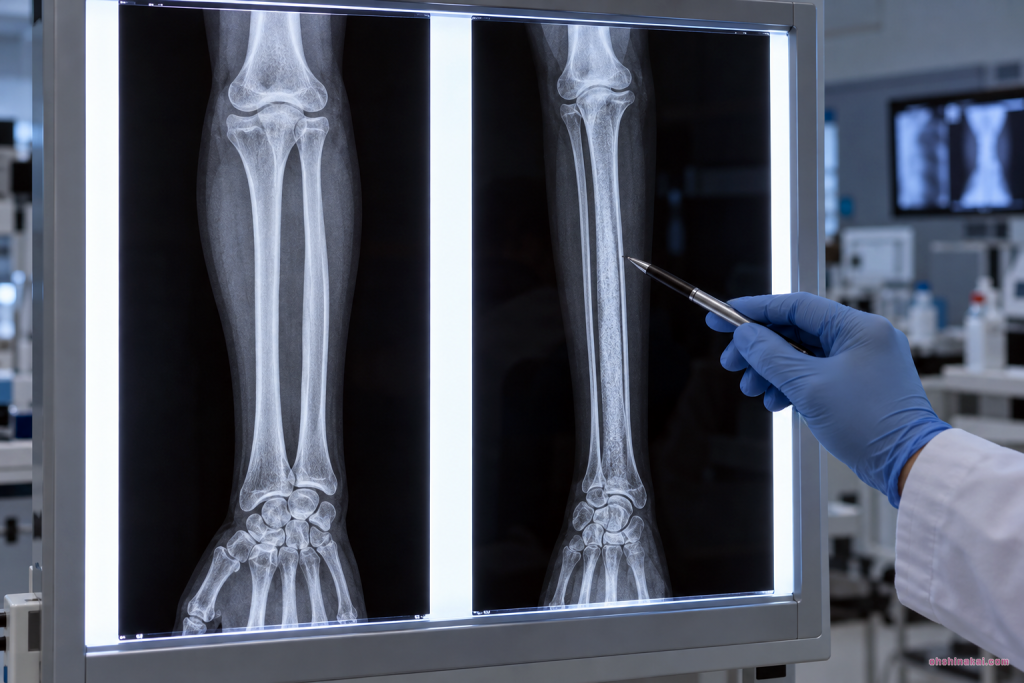
Elves are tall, and their limbs are long for their height. Human observers have called them delicate for about a thousand years. They are wrong. Elvish bone is slim but unusually dense: the outer shell is thinner than a human’s, the tissue inside is packed tighter, and the whole skeleton weighs less than it should for its length. Birds solved the same problem the same way. Thungalëthaur calls the result bainaflex, bone density with flexibility, and treats it as one of the defining elvish paradoxes. A human who falls from a cliff path breaks a wrist. An elf who takes the same fall usually walks off with a bruise.
Bones also come with their own senses, at least in Shikarapuran description. Bhuravi is the bone-ache that arrives a day before the weather turns. Sharithibhain is the itching awareness of a bone knitting itself back together, which elves report clearly enough that some Aldermark orthopaedic clinics ask patients to log it as a healing indicator.
Here is where the human world starts to rub. A standard bone-density scan in a German or British hospital compares the patient against human reference values. An elvish skeleton, slim at the shaft and dense inside, produces numbers that can read as anything from “abnormal” to “early osteoporosis” depending on which machine and which software. Elvish patients have been put on bone-loss medication they did not need. The OEA has published elvish reference ranges since the 1990s, but a reference range only helps if someone loads it into the scanner.
Height in a World Built to a Smaller Scale
The long bones keep growing for longer during adolescence, so adult elves end up tall. Not every elf towers over every human, but the average gap is wide enough to show up in daily life.
Airline seats, office chairs, hospital beds, car crumple zones and ready-made trousers are all sized from human anthropometric tables. An elf in economy class sits with her knees against the seat in front. An elf in an MRI tube has her shoulders pressed against the walls. Crash-test dummies come in human sizes, and the Aldermark Road Safety Board has been complaining since the 1970s that seatbelt geometry sits wrong across an elvish collarbone.
These sound like small irritations. Across eight hundred years they add up to a lifetime spent slightly bent.
Seeing and Hearing More Than Anyone Asked For
The third major system is augaskarp, hypersensitive perception. The elvish retina carries more rod and cone cells than a human one, and the inner ear has a more developed structure for picking up faint and high-frequency sound. Elves see well in near-darkness, a sense Thungalëthaur calls kveldhsinn, twilight-sense. They hear quiet things at a distance. In real silence their hearing sharpens further, which Shikarapuran names nishavi.
That is a fine set of traits for a forest or a mountain valley. It is a poor fit for a modern city. Elvish office workers report that fluorescent tubes flicker visibly, that open-plan offices are exhausting by mid-morning, and that ambulance sirens hurt. Shopping centres are loud, bright and smell of six things at once. Several Aldermark employers now offer “low-stimulus” desks as a standard accommodation, and the idea has spread to a handful of companies in Munich and Vienna with large elvish staff.
Taste follows the same pattern. Mountain elves can pick out mineral content in water by taste (gharithi), and the ability survives in city elves at a weaker level.
The Long Plateau
Underneath all of this is the trait that defines the species. Elvish cells repair themselves far more thoroughly than human ones. Telomeres hold their length, DNA damage gets fixed before it accumulates, and oxidative stress stays low. The lexicon calls the mechanism telomaeris, telomere-breath, and the result aeldhlif, the long life of roughly eight hundred years.
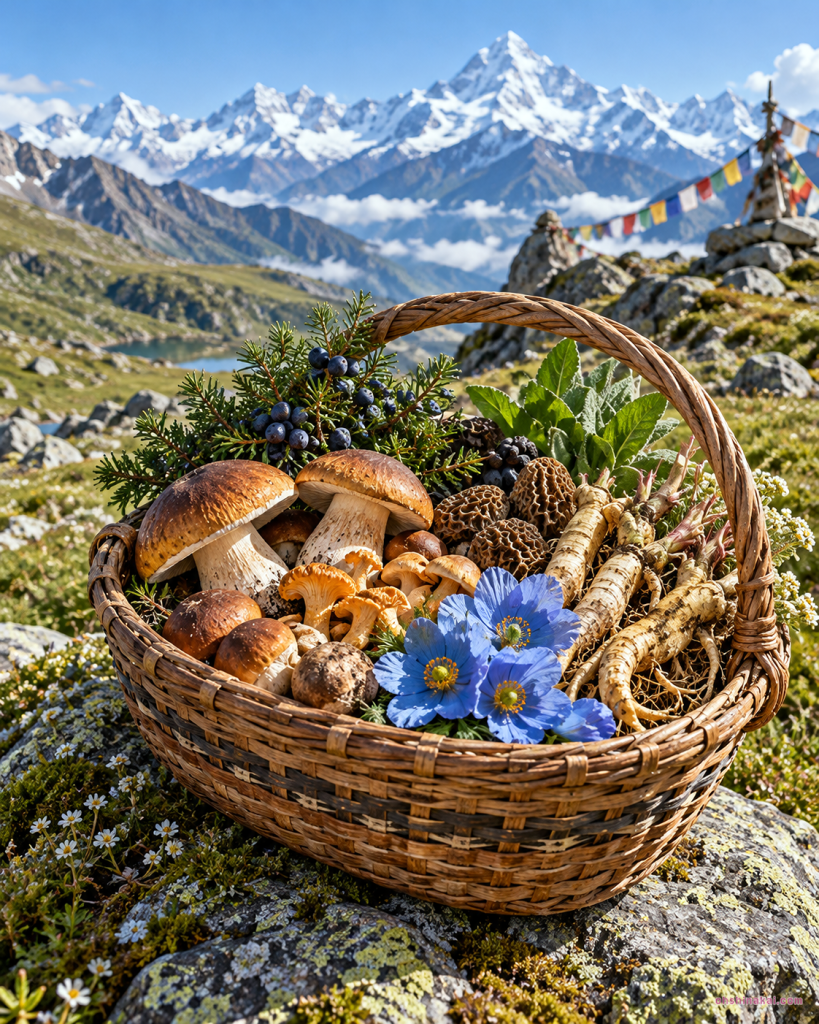
The working hypothesis in Aldermark biology is that longevity and altitude are linked. A body that has to make every breath of oxygen count gets very good at not wasting energy, and cells that run efficiently produce less of the oxidative damage that drives ageing. The mineral-heavy mountain diet probably helps, since high-altitude plants and fungi are loaded with antioxidant compounds. Nobody has proved the full chain, and Aldermark researchers are careful to call it a hypothesis. It is a tidy one, though, and it explains why the same species that breathes so well also ages so slowly.
Three Populations, Three Bodies
Dark elves have the full mountain package: the highest haemoglobin, the densest bone, the sharpest senses. They also do worst when they move to sea level, where the same body that thrives at four thousand metres starts to struggle. That problem has its own name, lowlandkhrankhi, and gets its own post later in this series.
City elves have spent several millenia in Aldermark’s river valleys and the lowland cities beyond. Their adaptations are slightly softened. They cope with sea level better, their perception is a little less intense, and their haemoglobin sits closer to the high end of the human range. Nobody knows yet whether that reflects genetic drift or simply a body adjusting to where it lives.
Half-elves land in between on almost every measure, and unpredictably so. Some inherit near-elvish senses with human bone. Others get the reverse. They are the hardest group to describe and the most interesting, and they get a post of their own later in this series.
Where It Came From
Elves are hominins. They branched off from the same ancestral line as modern humans, and their genome carries far more Neanderthal and Denisovan material than any human population. Dark elves carry the most of all. Thungalëthaur gives that inheritance a name, nidhrbloth, Neanderthal blood, and dark elf communities talk about it with some pride.
The Denisovan part is where the setting borrows from real science. Present-day Tibetans carry a gene variant for high-altitude living that almost certainly came from Denisovan ancestors. In the Aldermark world, elves carry a stronger version of the same inheritance, along with a cluster of other archaic markers that humans either never picked up or lost along the way. The altitude adaptations, the bone structure and possibly the cellular repair all seem to sit in that older material.
Then came isolation. Elvish populations spent tens of thousands of years in high, cold, thin-aired places, small enough that useful traits spread quickly. Dark elves stayed isolated longest, which is why their genome is the most uniform of any elvish group and why their adaptations are the strongest.
Glossary of Thungalëthaur Terms
- Lungathru Respiratory efficiency; the deep mountain breath
- Tashivi Altitude in the lungs; awareness of thin air (Shikarapuran)
- Khuravi Warmth rising from the chest during exertion at altitude (Shikarapuran)
- Bainaflex Bone density with flexibility; slim but fracture-resistant
- Bhuravi Bone-ache that predicts weather (Shikarapuran)
- Sharithibhain Healing-bone; the felt sensation of a bone mending
- Augaskarp Hypersensitive perception
- Kveldhsinn Twilight-sense; enhanced vision in low light
- Nishavi Sharpening of hearing in silence (Shikarapuran)
- Gharithi Ability to taste the mineral content of water (Shikarapuran)
- Telomaeris Telomere-breath; the cellular repair behind elvish longevity
- Aeldhlif The long life; elvish lifespan of about 800 years
- Nidhrbloth Neanderthal blood; archaic genetic markers, strongest in dark elves
- Lowlandkhrankhi Lowland sickness (coined in Elvish Life in the Modern World)
Join the conversation