
How I Built the Last Elven Empire


Welcome to the worldbuilding series for Aldermark: The Last Elven Empire. Over the next month I'm pulling back the curtain on the setting, the cultures, the characters, the institutions, and the ideas that didn't survive the cutting-room floor. This first post is the map of the territory: what Aldermark is, what makes it tick, and why I built it the way I did.
The One Question That Started Everything
Most fantasy worlds ask what if magic were real? Aldermark started from a quieter, stranger question: what if elves never left?
Not elves of the deep forest who fade when humans arrive. Not a vanished elder race we only meet in ruins. I wanted elves who stayed, who evolved on this same Earth, alongside us, building roads and banks and tabloid newspapers, riding out the same centuries we did and arriving, blinking, into the twenty-first century with us. Elves who have a flag carrier airline and a semiconductor industry and an argument about reproductive-health funding.
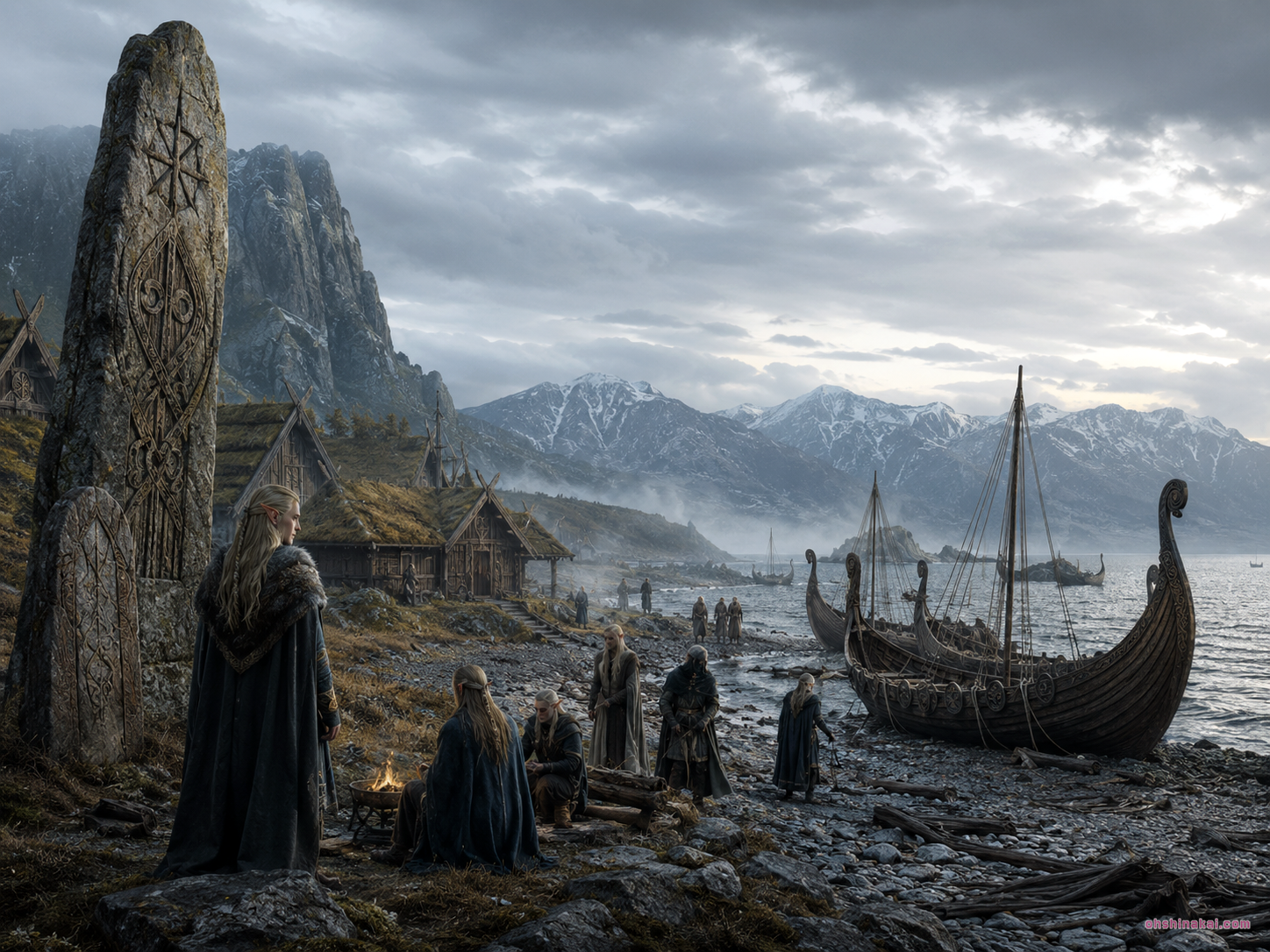
The whole setting hangs off a single hinge in history: in Aldermark's timeline, Scandinavia's Christianization came centuries late. The old gods held on. And in the long shadow of that delay, the elvish clans of the north were never folklorized into harmless little people. They remained a polity: proud, organized, and very real.
The Shape of the World
From that hinge, the world unfolds along recognizable but bent lines. The headline facts a newcomer needs:
- The Aldermark Empire was founded on 22 November 1473 by Alberich, who united the scattered elvish clans not under a bloodline but under a radical idea: a realm of merit. It sat at the heart of Central Europe, roughly today's Germany, Austria, and the Czech lands, and dominated the region for over five centuries.
- It was never only a military power. Its real engine was a combination of technological head-start, patient diplomacy, and a meritocratic civil service that ran circles around its feudal human neighbors.
- And then it fell. There was no single cataclysmic event, but through a long slow erosion: human industrialization, nationalism, two world wars, until the empire was formally dissolved in 2003. Aldermark is, deliberately, an elder world in its twilight. The title isn't decoration: it really is the last elven empire.
That ending is the most important creative decision in the whole project, and I'll devote a full post to it later this week. For now, know that grief and decline are baked into the setting's emotional core. These are immortals who outlived their own empire.
Many Peoples, Not One
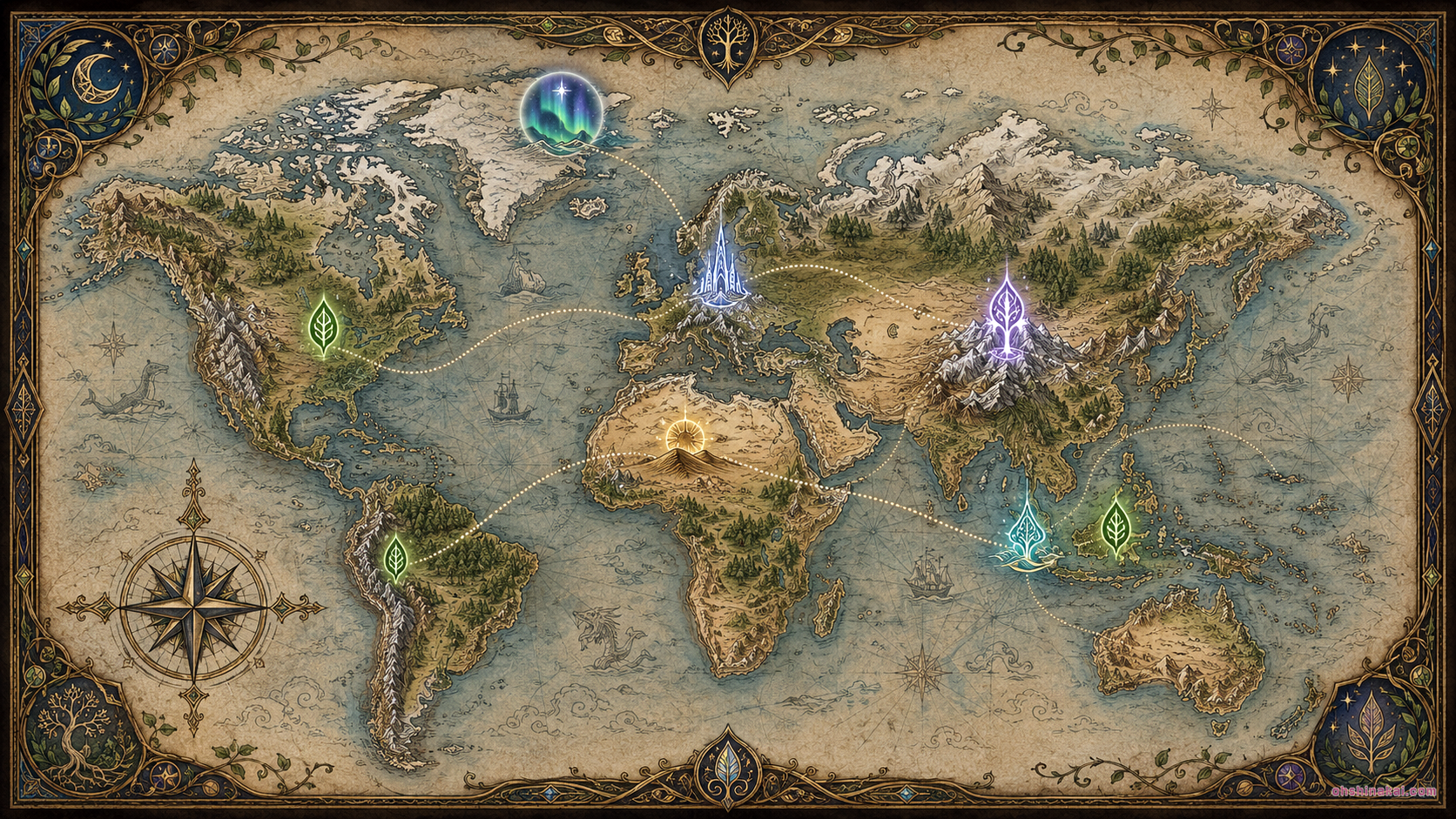
A mistake I wanted to avoid from the start was the monolithic elf: one culture, one language, one pointy-eared aesthetic stamped across the map. Real peoples diverge. So Aldermark's elves diverged too, hard, and the most consequential split has its own name: the Convocational Separatism, when the elvish world divided into modern elves who integrated with humanity and dark elves who withdrew into the Himalayas to guard the old ways. That fault line still runs through everything.
By the present day the elvish world is a genuine diaspora:
- Aldermark: the Alpine imperial heartland, cosmopolitan and now post-imperial. Descendents of the Baiuvarii elves
- Shikarapura: the Himalayan dark-elf nation, traditional, mystic, fiercely independent.
- The Strait Kingdoms (Singhasari): Bunian elves on Java's north coast.
- Beringian elves of the circumpolar Arctic, Jinìri Saharan elves with their own ceremonial tongue, and scattered clans that ended up everywhere from the Andes to the rainforests of Borneo to the American Midwest.
Each has its own language, its own body of custom, its own relationship to the empire that once claimed to speak for all of them.
The Texture: Language, Faith, and the Body
Three things, more than any plot, make the world feel inhabited.
Language. The flagship constructed language is Thungalëthaur (Deep Elvish), and it encodes the culture's values right in its grammar. The single worst insult in the language isn't sexual or scatological, it's nidhingr, "oath-breaker." There's a whole verb mood, the volitional, that exists only to mark words spoken as soul-binding commitments. You don't say these things lightly (future posts dives all the way in.)
Faith. The dominant religion is Freyjaist, the old Norse goddess reframed as the center of an enduring, unbroken tradition. It shapes attitudes toward fertility, the body, and the dead.
The body. Aldermark's elves hold frank, pre-Christian attitudes toward sexuality and the body, which collided, historically, with human moral codes the empire absorbed along with its human subjects. That collision produced one of the setting's most telling institutions, the Morality Police, and one of its most defiant characters, the magazine mogul Dewi. I'll get to both. The point: this is an adult world, written for adults, where the maturity is part of the worldbuilding rather than decoration on top of it.
In the Coming Weeks
Here's the deal for the next weeks and a deep dive into the following:
- Notable characters: the waitress, the mogul, the gym owner, the weaver, the conservationist, and the emperors above them all.
- Cultures and countries: Shikarapura, the Strait Kingdoms, the diaspora, and the great schism that made them.
- Institutions, companies, and media: the OEU, the Morality Police, the airlines and newspapers and tech firms that make an immortal civilization feel like a place where someone actually has to file taxes.
- The cutting-room floor: at least one post a week on ideas I scrapped: factions, peoples, and origins that didn't make it, and why.
Next in the Aldermark series → King Alberich and the Realm of Merit.